
How to Set Goals Without Burning Out After 2 Weeks

This post contains affiliate links, which means we may earn a commission if you purchase through our links—at no extra cost to you. As an Amazon Associate we earn from qualifying purchases. We only recommend products we use or trust. Learn more about affiliate marketing or read our full disclosure.
Have you ever set a new goal feeling excited and motivated, only to lose momentum a couple of weeks later?
You’re definitely not alone.
Whether you want to get in shape, start a side business, save more money, or build healthier habits, it’s easy to begin with excitement and confidence.
Then everyday life gets in the way. Your schedule fills up, motivation starts to fade, and the goal that once felt exciting begins to feel overwhelming.
The problem usually isn’t that you’re lazy or lack discipline. More often, burnout happens because your approach to goal setting simply isn’t designed to be sustainable.
The good news?
You can make meaningful progress toward your goals without burning yourself out. When you learn how to set goals with sustainable systems and focus on steady progress instead of perfection, staying consistent becomes much easier over time.
In this article, I’ll show you how to set goals that stay realistic, motivating, and achievable long after the first two weeks.
Why Most Goals Lead to Burnout
Before you can learn how to avoid burnout, it helps to understand why it happens in the first place.

Many people approach new goals with an all-or-nothing mindset.
They try to transform every part of their life at once:
- Wake up two hours earlier
- Exercise every day
- Meal prep every Sunday
- Read one book per week
- Start a business
- Learn a new skill
While these goals may sound ambitious and inspiring, they’re rarely sustainable for long. Your brain naturally resists sudden, dramatic changes because they require a lot of energy and willpower.
When you’re trying to build several new habits at the same time, it’s easy to become overwhelmed, and burnout often follows.
As motivation starts to fade, consistency slips, and many people begin to believe they’ve failed.
In reality, the problem wasn’t you—it was the strategy.
Start With One Meaningful Goal
One of the most common mistakes people make is trying to pursue too many goals at the same time.
Instead of trying to improve every area of your life all at once, choose the one goal that would have the biggest positive impact.
Ask yourself:
- What would make the biggest difference in my life right now?
- Which goal truly matters to me?
- What am I willing to keep working on even when I don’t feel motivated?
When you focus on one main priority, you protect your mental energy and give yourself a much better chance of succeeding.
For example, instead of:
I want to lose weight, start a business, learn Spanish, and save money.
Try:
My primary focus for the next three months is improving my health.
Keeping your focus simple makes it much easier to stay consistent.
Want help staying focused on what matters most? The Full Focus Planner by Michael Hyatt (available on Amazon) is designed to help you prioritize your most important goals instead of trying to tackle everything at once. It’s a great tool if you’re working on building a more intentional and sustainable approach to goal setting.
RELATED POST: The 7 Areas of Life You Should Be Setting Goals In (Most People Ignore #3)
Make Your Goals Smaller Than You Think
Most people underestimate how powerful small actions can be.
It’s easy to assume that success requires massive effort every day, but lasting progress usually comes from small actions repeated consistently over time. If your goal feels overwhelming, it’s probably too big.
Consider these examples:
Instead of: Exercise 60 minutes every day
Try: Walk for 10 minutes daily
Instead of: Write 2,000 words per day
Try: Write for 15 minutes
Instead of: Read 50 books this year
Try: Read 5 pages per day
Smaller goals reduce resistance. When something feels easy to do, you’re far more likely to stick with it. And consistency is what produces results.
RELATED POST: How to Break Down Goals So They Actually Feel Easy to Start
Focus on Systems, Not Outcomes
Many people become fixated on outcomes:
- Lose 20 pounds
- Make $10,000
- Gain 10,000 followers
- Read 30 books
While outcomes give you a destination, they don’t determine what you do each day. Systems do.
A system is a collection of actions you repeat consistently.
Examples:
Outcome: Lose 20 pounds
System: Walk daily and eat protein with every meal
Outcome: Write a book
System: Write for 20 minutes every morning
Outcome: Grow a business
System: Reach out to three potential clients each weekday
The people who achieve lasting success tend to focus on the process rather than constantly thinking about the end result. When your attention stays on the actions you can take today, making progress feels simpler and far less stressful.
RELATED POST: Why SMART Goals Work Better Than Regular Goals
Choose Flexible Goals Over Perfect Ones
Perfectionism is one of the fastest ways to burn out. Many people create strict plans and expect themselves to follow them perfectly.
Then life happens:
- They get sick
- Work gets busy
- Family responsibilities increase
- Travel disrupts their routine
Suddenly, they miss a few days and convince themselves they’ve failed. But achieving your goals isn’t about being perfect. It’s about being flexible.
Instead of saying: “I must work out every day.”
Try: “I’ll exercise four times per week whenever it fits my schedule.”
Instead of: “I’ll write every morning at 6 a.m.”
Try: “I’ll write for 20 minutes at some point during the day.”
Flexibility makes it easier to adapt when life gets in the way, without giving up on your goal altogether.

Build Recovery Into Your Plan
Many people make time for effort but forget to make time for recovery. Imagine trying to drive a car without ever stopping to refuel. Eventually, it runs out of gas.
Your mind and body work the same way.
Rest isn’t something you earn after being productive. It’s an essential part of staying productive.
To help prevent burnout:
- Take breaks during work sessions
- Schedule days off
- Get enough sleep
- Spend time on hobbies
- Allow yourself downtime
Recovery helps you maintain your motivation, creativity, and energy. Without it, even the goals you’re most excited about can start to feel exhausting.
Use the 80% Rule
One overlooked cause of burnout is constantly trying to operate at your maximum capacity.
Many people believe they need to give 100% every single day. In reality, lasting success often comes from working at closer to 80%.
Think about athletes. Top performers don’t train at full intensity every day. They balance challenging workouts with proper recovery.
You can take the same approach.
Focus on consistency instead of maximum intensity. Rather than pushing yourself to the limit every day, leave a little energy in reserve.
That makes it much easier to keep going when others have already burned out.
Track Your Progress, Not Your Perfection
Many people focus only on what they’re doing wrong. They notice missed workouts, unfinished tasks, and the days that didn’t go as planned.
Over time, that creates frustration and makes it harder to stay motivated. Instead, look for evidence that you’re making progress.
Examples:
- Days exercised
- Pages read
- Money saved
- Hours practiced
- Healthy meals eaten
Even the smallest wins matter. When you can clearly see your progress adding up, it’s much easier to stay motivated.
A simple habit tracker, calendar, or journal can help you stay encouraged during more challenging weeks.
If you enjoy tracking your progress, the Legend Planner PRO (available on Amazon) makes it easy to monitor habits, milestones, and daily actions all in one place. Seeing your progress build over time can be a powerful motivator on the days when motivation is low.
RELATED POST: Why Positive Thinking Isn’t Enough to Reach Your Goals
Expect Motivation to Disappear
One of the biggest myths about achieving goals is that successful people stay motivated all the time.
They don’t.
Everyone has days when they don’t feel like putting in the work. The difference is that successful people know motivation comes and goes, so they rely on routines instead.
When motivation disappears:
- Follow the habit anyway
- Reduce the effort if necessary
- Focus on simply showing up
For example:
If you planned a 45-minute workout but feel exhausted, do 10 minutes instead. That small action is often enough to keep your momentum going.
Remember: consistency beats intensity.
RELATED POST: Why Visualizing Failure Makes WOOP Goal Setting So Powerful
Celebrate Small Wins
Many people put off feeling proud until they reach the finish line.
They tell themselves:
- “I’ll be proud when I lose the weight.”
- “I’ll celebrate when I make more money.”
- “I’ll feel successful when I reach my target.”
That way of thinking can make the entire journey feel like it’s never enough.
Instead, celebrate your progress along the way. Recognize:
- Your first week of consistency
- Your first milestone
- Your improved habits
- Your growing confidence
Small celebrations reinforce positive behaviors and make the journey more enjoyable. The more you enjoy the process, the less likely you are to burn out.
If you’d like to become more aware of your progress, the 6-Minute Gratitude Journal by UrBestSelf (available on Amazon) encourages you to reflect on your daily wins and build a habit of celebrating small victories. It’s a simple way to stay motivated without constantly chasing the next big milestone.
Build Goals Around Your Identity
The goals that last the longest are often connected to your identity.
Instead of focusing only on what you want to accomplish, think about the kind of person you want to become.
Examples:
Instead of: “I want to run a marathon.”
Think: “I am becoming a runner.”
Instead of: “I want to save money.”
Think: “I am someone who manages money wisely.”
Instead of: “I want to read more books.”
Think: “I am a reader.”
Identity-based goals create lasting change because they influence the choices you make every day.
Each action becomes proof of the person you’re becoming.
If you’d like to explore this idea further, Atomic Habits by James Clear (available on Bookshop.org) is an excellent read. It explains how small habits shape your identity over time and offers practical strategies for creating lasting change.
book tip

Atomic Habits
By James Clear
Want to change your life without relying on willpower?
Did you know? When you buy through Bookshop.org, you’re helping support independent bookstores.
The Power of Slow Progress
In a world obsessed with overnight success, slow progress can feel disappointing. But meaningful, lasting growth is almost always gradual.
Think about planting a tree. You won’t notice dramatic changes from one day to the next. Yet over months and years, the growth becomes remarkable.
Your goals work the same way.
A small effort today may not seem like much. But when those actions are repeated consistently over weeks and months, they can lead to remarkable results.
The key is staying committed long enough to see them.
If the idea of slow, consistent progress resonates with you, The Compound Effect by Darren Hardy (available on Bookshop.org) shows how small actions repeated over time can lead to remarkable results. It’s a motivating reminder that lasting success is built one step at a time.
book tip
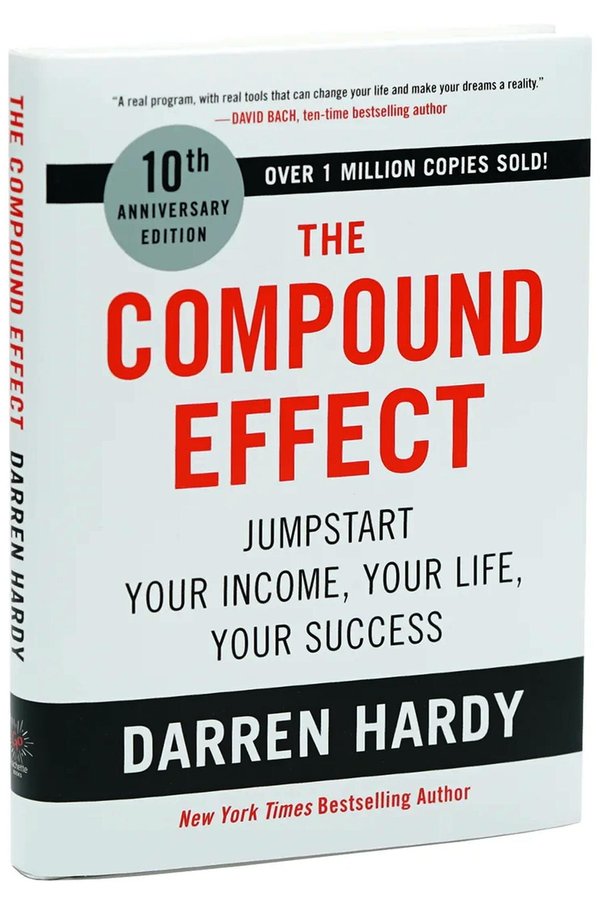
The Compound Effect
By Darren Hardy
Discover how small choices and consistent habits can create lasting change over time.
Did you know? When you buy through Bookshop.org, you’re helping support independent bookstores.
RELATED POST: 13 New Year’s Resolutions That Finally Work—Here’s the Method
Final Thoughts
If you’ve ever burned out after just two weeks, don’t assume you’re bad at reaching goals. More often, it simply means you’ve been following a strategy that wasn’t built to last.
The most effective goals aren’t always the biggest or most ambitious. They’re the ones you can keep working toward long after the initial excitement fades.
Focus on:
- One meaningful goal at a time
- Small, manageable actions
- Consistent systems
- Flexible expectations
- Regular recovery
- Progress over perfection
Remember, success isn’t about doing everything perfectly for two weeks. It’s about doing the right things consistently over months and years.
When you learn how to set goals in a way that supports your life instead of taking it over, steady progress becomes far more powerful than short bursts of motivation.
*This article is for informational and educational purposes only and should not be considered a substitute for professional mental health advice. If you are experiencing emotional distress or mental health challenges, please seek guidance from a licensed therapist or mental health professional.
Antoniou, F., & Alkhadim, G. S. "The Stressful Experience of Goal Orientations Under Frustration: Evidence Using Physiological Means." Frontiers in Psychology, vol. 13, 2022, article 823655. doi:10.3389/fpsyg.2022.823655. Adapted and used under the Creative Commons Attribution 4.0 International License.
Ashraf, Muhammad Azeem et al. “Impact of Self-Efficacy and Perfectionism on Academic Procrastination among University Students in Pakistan.” Behavioral sciences (Basel, Switzerland)vol. 13,7 537. 28 Jun. 2023, doi:10.3390/bs13070537. Adapted and used under the Creative Commons Attribution 4.0 International License.
Dopmeijer, Jolien M et al. “The role of performance pressure, loneliness and sense of belonging in predicting burnout symptoms in students in higher education.” PloS one vol. 17,12 e0267175. 21 Dec. 2022, doi:10.1371/journal.pone.0267175. Adapted and used under the Creative Commons Attribution 4.0 International License.
Freund, Alexandra M, and Martin J Tomasik. “Managing conflicting goals through prioritization? The role of age and relative goal importance.” PloS one vol. 16,2 e0247047. 19 Feb. 2021, doi:10.1371/journal.pone.0247047. Adapted and used under the Creative Commons Attribution 4.0 International License.
Geurtzen, Naline et al. “Patients' perceived lack of goal clarity in psychological treatments: Scale development and negative correlates.” Clinical psychology & psychotherapy vol. 27,6 (2020): 915-924. doi:10.1002/cpp.2479. Adapted and used under the Creative Commons Attribution 4.0 International License.
Lee, Jin Kyun. “The effects of social comparison orientation on psychological well-being in social networking sites: Serial mediation of perceived social support and self-esteem.” Current psychology (New Brunswick, N.J.) vol. 41,9 (2022): 6247-6259. doi:10.1007/s12144-020-01114-3.
Polivy, J. “The false hope syndrome: unrealistic expectations of self-change.” International journal of obesity and related metabolic disorders : journal of the International Association for the Study of Obesity vol. 25 Suppl 1 (2001): S80-4. doi:10.1038/sj.ijo.0801705.

Linda is the co-founder of Courier Mind and holds a Diploma in Natural Health Nutrition & Diet. Her passions include photography, personal growth, and travel, where she draws inspiration from diverse cultures and their approaches to mindset and self-discovery. She is committed to helping others set meaningful goals, overcome self-doubt, and become the best version of themselves.