
Why Your Brain Creates Obstacles to Your Own Goals

This post contains affiliate links, which means we may earn a commission if you purchase through our links—at no extra cost to you. As an Amazon Associate we earn from qualifying purchases. We only recommend products we use or trust. Learn more about affiliate marketing or read our full disclosure.
We often assume that once you set a goal, your brain will naturally help you follow through and achieve it.
- “I want to get fit.”
- “I want to save money.”
- “I want to wake up earlier.”
But then you procrastinate. You hesitate. You avoid doing the very things that would move you closer to your goals.
Why?
Because your brain’s primary job isn’t to help you achieve your goals. Its main priority is to keep you safe, comfortable, and surrounded by what feels familiar.
Since change often feels uncertain, your brain can end up creating obstacles to goals—even when those goals are genuinely good for you.
In this article, you’ll discover why your brain resists change, why motivation alone is rarely enough, and how to reduce the mental friction that keeps getting in the way of your goals.
Once you understand that resistance is a normal part of how the brain works, you’ll stop seeing it as a personal flaw and start building systems that work with your brain instead of against it.
Your Brain Is Not Optimized for Goals — It’s Optimized for Survival
For a long time, I felt like part of me was working against my own goals.
I couldn’t understand why my brain kept pulling me toward distractions, delays, and avoidance instead of the actions that would actually help me move forward.

At times, it even felt like my brain was trying to keep me stuck. But once I started learning more about how the brain works, everything began to make sense.
More importantly, that understanding brought a real sense of relief because I realized it wasn’t simply a matter of lacking discipline or motivation.
My brain was doing exactly what it was designed to do:
Avoid uncertainty, stick with what feels familiar, and protect me from anything it perceives as uncomfortable or risky.
RELATED POST: The Hidden Mistake People Make When Setting Goals
Why Your Brain Resists Change
The truth is, your brain evolved long before goal-setting apps, personal development, or modern ambitions existed.
It’s designed to:
- Conserve energy
- Avoid risk
- Seek predictability
- Reduce uncertainty
From a survival perspective, that makes perfect sense.
Change is “expensive” for the brain because:
- It requires attention
- It requires energy
- It introduces uncertainty
- It increases perceived risk
So when you set a new goal, your brain doesn’t automatically recognize it as growth or self-improvement.
Instead, it tends to interpret it like this:
Something is changing. We should resist this.
That resistance often shows up as hesitation, procrastination, and avoidance, creating obstacles to goals and slowing your progress before it has a chance to build momentum.
Even though it may feel personal, your brain isn’t actually trying to stop you from succeeding.
If you’d like to explore this idea further, The Expectation Effect by David Robson (available on Bookshop.org) explains how your brain’s predictions influence your thoughts, behaviors, and even your ability to adapt to change.
book tip
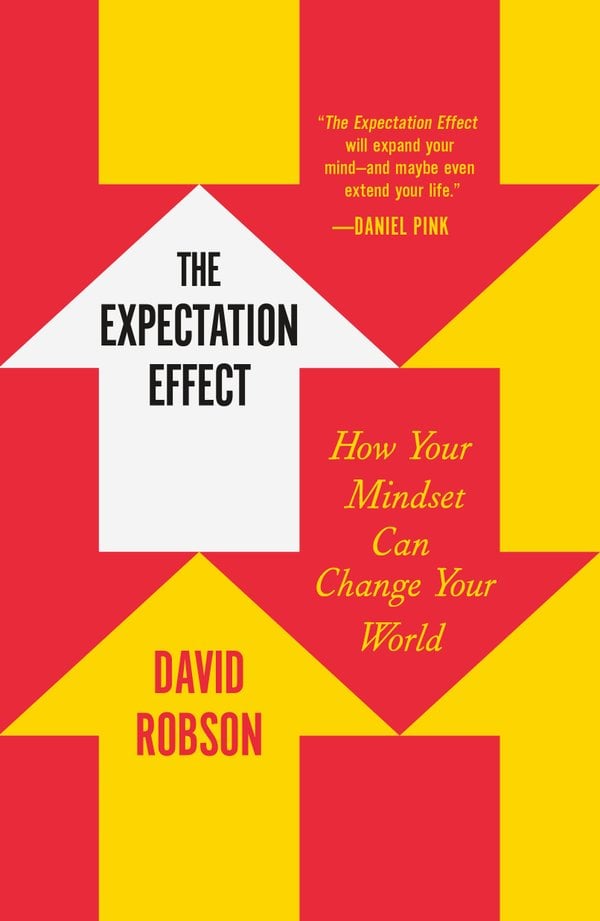
The Expectation Effect
By David Robson
Discover how your expectations can influence your thoughts, behaviors, and everyday experiences.
Did you know? When you buy through Bookshop.org, you’re helping support independent bookstores.
RELATED POST: Why Positive Thinking Isn’t Enough to Reach Your Goals
How Your Brain Decides What to Resist
Research suggests that your brain is constantly making predictions about what will happen next based on your past experiences.
So when you set a new goal, you’re introducing something unfamiliar. Unfamiliar situations create what’s known as “prediction error,” something the brain naturally tries to reduce.
That’s why, instead of fully supporting the change, it often pulls you back toward what already feels familiar and predictable.
In other words, your brain is simply doing what it was built to do:
Prioritize stability, predictability, and safety—even when that creates obstacles to goals and conflicts with what you’re trying to achieve.
Why Change Feels Like a Threat to Your Brain
Even positive goals can feel threatening to your brain on a neurological level.
For example:
- Starting a workout routine
- Waking up earlier
- Changing your diet
- Building a business
None of these things are actually dangerous. In fact, they’re often goals you genuinely want to achieve.
But your brain doesn’t evaluate reality in a completely rational way. Instead, it predicts outcomes based on past experiences and familiar patterns.
So it starts asking questions like:
- Will this take extra energy?
- Will this interrupt my routine?
- Will this create uncertainty?
- Is this something unfamiliar?
If the answer is “yes,” your brain often responds with resistance.
That resistance can show up as hesitation, procrastination, distraction, or a sudden drop in motivation—often just as you begin making progress.
But this isn’t laziness or a lack of discipline.
It’s protection.
Your brain is simply doing what it was designed to do:
Keeping you in a state it already understands, even when that state no longer aligns with where you want to go.
The Comfort Zone Is Not Emotional — It’s Neurological
People often talk about the “comfort zone” as if it’s simply a mindset or personality trait.
In reality, it’s something even more fundamental: your brain’s preference for what feels familiar and predictable.
- Familiar routines
- Predictable outcomes
- Known levels of effort
Even when your current habits aren’t serving you well, your brain often prefers them because they’re familiar and easier to predict. Familiarity feels safe to your nervous system, even if it isn’t especially fulfilling.
This creates an interesting paradox:
Your brain will often choose a familiar struggle over an unfamiliar improvement.
So even when you genuinely want things to get better, “better” usually comes with uncertainty—and uncertainty feels risky to the brain.
That’s why so many people stay stuck despite wanting change. Your brain naturally favors what it can predict over what it can’t.
RELATED POST: The Psychology of Starting Over Again and Again
How Your Brain Creates Obstacles Without You Realizing It
The obstacles to goals your brain creates rarely look like obvious self-sabotage.
More often, they show up as subtle patterns that seem completely reasonable in the moment—sometimes even responsible.
1. Procrastination Disguised as “Timing”
- “I’ll start tomorrow.”
- “I’ll do it later when I feel more ready.”
On the surface, this sounds perfectly reasonable. After all, you’re not saying no—you’re just postponing it.
Underneath, though, this is often your brain’s way of avoiding uncertainty and reducing immediate effort. It creates a delay, not because more time will necessarily help, but because putting it off feels more comfortable right now.
And that’s often how obstacles to goals develop—not through one big decision, but through small delays repeated over and over.

2. Overthinking Disguised as Planning
- “I need to research more first.”
- “I need a better plan before starting.”
At first glance, this seems responsible. It feels like you’re preparing properly and setting yourself up for success.
But often, it’s a way to reduce uncertainty without taking action. Your brain gets the feeling of making progress without having to face the discomfort of actually moving forward.
Planning is valuable, but if you’re not careful, it can become a holding pattern—a place where thinking replaces doing.
And the longer it continues, the more productive it feels, even though nothing is actually changing.
3. Emotional Resistance Disguised as Fatigue
- “I’m too tired today.”
- “I don’t have the energy right now.”
Sometimes that’s absolutely true. Real rest is important and necessary.
Other times, though, it’s not purely physical fatigue. It can be your brain’s response to something that feels challenging, unfamiliar, or slightly uncomfortable.
Instead of clearly saying, “This feels difficult,” or “This feels uncertain,” your mind often translates that feeling into something more immediate and acceptable:
Tiredness.
This is one of the more subtle ways obstacles to goals appear—not as obvious resistance, but as a feeling that seems reasonable enough to stop you from taking action.
4. Perfectionism Disguised as Standards
“If I can’t do it properly, I won’t do it at all.”
On the surface, this sounds like having high standards—maybe even strong discipline. It can feel like you’re protecting the quality of your work or making sure your effort is worthwhile.
But underneath, it’s often a strategy for avoiding the discomfort of starting before you feel completely ready.
Because starting imperfectly means accepting mistakes, navigating a learning curve, and stepping into situations where you’re not fully in control.
So your mind chooses the safer option—not starting at all. It protects the idea of “doing it right” by never putting it to the test.
5. Distraction Disguised as Urgency
Checking messages, scrolling through your phone, multitasking—anything that suddenly feels important the moment you’re about to focus.
On the surface, it feels justified. There’s always something to check, someone to respond to, or another task that seems to need your attention immediately.
But often, the timing isn’t a coincidence.
These behaviors tend to appear right before you begin something that requires focus, effort, or a certain level of discomfort.
It’s not that these activities are pointless—they’re simply easier, more immediate, and more mentally rewarding than the task you’re trying to do.
And that’s what pulls your attention away.
In this way, distraction becomes a subtle form of avoidance. Not obvious procrastination, but a gentle shift in your attention.
And this is where obstacles to goals become especially difficult to recognize.
Your brain doesn’t stop you outright—it simply keeps offering easier alternatives that feel more appealing in the moment.
Your Brain Is Energy Efficient, Not Goal Efficient
One of the biggest misconceptions about productivity is believing that your brain is naturally wired to help you achieve your goals.
It isn’t.
At a biological level, your brain is focused on a much more fundamental priority:
Conserving energy.
So when you try to do something new, challenging, or unfamiliar, your brain doesn’t immediately ask, “Will this help me grow?”
Instead, it asks much simpler questions:
- “Is this worth the energy?”
- “Can we avoid this and still be okay?”
And if it finds an easier option that feels “good enough” in the moment, that’s usually the path it will choose.
That’s why certain behaviors can feel almost automatic:
- Scrolling feels easier than working
- Comfort feels easier than discipline
- Distraction feels easier than focus
None of this happens by accident. Your brain is constantly looking for ways to reduce effort and maintain stability.
In practice, that means it naturally gravitates toward the path of least resistance—even when that path reinforces the very obstacles to goals you’re trying to overcome.
Why Even Good Goals Trigger Resistance
Even meaningful goals can trigger resistance because your brain doesn’t evaluate meaning first.
It doesn’t begin by asking whether something will benefit you in the long run. Instead, it makes a much simpler calculation based on the immediate cost.
It evaluates:
- Effort
- Uncertainty
- Disruption
For example:
- Starting a business = high uncertainty
- Learning a new skill = cognitive strain
- Exercising regularly = physical effort
So even when the outcome is clearly positive, the process itself can still feel expensive in the present moment.
And your brain pays far more attention to that immediate cost than it does to a future reward.
Research on decision-making suggests that people are especially sensitive to uncertainty, often treating it more like a potential loss than a neutral unknown.
In other words, when something is unclear, your brain tends to respond as though something could go wrong rather than simply recognizing that the outcome is uncertain.
This is where things become challenging:
The bigger or more meaningful the goal, the more uncertainty or discomfort it can create in the beginning—which can also increase internal resistance.
That’s why even positive, worthwhile changes can feel difficult at first—not because they’re wrong for you, but because your brain reacts more strongly to effort and uncertainty than it does to distant, long-term rewards.
The Two Systems Driving Your Behavior: Survival vs. Growth
Inside your mind, two competing systems are constantly at work:
1. The Survival System
- Keeps you safe
- Avoids risk
- Preserves energy
- Maintains stability
This system is fast, automatic, and always running in the background. Its role isn’t to help you grow or evolve—it’s to keep life predictable and stable based on what has worked before.
2. The Growth System
- Seeks improvement
- Tolerates discomfort
- Embraces uncertainty
- Pushes change
When you set a goal, both systems become active at the same time. That’s where the internal tension begins.
The survival system usually reacts first—and with greater intensity. That’s why resistance often feels automatic.
It doesn’t mean your goal is wrong or that you lack discipline. It simply means the older, faster system is designed to respond first whenever something involves uncertainty or effort.
So before the growth system has fully engaged, the survival system is already questioning the cost, risk, and energy required.
That difference in timing is often what creates friction—the feeling that one part of you wants change while another immediately pushes back through hesitation or avoidance.
RELATED POST: Why Visualizing Failure Makes WOOP Goal Setting So Powerful
Why Motivation Doesn’t Fix This Problem
Motivation is often treated as the solution to resistance.
But motivation is:
- Temporary
- Emotional
- Inconsistent
It comes and goes in waves. It rises when something feels exciting, inspiring, or urgent, then fades as that emotional energy naturally wears off.
Your brain’s resistance system works very differently. It is:
- Automatic
- Deeply wired
- Always active
It doesn’t depend on how motivated you feel at any given moment. It’s constantly operating in the background, evaluating effort, uncertainty, and energy costs.
So when motivation inevitably drops—and it always does—resistance is already there. In that moment, it often wins by default.
That’s why you can feel highly motivated one day and completely unmotivated the next.
Nothing external has changed. But internally, the balance has shifted again. The survival system has stepped back in, restoring comfort, predictability, and low effort as the default.
If you’re tired of relying on motivation, Tiny Habits by BJ Fogg (available on Bookshop.org) shows how making behaviors incredibly small can lead to lasting change. It’s one of the best books for learning how to build habits that work with your brain instead of against it.
book tip
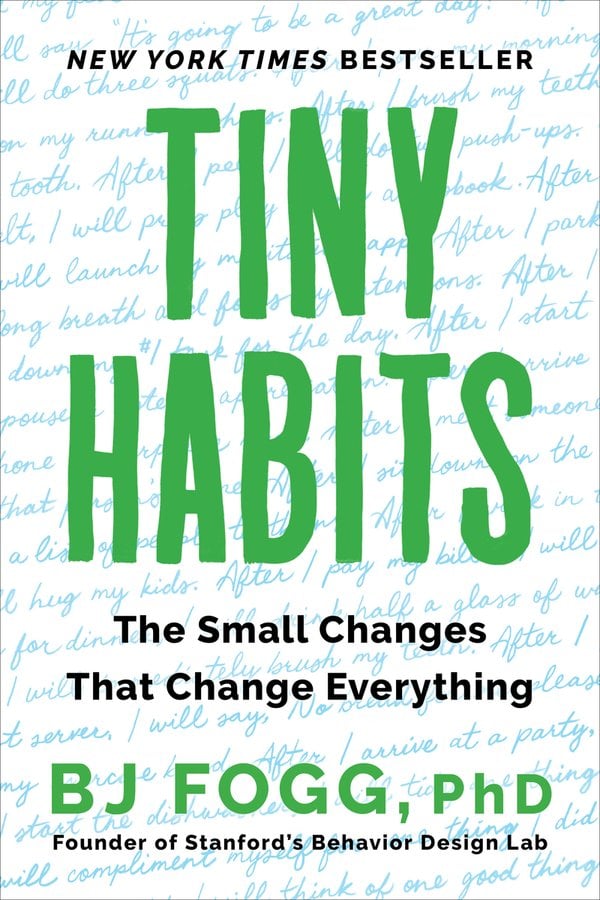
Tiny Habits
By BJ Fogg, PhD
Discover how tiny, consistent habits can lead to meaningful and lasting changes over time.
Did you know? When you buy through Bookshop.org, you’re helping support independent bookstores.
RELATED POST: How to Set Goals Without Burning Out After 2 Weeks
The Real Reason You Feel “Stuck”
Feeling stuck is usually not about a lack of desire.
It’s a conflict between:
- What you consciously want
- What your brain feels comfortable with
So you experience:
- Intention (“I want to change”)
- Resistance (“But I can’t seem to start”)
And both experiences feel equally real, which is what makes the situation so frustrating. Neither side is false—they’re simply driven by different systems with different priorities.
One part of you is focused on growth, change, and long-term improvement. The other is focused on familiarity, efficiency, and minimizing effort in the present.
So when those priorities clash, it doesn’t feel like a simple choice. It feels like friction—a constant push and pull that shows up as hesitation or delay that appear right when it’s time to act.
In that sense, being “stuck” isn’t a single condition. It’s the experience of two legitimate internal systems pulling you in different directions at the same time.
Why Your Brain Tries to Reduce Mental Effort
Another reason your brain creates obstacles is to reduce the effort required for thinking. Every decision, even a small one, uses mental energy.
So your brain naturally tries to:
- Automate behavior
- Reduce decision-making
- Stick to routines
That’s also why habits feel easier than starting something new—they eliminate the need to constantly choose, evaluate, and initiate action.
When you introduce a new goal, your brain may resist not because the goal is bad, but because it increases:
- Decisions
- Attention
- Uncertainty
From your brain’s perspective, that extra mental demand feels expensive.
So what looks like resistance is often your brain trying to make life simpler in the moment. It prefers familiar paths because they require less processing, fewer decisions, and less mental effort.
In that sense, many obstacles to goals aren’t just emotional reactions—they’re also your brain’s attempt to conserve energy by keeping life predictable, automatic, and manageable.
RELATED POST: Why SMART Goals Work Better Than Regular Goals
The Important Shift: Resistance Is Not Failure — It’s Feedback
Most people interpret resistance as:
- “I’m not disciplined enough.”
- “I’m not serious enough.”
- “I’m doing something wrong.”
But resistance is actually information. It’s not a judgment about your ability—it’s a signal about what your brain is experiencing in that moment.
It tells you things like:
- This is unfamiliar
- This requires effort
- This needs structure
- This needs smaller steps
When you see it this way, resistance stops being something you have to defeat through force and becomes something you can learn from.
Rather than fighting it head-on, successful people often adapt around it. They don’t assume resistance means stop—they see it as a sign to adjust their approach.
Because resistance isn’t random. It highlights where friction exists and where a task feels too large, too unclear, or too costly in terms of energy.
And when you start treating resistance as feedback instead of failure, those internal obstacles to goals begin to look less like roadblocks and more like useful signals that help you redesign your path forward.
One of the best ways to understand your own patterns is to write them down. Keeping a simple journal like the VICTORIA’S JOURNALS Leatherette Vintage Journal (available on Amazon) can help you notice what triggers resistance and what makes taking action easier over time.
How to Work With Your Brain Instead of Against It
Once you understand why your brain creates obstacles, the solution starts to look very different.
It’s no longer about forcing more discipline or trying harder to push through resistance. Instead, it’s about reducing resistance before it has the opportunity to take over.
1. Make Goals Smaller Than Resistance
If resistance feels overwhelming, the goal is often too large or too unclear in its current form.
Smaller actions are easier for your brain to accept because they feel safer, more predictable, and less demanding. They move past survival resistance far more easily than large commitments.
2. Reduce Decision-Making
Decide in advance when and how you’ll take action.
The fewer decisions you have to make in the moment, the less mental friction you create. And less friction means fewer opportunities for hesitation to become delay.
3. Expect Resistance in Advance
When you expect resistance, it loses some of its power.
Instead of seeing it as a problem or a surprise, you begin recognizing it as a normal part of the process. That shift alone reduces the impact of those internal obstacles to goals.
4. Start Before Motivation Appears
Motivation isn’t a prerequisite for action—it’s often the result of action.
In many cases, starting creates momentum, and momentum creates motivation. Waiting until you feel motivated usually leads to more waiting.
5. Design for Energy Conservation
Make the action you want to take the easiest option in your environment. When the behavior you want requires less effort than the alternatives, your brain is far more likely to choose it automatically.
That’s where structure becomes more valuable than willpower because a well-designed system can achieve what discipline alone often cannot.
If you’re ready to turn these ideas into lasting habits, Atomic Habits by James Clear (available on Bookshop.org) is one of the most practical books available. It shows how small changes and better systems can produce remarkable results over time.
book tip

Atomic Habits
By James Clear
Want to change your life without relying on willpower?
Did you know? When you buy through Bookshop.org, you’re helping support independent bookstores.
RELATED POST: How to Break Down Goals So They Actually Feel Easy to Start
Why Understanding This Changes Everything
Once you realize your brain isn’t sabotaging you out of laziness, but is responding to perceived risk while trying to conserve energy, your perspective begins to shift.
- You stop blaming yourself.
- You stop relying on motivation as your primary driver.
- You stop expecting endless willpower to carry you forward.
Instead, your attention shifts toward something much more reliable:
Creating smarter systems.
You begin organizing your environment and your actions in ways that reduce friction instead of constantly fighting against it.
Over time, this changes how you relate to effort itself. You’re no longer treating resistance as something you have to battle every time it appears.
Instead, you recognize it as a predictable response to uncertainty, effort, and change—and you adjust your approach accordingly.
That’s the real shift:
Not forcing your way through obstacles to goals, but learning how to make progress feel less like a struggle and more like a process that works with the way your brain is designed.
If you’d like a practical way to apply these ideas every day, the Full Focus Planner by Michael Hyatt (available on Amazon) helps you break larger goals into manageable daily actions, making it easier to stay consistent without depending on willpower.
Final Thoughts
Your brain creates obstacles to your goals not because it wants to sabotage you, but because it’s doing exactly what it was designed to do:
Protect you from change, conserve energy, and maintain stability.
The problem isn’t resistance itself. The problem is trying to move forward without understanding it.
Once you begin seeing resistance as a natural part of the system rather than a personal flaw, everything changes. Success is no longer about overpowering your brain.
Instead, it becomes about understanding it well enough to work with it—and gently guiding it in the direction you want to go.
From that perspective, those internal obstacles to goals stop feeling like proof that something is wrong with you. Instead, they become part of a predictable pattern that you can recognize, adapt to, and design around.
And that’s where real progress starts to feel less like a fight—and more like alignment.
*This article is for informational and educational purposes only and should not be considered a substitute for professional mental health advice. If you are experiencing emotional distress or mental health challenges, please seek guidance from a licensed therapist or mental health professional.
Hu, Yiqin et al. “The Neurobase of ambiguity loss aversion about decision making.” Frontiers in psychology vol. 14 1055640. 26 Jan. 2023, doi:10.3389/fpsyg.2023.1055640. Adapted and used under the terms of the Creative Commons Attribution 4.0 International License.
Keysers, Christian et al. “Predictive coding for the actions and emotions of others and its deficits in autism spectrum disorders.” Neuroscience and biobehavioral reviews vol. 167 (2024): 105877. doi:10.1016/j.neubiorev.2024.105877. Adapted and used under the terms of the Creative Commons Attribution 4.0 International License.

Linda is the co-founder of Courier Mind and holds a Diploma in Natural Health Nutrition & Diet. Her passions include photography, personal growth, and travel, where she draws inspiration from diverse cultures and their approaches to mindset and self-discovery. She is committed to helping others set meaningful goals, overcome self-doubt, and become the best version of themselves.