


7 Helpful Tips to Overcome Procrastination
We’ve all been there.
Whether it’s putting off a work project, avoiding those household chores, or delaying a personal goal, procrastination is something we all struggle with from time to time.
It’s easy to fall into the trap of putting things off, especially when the task feels overwhelming or unappealing.
But here’s the thing – procrastination doesn’t have to control you.
With a little awareness and some practical tips to overcome procrastination, you can break the cycle and take back control of your time.
In this article, I’ll break down why we procrastinate, what’s really going on behind the scenes, and share simple strategies to help you get back on track and feel more in control of your tasks (and your life).
Ready to tackle procrastination once and for all?
Let’s dive in!
This post contains affiliate links, which means we may earn a commission if you purchase through our links—at no extra cost to you. As an Amazon Associate we earn from qualifying purchases. We only recommend products we use or trust. Learn more about affiliate marketing or read our full disclosure.
What is Procrastination?
Procrastination is that frustrating habit of putting things off, even when we know it’s not doing us any favors.
We’ve all been there – avoiding a task, even though we know we’re just postponing the inevitable.
But here’s the thing: procrastination isn’t laziness. When you’re lazy, you don’t feel bad about not doing something.
But with procrastination, there’s usually a reason behind it. Maybe you’re afraid of failing, the task feels too overwhelming, or you’re putting too much pressure on yourself to be perfect.
Found this helpful? Pin it for later so you can come back anytime.

The truth is, procrastination is influenced by a mix of psychological, emotional, and situational factors that can make it feel like we’re stuck in a tug-of-war.
At its core, procrastination is the battle between the “now me,” who craves instant relief or comfort, and the “future me,” who knows that getting things done is important and will pay off in the end.
It’s like we’re caught in the middle, torn between short-term comfort and long-term success.
The Procrastination Cycle
Procrastination often falls into a familiar, never-ending loop:
task avoidance
You come across a task that feels overwhelming, boring, or just plain stressful. Naturally, your first instinct is to put it off.
The thought of starting feels like more effort than it’s worth, so you avoid it altogether.
temporary relief
Instead of tackling it, you turn to activities that provide an instant escape.
Maybe it’s scrolling through social media, binge-watching TV shows, or even organizing your desk (anything to avoid the task at hand, right?).
These things feel satisfying in the moment, but they don’t solve the problem.
increased anxiety
As time goes on, the pressure starts to build. Guilt, stress, and anxiety creep in as you realize the task is still waiting.
You might begin to beat yourself up, which only makes the task seem harder and more daunting.
last-minute rush
Finally, with the deadline looming, you scramble to get it done. You manage to focus under the pressure, but it’s often rushed, and the quality of your work suffers.
What could have been a smoother process ends up being a stressful sprint to the finish line.
completion
You finish the task, and there’s a mix of relief—and maybe a little regret. If only you’d started earlier, right?
It’s a temporary sense of accomplishment, but the nagging feeling of “I could’ve done better” remains.
repeat
And before you know it, the cycle starts all over again with the next task, trapping you in the procrastination loop.
Why Procrastination Is Not a Sign of Laziness
Procrastination doesn’t mean you’re lazy – in fact, it’s the complete opposite.
When we procrastinate, it’s not because we don’t care, it’s usually because there’s something deeper going on.
It might be:
- Fear of failure
- Perfectionism
- A lack of motivation
- Anxiety
- Struggling with managing emotions
People who procrastinate often want to get things done, but something is holding them back. It could be the pressure of not being perfect or the overwhelming fear of failure.
Laziness, though?
That’s when you just don’t care or don’t want to put in any effort at all – no matter how important the task is.
Understanding that procrastination is about internal struggles, not laziness is a huge step in breaking the habit.
Procrastination can cause a lot of unnecessary stress and, on top of that, it can mess with your self-esteem. When you’re constantly falling behind or not meeting your own expectations, it can lead to guilt, self-doubt, and make it even harder to push forward.
RELATED POST: Procrastination vs Laziness: How to Tell the Difference and What It Means
The Role of Emotional Regulation in Procrastination
A lot of the time, procrastination comes down to how well we manage our emotions.
When you can keep your feelings in check, you’re much more likely to start a task and actually follow through.
But if you struggle with emotional regulation, those negative emotions – like stress, anxiety, or frustration – can really take over, making it harder to get anything done.
For instance, if stress feels overwhelming, you might procrastinate just to avoid dealing with those uncomfortable feelings.
Found this helpful? Pin it for later so you can come back anytime.
On the flip side, people who are good at emotional regulation seem to handle negative emotions better. They can stay focused on the task at hand, even when things feel tough, and resist the urge to put things off.
They know how to acknowledge their feelings without letting them control their actions.
So, what can we learn from this?
If you want to overcome procrastination, mastering your emotions is key. Once you can identify what’s driving your procrastination, you can start addressing those emotional roadblocks.
Why Do We Procrastinate?
There are many reasons why we procrastinate, and often, it’s a mix of factors at play.
Here are some of the most common causes:
fear of failure
The fear of not meeting expectations or making mistakes can keep us from taking action. It’s often easier to delay tasks than face that fear.
perfectionism
Striving for perfection can actually make things harder. When we set impossibly high standards, it can lead to anxiety, making procrastination feel like the only way to cope.
lack of motivation
Without motivation, getting started or following through becomes a real challenge. A lack of drive can quickly turn into procrastination.
depression
Depression often comes with feelings of fatigue and low energy, making tasks feel like too much to handle. Procrastination may become a way of avoiding the tough emotions tied to sadness or despair.
social media
Social media can be a double-edged sword. On one hand, it offers instant entertainment, which is tempting when we want a quick escape from our tasks.
On the other hand, seeing other people live their best lives on social media can leave us feeling less motivated, unproductive, and more likely to procrastinate.
task difficulty
When a task feels too overwhelming or complicated, procrastination often seems like a way to delay the stress.
negative tasks and emotions
We all want to avoid uncomfortable feelings, and procrastination can be a way to escape tasks we find unpleasant.
While this gives temporary relief, it doesn’t solve the underlying issue—and often, the stress just builds up.
low mental coping abilities
If you’re struggling to cope with stress or challenges, procrastination may be a way to avoid confronting difficult emotions.
It’s easier to put off the problem than face it head-on when your coping skills aren’t fully developed.
Tips to Overcome Procrastination
Procrastination is something we all deal with from time to time — but the good news is, it can be managed. With the right strategies, you can break free from the cycle and start getting things done with less stress.
Here are seven tips that can help you take action and stop procrastinating:
1. Focus on Doing, Not Feeling
If you tend to get stuck in your head before starting something, this strategy can be a game-changer.
There are two main ways we deal with stressful or overwhelming tasks:
- Emotion-oriented coping: This is when you focus on your feelings about the task — like anxiety, frustration, or self-doubt.
- Task-oriented coping: This is when you zero in on the task itself and figure out what you can do right now to make progress.
Shifting to a task-oriented mindset means you’re putting your energy into solving the problem, not spiraling over how it makes you feel.
It’s about taking practical, doable steps — even if they’re small.
For example, instead of thinking, “This whole project is way too much,” you might say, “Let me just get started with the outline” or “I’ll work on it for 15 minutes.”
When you focus on action instead of emotion, you’re more likely to build momentum — and less likely to fall into the procrastination trap.
Note: This is also really helpful when setting personal or professional goals. By breaking your goals into smaller, more manageable steps, you’re way more likely to succeed — and less likely to feel overwhelmed.
RELATED POST: Learn How to Break Big Goals Into Smaller Steps
2. Declutter Your Space
Let’s be honest — it’s hard to focus when your space is a mess.
Whether it’s your desk, your kitchen, or that one chair piled with laundry, clutter has a sneaky way of making everything feel more overwhelming than it actually is.
For me, when things around me are chaotic, I’m more likely to procrastinate. I’ll convince myself I can’t start something until I “clean up first”… and then somehow I still don’t start.
Sound familiar?
But here’s the thing — taking just a few minutes to tidy up can shift your entire mindset.
Clearing out physical clutter often helps clear out mental clutter too. You can think more clearly, make decisions faster, and be less tempted to put things off.
A clean, organized space doesn’t have to be perfect — it just needs to work for you. When your environment feels calm, it’s easier to stay focused and actually want to get things done.
Note: There’s a strong link between your mental well-being and clutter — and it goes both ways. A cluttered space can make you feel more stressed and overwhelmed, while feeling mentally drained or low can make it harder to keep things tidy.
RELATED POST: How to Support Mental Well-Being by Removing Clutter
3. Use Tools to Stay Organized
Staying organized is crucial for avoiding procrastination, but it’s not always easy without a reliable system.
When you don’t have things written down or a clear plan in place, it’s easy to feel overwhelmed, which can lead to procrastination.
That’s where using the right tools can really make a difference.
Having everything in one place—like your schedule, goals, and habits—helps you stay on track and reduces the mental clutter that often leads to procrastination.
Looking for a way to stay organized? The Legend Pro Planner (available on Amazon) is a great option. With features like an hourly schedule, habit trackers, and goal-setting sections, it helps you prioritize tasks and hold yourself accountable.
Having a system like this can make it easier to focus on what needs to get done, instead of feeling stuck in the overwhelm.
When your day is mapped out clearly, you’re less likely to procrastinate and more likely to take action. It’s all about having a plan and sticking to it!
RELATED POST: Uncovering 7 Reasons Why Your Goals Overwhelm You
4. Don’t Wait For Inspiration
One of the biggest myths about productivity is that you need to feel motivated before you can take action.
But the truth is, inspiration rarely shows up when you want it to — and waiting around for it usually leads to more procrastination.
The key is to start before you feel ready or motivated.
Action creates momentum. And once you take that first step, the task often feels way less overwhelming than it did in your head. Most of the time, it’s not the task itself that’s hard — it’s just getting started.
This idea totally clicked for me when I read The Subtle Art of Not Giving a F*ck by New York Times bestselling author Mark Manson (available on Bookshop.org).
book tip

The Subtle Art of Not Giving a F*ck
By Mark Manson
Sometimes caring less is the key to living more. In this book, Mark Manson flips traditional self-help on its head.
Did you know? When you buy through Bookshop.org, you’re helping support independent bookstores.
He explains that we usually expect motivation to come first, but in reality, action comes first — and motivation follows.
Pro tip: Next time you don’t feel motivated to do something, do it anyway. The more you practice that, the less you’ll procrastinate — and the more stuff you’ll actually get done.
5. Don’t Overestimate Willpower
Here’s the truth: willpower only works temporarily.
It’s effective for small tasks, like cleaning your bathroom or running a quick errand — things you can power through even if you’re not in the mood.
But when it comes to long-term tasks — like studying for the bar exam or training for a big project — relying on willpower every day can quickly wear you down.
That’s because the more you use willpower, the weaker it becomes over time. This is known as the strength depletion model. Eventually, you’ll run out of steam, and that’s when procrastination kicks in.
Think about it: if willpower truly worked, we’d be able to rely on it indefinitely, right?
But it doesn’t.
Despite this, it’s often recommended for big challenges, like quitting smoking. But here’s the catch — relying on willpower alone isn’t realistic. You can’t expect to use sheer willpower to avoid cigarettes for the rest of your life.
Instead, the key is to shift your mindset.
Get comfortable with doing things even when you don’t feel like it. The more you face uncomfortable tasks head-on, the easier it becomes to take action without needing motivation or willpower in the first place.
Willpower might get you started, but consistency and mindset will keep you going.
6. Let Go of Perfection
Perfectionism is often seen as a positive trait — something that signals ambition and dedication.
But in reality, it’s often rooted in deeper issues like anxiety, self-doubt, and the fear of being judged or rejected. These fears make it harder to take action and move forward, which can ultimately lead to procrastination.
There’s a big difference between striving for excellence and being a perfectionist. Excellence is about doing your best, while perfectionism is driven by an unrealistic need to be flawless — something that can actually hold you back.
Perfectionism stunts creativity, slows down progress, and makes tasks feel far more daunting than they really are.
People who let go of perfectionism are often more successful because they’re willing to take risks, make mistakes, and learn from them.
So, let me ask you: do you expect yourself to be perfect?
If you do, try this: think about someone you admire, someone you’d consider “perfect.” Now, take a closer, more critical look at their work or actions.
I bet you’ll see that they’re not as flawless as you once thought — they have imperfections too. This isn’t about tearing them down, but about realizing that no one is perfect. We all have our flaws, and that’s totally okay.
When you let go of the need to be perfect, you can finally be kinder to yourself and accept who you are, imperfections and all.
And best of all, you can focus on progress instead of getting stuck in the endless procrastination loop.
7. Try the “Nothing Alternative” Strategy
If all else fails, you can always try the “Nothing Alternative” approach.
Now, at first glance, it might sound like the perfect excuse to slack off, but it’s actually a powerful trick to break the procrastination cycle.
That’s because it’s less about giving yourself a break and more about giving yourself a reality check.
The idea is simple: You force yourself to face the discomfort of doing nothing — and when you realize how unappealing that is, you’ll probably end up doing the task instead.
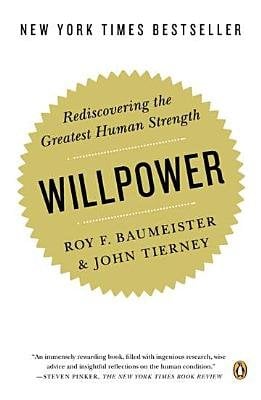
Ever wondered how to build stronger willpower? The book Willpower: Rediscovering the Greatest Human Strength by Roy Baumeister and John Tierney (available on Bookshop.org) explains that sometimes, the best way to get started is by limiting your choices.
book tip
Willpower
By Roy F. Baumeister and John Tierney
Ever wish you could stick to your goals, resist temptation, and stay focused?
Did you know? When you buy through Bookshop.org, you’re helping support independent bookstores.
Here’s how it works: Let’s say you have a big work project you’ve been avoiding for days, maybe even weeks. You know it needs to be done, but the task feels overwhelming, so you keep putting it off.
Enter the “Nothing Alternative.”
Now, you have two options:
- Work on your project, even if you don’t feel like it.
- Do absolutely nothing — and I mean nothing. No scrolling on your phone. No Netflix. No distractions whatsover. You literally just sit and exist.
It might sound tempting to just do nothing at first, but the key here is that “nothing” is actually uncomfortable.
When you sit with that discomfort long enough, you’ll realize that doing the task is way more appealing than sitting there, doing absolutely nothing.
And it works because you’re limiting your choices — you only have two: work or sit.
When you give yourself no other option but to face the task, the discomfort of inaction becomes enough to push you into action.
It’s a kind of mental punishment — and sometimes, that’s what it takes to stop procrastination in its tracks.
Final Thoughts
It’s easy to think that procrastination simply comes from laziness, but that’s not really the case. The true cause often lies in how we manage the negative emotions that come with tasks.
Whether it’s the fear of failure, anxiety, or just feeling overwhelmed, procrastination usually stems from the discomfort we feel when facing these emotions.
When you take the time to understand the root causes of your procrastination, you can start to address them with strategies that actually work.
Overcoming procrastination isn’t about waiting for the perfect moment or magically finding motivation. It’s about taking action, even when you don’t feel like it.
Whether it’s breaking tasks into smaller steps, organizing your space, or letting go of the need to be perfect, the key is to make things easier on yourself so you can take that first step.
Remember, no one is perfect. You don’t have to have everything figured out right away.
The most important thing is to get started, even when it feels uncomfortable.
So, pick one of these strategies, give it a try, and watch how taking small, consistent actions can lead to big results.
You’ve got this!
*This article is for informational and educational purposes only and should not be considered a substitute for professional mental health advice. If you are experiencing emotional distress or mental health challenges, please seek guidance from a licensed therapist or mental health professional.
Cunningham, M. R., & Baumeister, R. F. "How to Make Nothing Out of Something: Analyses of the Impact of Study Sampling and Statistical Interpretation in Misleading Meta-Analytic Conclusions." Frontiers in Psychology, vol. 7, 2016, p. 1639, doi:10.3389/fpsyg.2016.01639. Adapted from and used under the terms of the Creative Commons Attribution 4.0 International License.
Kelly, John D 4th. “Your Best Life: Perfectionism--The Bane of Happiness.” Clinical orthopaedics and related research vol. 473,10 (2015): 3108-11. doi:10.1007/s11999-015-4279-9.
Mohammadi Bytamar, Jahangir et al. “Emotion Regulation Difficulties and Academic Procrastination.” Frontiers in psychology vol. 11 524588. 4 Nov. 2020, doi:10.3389/fpsyg.2020.524588. Adapted from and used under the terms of the Creative Commons Attribution 4.0 International License.
Oscarsson, Martin et al. “A large-scale experiment on New Year's resolutions: Approach-oriented goals are more successful than avoidance-oriented goals.” PloS one vol. 15,12 e0234097. 9 Dec. 2020, doi:10.1371/journal.pone.0234097. Adapted from and used under the terms of the Creative Commons Attribution 4.0 International License.
Raypole, Crystal. “How to (Finally) Break the Cycle of Chronic Procrastination.” Healthline, medically reviewed by Alex Klein, PsyD, 19 July 2021, https://www.healthline.com/health/mental-health/chronic-procrastination#symptoms. Accessed 6 January 2024.
Sirois, Fuschia M. “Procrastination and Stress: A Conceptual Review of Why Context Matters.” International journal of environmental research and public health vol. 20,6 5031. 13 Mar. 2023, doi:10.3390/ijerph20065031. Adapted from and used under the terms of the Creative Commons Attribution 4.0 International License.

Linda is the co-founder of Courier Mind and holds a Diploma in Natural Health Nutrition & Diet. Her passions include photography, personal growth, and travel, where she draws inspiration from diverse cultures and their approaches to mindset and self-discovery. She is committed to helping others set meaningful goals, overcome self-doubt, and become the best version of themselves.