

How Highly Sensitive People Can Thrive in an Insensitive World
Being a highly sensitive person in an insensitive world can sometimes feel like walking around with the volume turned up.
You notice the noise. The moods. The tension in the room. The slightly strange tone in someone’s message. The person who says, “I’m fine,” when they’re very clearly not fine.
Then there are crowded places, packed schedules, difficult people, too much socializing, bad news, endless notifications—and the occasional person who tells you that you’re “too sensitive.”
If you’re highly sensitive yourself, you probably know exactly what that feels like.
I certainly do.
But I’ve come to realize that the answer isn’t to spend my life wishing the world were quieter, kinder, slower, and more considerate.
That would be lovely, of course, but it’s not a particularly reliable way to move through life. And I don’t think the answer is to become less sensitive, either.
Instead, I’m learning to become better equipped to handle the world as it is.
Here’s what that looks like for me.
This post contains affiliate links, which means we may earn a commission if you purchase through our links—at no extra cost to you. As an Amazon Associate we earn from qualifying purchases. We only recommend products we use or trust. Learn more about affiliate marketing or read our full disclosure.
What Is a Highly Sensitive Person?
A Highly Sensitive Person (HSP) is someone who tends to process their surroundings and experiences more deeply than others.
Found this helpful? Pin it for later so you can come back anytime.
The term was introduced by psychologist Dr. Elaine Aron, who began researching high sensitivity in the 1990s.
HSPs may notice subtle changes in their environment, feel more affected by noise or busy surroundings, and need more downtime after periods of stimulation.
They may also experience emotions deeply and pick up on things that others seem to brush right past. Being highly sensitive isn’t a disorder or something that needs to be fixed—it’s simply a trait that shapes how we experience and respond to the world around us.
And while sensitivity comes with plenty of positive qualities, it can also make everyday life feel a little more overwhelming at times.
If you want to understand high sensitivity on a deeper level, The Highly Sensitive Person by Dr. Elaine Aron (available on Bookshop.org) is a great place to start. It explores what it means to be highly sensitive and how to navigate life without seeing your sensitivity as something that needs to be fixed.
book tip

The Highly Sensitive Person
By Elaine N. Aron, Ph.D.
Do you often feel overwhelmed by sights, sounds, or emotions that others seem to handle easily?
Did you know? When you buy through Bookshop.org, you’re helping support independent bookstores.
Now, let’s look at how highly sensitive people can become better equipped to handle an insensitive world:
1. Protect Your Energy Before You Run Out of It
This has probably been my biggest lesson.
I used to think rest was something I needed once I was already exhausted. Now I try to pay attention much earlier.
For highly sensitive people, energy can disappear surprisingly quickly. A busy day at work followed by dinner with friends might sound perfectly reasonable on paper.
In reality, by 8 p.m. you may find yourself wondering why everyone is still talking. The trick is learning to recognize your limits before you hit them.
If I know I have a busy weekend coming up, I try not to fill every empty space around it. If I’ve had an intense day, I give myself some quiet time. If my social battery is flashing red, I listen to it.
You don’t need to avoid life. You just need to stop pretending your energy is unlimited.
2. Stop Expecting Everyone to Understand Your Sensitivity
This one can save you a lot of frustration. Some people simply aren’t going to understand why certain things affect you.
They may not understand why you need time alone after socializing, why constant noise makes you irritable, or why a harsh comment stays with you longer than it might stay with them.
That’s okay.
You don’t actually need everyone to understand.
The more I understand my own needs, the less important it becomes to convince other people that those needs are valid.
Instead of waiting for the world to say, “Of course! Please take all the quiet time you need,” learn to give yourself that permission.
RELATED POST: 9 Myths About Highly Sensitive People You May Still Believe
3. Learn to Say No Without Turning It Into a TED Talk
Highly sensitive people can be excellent over-explainers.
“No, I can’t come because I’ve had a really busy week, and tomorrow I have to get up early, and I hope you don’t think I’m being rude, and maybe I could come for an hour, although…”
You get the idea.
Sometimes a simple “I can’t make it this time, but thank you for inviting me” is enough.
Protecting your energy becomes much easier when you realize that a boundary doesn’t require a lengthy defense.
Not everyone will love your boundaries. That’s also okay.
RELATED POST: 9 Ways Highly Sensitive People Can Overcome Fear of Rejection
4. Create Small Escape Routes
You don’t need to redesign your entire life around being highly sensitive.
Sometimes small adjustments make a surprisingly big difference.
- Take five quiet minutes in your car before going into a busy place.
- Wear headphones when you need to concentrate.
- Go for a walk after a stressful conversation.
- Leave the party a little earlier.
- Put your phone on Do Not Disturb.
- Take a lunch break somewhere quieter.
- Give yourself half an hour after work before dealing with anything else.
Think of these as little pressure-release valves.
The goal isn’t to avoid stimulation altogether. That’s impossible. The goal is to stop letting it build up until everything feels like too much.
RELATED POST: 13 Things That Secretly Trigger Highly Sensitive People
5. Be Selective About What You Consume
Highly sensitive people don’t only absorb what’s happening around them. We can also be deeply affected by what we watch, read, and scroll through.
And modern life gives us an almost unlimited supply of things to react to.
Breaking news. Arguments. Other people’s problems. Disturbing videos. Social media drama. Outrage about something you didn’t even know existed ten minutes ago.
Found this helpful? Pin it for later so you can come back anytime.
You are allowed to filter what you let in. You don’t need to know everything happening everywhere at all times.
Unfollow accounts that consistently make you feel worse. Turn off unnecessary notifications. Don’t begin and end every day with the news.
If you’d like to become more intentional about where you place your attention, The Miracle of Mindfulness by Thich Nhat Hanh (available on Bookshop.org) is a gentle, practical introduction to bringing more awareness into everyday life. It’s especially helpful if you’re looking for ways to slow down and feel less pulled in every direction.
book tip

The Miracle of Mindfulness
By Thich Nhat Hanh
In the busyness of everyday life, it’s easy to forget the present moment. This book is a gentle reminder to slow down and truly live.
Did you know? When you buy through Bookshop.org, you’re helping support independent bookstores.
6. Don’t Treat Every Mood in the Room as Your Responsibility
One of the stranger parts of being highly sensitive is noticing when something feels “off” before anyone has actually said anything.
- Someone is quiet.
- Someone sounds irritated.
- Someone’s energy has changed.
And suddenly your brain starts investigating.
Did I do something?
Are they upset?
Should I ask?
Should I fix it?
Sometimes the best thing you can do is… nothing. People are allowed to be tired, grumpy, distracted, stressed, or quiet without you needing to solve it.
I’ve found it helpful to remind myself that noticing someone’s mood doesn’t make me responsible for changing it.
If you often find yourself absorbing other people’s emotions, The Empath’s Survival Guide by Judith Orloff (available on Bookshop.org) may be worth reading. It offers practical strategies for sensitive people who want to protect their energy without shutting themselves off from the people around them.
book tip
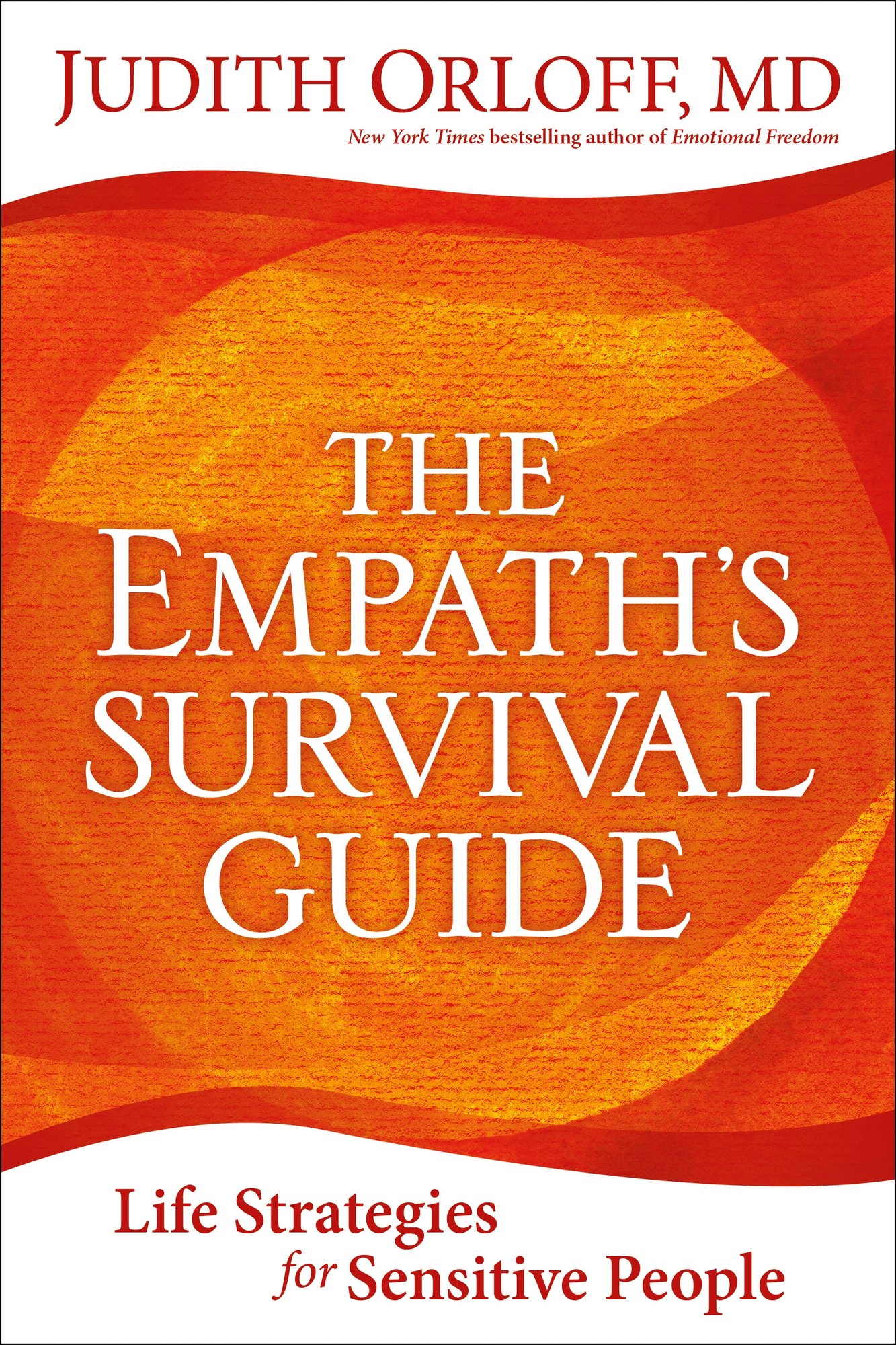
The Empath’s Survival Guide
By Judith Orloff, MD
Do you ever feel drained after being around certain people? Or overwhelmed by emotions that don’t even feel like your own?
Did you know? When you buy through Bookshop.org, you’re helping support independent bookstores.
RELATED POST: The 10 Biggest Relationship Challenges for Highly Sensitive People
7. Build More Recovery Into Your Life
We talk a lot about productivity and very little about recovery. But highly sensitive people often need both.
If you’re constantly moving from work to errands to social plans to family responsibilities to your phone to Netflix, and then wondering why you feel overstimulated, the answer may be surprisingly simple:
“There is no quiet anywhere.“
Recovery doesn’t have to mean an elaborate self-care routine.
- It can be making tea and sitting down for ten minutes.
- Taking a walk without your phone.
- Reading.
- Gardening.
- Cooking.
- Listening to music.
- Doing absolutely nothing for a while.
Find the things that bring your internal volume back down. Then make time for them regularly—not only when you’re already overwhelmed.
If writing helps you slow down and check in with yourself, the Recharge: A Day and Night Reflection Journal by Insight Editions (available on Bookshop.org) offers a simple way to make that pause part of your routine. It can be a useful companion if you’re trying to build more intentional recovery time into your days.
recharge your energy
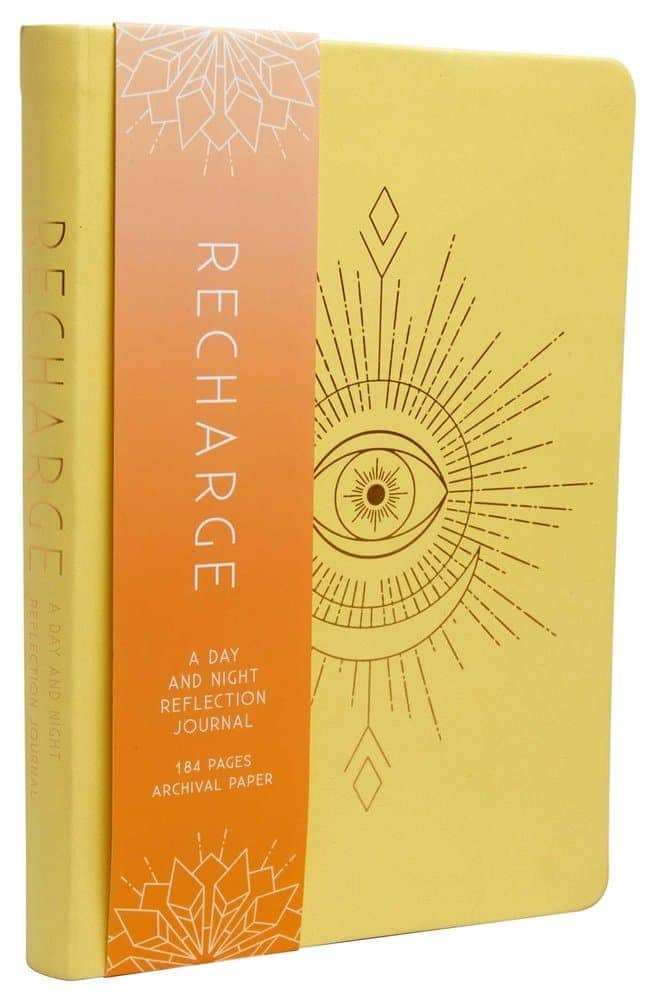
Recharge Journal by Insight Editions
Recharge your energy and avoid burnout with a simple daily routine that actually fits your life.
Did you know? By buying from Bookshop.org, you help support independent bookstores.
RELATED POST: 15 Best and Worst Jobs for Highly Sensitive People
8. Choose Your People Carefully
You can’t avoid every difficult person.
There will always be blunt colleagues, demanding relatives, noisy neighbors, impatient strangers, and people who think sensitivity is something to make fun of.
But you can be selective about the people you allow close to you. The right people won’t leave you constantly needing to recover from being around them.
They don’t have to be highly sensitive themselves. They simply need to respect that people experience the world differently.
And when you find people you can relax around rather than constantly monitoring yourself, appreciate them.
They make life much easier.
RELATED POST: Why Some Highly Sensitive People Choose Not to Have Children
9. Use Your Sensitivity Instead of Fighting It
Sensitivity has its inconvenient moments. But it also comes with some pretty useful qualities. Highly sensitive people often notice details others miss.
We tend to think deeply, pick up on subtle changes, care about how other people feel, appreciate beauty, and put a lot of thought into the things that matter to us.
Those qualities can be incredibly valuable.
The goal isn’t to remove your sensitivity so the difficult parts disappear. It’s to learn how to manage the difficult parts well enough that you can actually enjoy the good ones.
That shift changed a lot for me.
RELATED POST: The Benefits of Being a Highly Sensitive Person No One Talks About
10. Stop Trying to Toughen Yourself Up
For years, sensitive people have often been given the same advice:
- “Don’t take things so personally.”
- “Just ignore it.”
- “You need thicker skin.”
Sometimes there is useful advice hidden in there. We can learn not to dwell on every comment or absorb every person’s mood.
But becoming stronger doesn’t have to mean becoming harder.
For me, it has meant becoming more prepared.
- I know what drains me.
- I know I need quiet.
- I know I can’t say yes to everything.
- I know some people affect my energy more than others.
- I know too much stimulation eventually catches up with me.
And the better I understand those things, the easier life becomes.
If you’re trying to become stronger without becoming harder on yourself, Self-Compassion by Dr. Kristin Neff (available on Bookshop.org) is an excellent next read. It explores a kinder way of responding to your own struggles and imperfections rather than relying on constant self-criticism.
book tip

Self-Compassion
By Dr. Kristin Neff
Ever notice how harshly we can treat ourselves — and wonder if it’s holding us back?
Did you know? When you buy through Bookshop.org, you’re helping support independent bookstores.
Thriving Doesn’t Mean the World Has to Change
There will always be insensitive people.
There will always be loud places, stressful days, awkward conversations, crowded calendars, bad moods, unexpected changes, and people who don’t understand why something affects you.
We can’t arrange the entire world around our sensitivity. And actually, we don’t need to.
What we can do is become better at living in it.
- We can protect our energy without hiding away.
- We can set boundaries without feeling guilty about every single one.
- We can learn when to engage and when to let something go.
- We can stop carrying emotions that aren’t ours.
- We can give ourselves enough time to recover.
- And we can stop treating sensitivity as a flaw we’re supposed to fix.
Being highly sensitive doesn’t mean the world needs to become softer for you. It means learning what helps you stay grounded when the world isn’t soft at all.
And once you figure that out, sensitivity starts to feel a lot less like something you have to manage—and much more like something you simply know how to live with.
If you want to take what you’ve learned about your sensitivity and put it into practice, The Highly Sensitive Person’s Workbook by Dr. Elaine Aron (available on Amazon) is a useful next step. It’s designed to help highly sensitive people understand themselves better and find practical ways to work with their sensitivity in everyday life.
Final Thoughts
Being highly sensitive in a world that often feels loud, fast, and a little insensitive isn’t always easy. But thriving doesn’t mean we need to change the world—or change who we are.
It’s really about understanding ourselves better.
Protecting our energy, setting boundaries, making time to recover, choosing what deserves our attention, and learning not to absorb everything happening around us.
We may not be able to turn down the volume of the world, but we can get much better at deciding how much of it we let in.
And perhaps that’s the real goal: not becoming less sensitive, but becoming better equipped to enjoy all the good things that come with being sensitive, without feeling quite so overwhelmed by the rest.
*This article is for informational and educational purposes only and should not be considered a substitute for professional mental health advice. If you are experiencing emotional distress or mental health challenges, please seek guidance from a licensed therapist or mental health professional.
Acevedo, Bianca et al. “The functional highly sensitive brain: a review of the brain circuits underlying sensory processing sensitivity and seemingly related disorders.” Philosophical transactions of the Royal Society of London. Series B, Biological sciences vol. 373,1744 (2018): 20170161. doi:10.1098/rstb.2017.0161. Adapted and used under the terms of the Creative Commons Attribution 4.0 International License.
Brindle, Katrina, et al. “Is the Relationship between Sensory‐Processing Sensitivity and Negative Affect Mediated by Emotional Regulation?” Australian Journal of Psychology, vol. 67, no. 4, 2015, pp. 214–221. Wiley Online Library, https://doi.org/10.1111/ajpy.12084. Abstract only.
Forsberg, Klara et al. “Sensory processing patterns and their relationships to coping and occupational engagement in mental health service users.” Australian occupational therapy journal vol. 72,1 (2025): e13016. doi:10.1111/1440-1630.13016. Adapted and used under the terms of the Creative Commons Attribution 4.0 International License.
Greven, Corina U et al. “Sensory Processing Sensitivity in the context of Environmental Sensitivity: A critical review and development of research agenda.” Neuroscience and biobehavioral reviews vol. 98 (2019): 287-305. doi:10.1016/j.neubiorev.2019.01.009. Adapted and used under the terms of the Creative Commons Attribution 4.0 International License.
Liu, Yiran, and Feng Tian. “Emotion regulation goals and strategies among individuals with varying levels of sensory processing sensitivity: a latent profile analysis.” Frontiers in psychology vol. 15 1364648. 17 Apr. 2024, doi:10.3389/fpsyg.2024.1364648. Adapted and used under the terms of the Creative Commons Attribution 4.0 International License.

Malin, co-founder of Courier Mind, is passionate about personal growth and mindset. With a focus on self-discovery and goal-setting, she creates content that inspires confidence, balance, and growth for the mind and spirit.