


The Growth Mindset Background: What Really Shapes Our Ability to Learn?
Why do some people face a difficult challenge and think, “I could learn how to do that,” while others immediately think, “I’m just not good at this”?
For a long time, conversations about achievement focused heavily on intelligence, talent, and natural ability. Some people seemed to have “it,” while others simply didn’t.
But what if the way we think about ability also shapes how we approach learning?
That question is at the heart of the growth mindset background.
The term “growth mindset” has become incredibly popular in education, parenting, workplaces, and personal development.
You may have seen posters encouraging children to add “yet” to the end of “I can’t,” or heard advice about embracing mistakes and treating failure as an opportunity to grow.
But growth mindset didn’t start as a motivational slogan. Its roots go back to decades of psychological research exploring how people understand intelligence, achievement, failure, and their own ability to change.
So where did the idea come from? And what really shapes our ability to learn?
The story is more interesting—and more nuanced—than simply telling yourself to think positively.
This post contains affiliate links, which means we may earn a commission if you purchase through our links—at no extra cost to you. As an Amazon Associate we earn from qualifying purchases. We only recommend products we use or trust. Learn more about affiliate marketing or read our full disclosure.
Where Did the Growth Mindset Idea Come From?
Growth mindset is most closely associated with psychologist Carol Dweck, whose research explored how people’s beliefs about intelligence and ability could shape the way they respond to challenges.
Found this helpful? Pin it for later so you can come back anytime.
Before the phrases “fixed mindset” and “growth mindset” became widely known, researchers were already asking why people could react so differently when faced with difficulty.
Why might one student approach a challenging problem with curiosity while another quickly becomes discouraged?
Why could failure motivate one person to try a different strategy but make another want to stop trying altogether?
The difference wasn’t necessarily about ability alone. How people interpreted what was happening seemed to matter too.
If difficulty meant:
I’m not smart enough,
then continuing could feel pointless—or even threatening.
But if difficulty meant:
I haven’t learned how to do this yet,
then the same challenge could leave room to try again.
This distinction eventually became central to the fixed and growth mindset framework.
If you want to explore the ideas behind growth mindset in more depth, Mindset: The New Psychology of Success by Carol S. Dweck (available on Bookshop.org) is the natural place to start. It takes you closer to the research and thinking that helped bring the concept into the mainstream.
book tip

Mindset: The New Psychology of Success
By Carol S. Dweck
Do you believe your abilities are fixed, or that you can grow with effort?
Did you know? When you buy through Bookshop.org, you’re helping support independent bookstores.
RELATED POST: The Ultimate Guide to Growth Mindset: From “I Can’t” to “I Can Learn”
What Is a Fixed Mindset?
A fixed mindset describes the belief that qualities such as intelligence or ability are largely fixed.
From this perspective, you have a certain amount of ability, and your experiences can become opportunities to discover—or prove—how much of it you have.
Imagine a child who completes mathematics problems easily.
They may conclude:
I’m good at math.
That seems harmless enough. But what happens when the problems become much harder? If being “good at math” means getting answers quickly and easily, struggling can suddenly feel like a threat to that identity.
The child may start thinking:
Maybe I’m not actually good at math after all.
They may begin avoiding harder problems, lose confidence, or become reluctant to make mistakes.
The issue isn’t simply that the task is difficult. It’s what that difficulty means. A fixed mindset can turn struggle into evidence about who you are.
RELATED POST: Fixed Mindset vs Growth Mindset: Which One Is Running Your Life?
What Is a Growth Mindset?
A growth mindset takes a different view. Abilities can develop through learning, practice, effective strategies, instruction, feedback, and experience.
That doesn’t mean everyone starts in the same place. It doesn’t mean everyone will reach the same outcome. And it doesn’t mean effort guarantees success.
Instead, it challenges the assumption that your ability right now represents your permanent limit. Consider the same difficult mathematics problem.
A growth-oriented response might be:
I don’t understand this method yet. What am I missing?
The problem hasn’t become any easier. But the way you interpret it has changed. Instead of using difficulty to measure your identity, you can use it to identify what you still need to learn.
That difference helps explain why mindset became such an interesting area of research.
RELATED POST: 10 Inspiring Growth Mindset Examples—and What They Can Teach Us
What Did Early Research Reveal About Failure?
One of the fascinating parts of the growth mindset background is the attention researchers paid to how people respond when things don’t go well.
Success doesn’t always tell us much about mindset. If you’re doing something you already know how to do, fixed- and growth-oriented beliefs can both sit comfortably in the background.
Challenge is different. Imagine two students receiving the same disappointing result.
One thinks:
I’m obviously not intelligent enough.
The other thinks:
My approach didn’t work. What should I do differently?
The grade is identical. But the meaning each student gives it is different.
Researchers studying motivation became interested in these patterns because a person’s beliefs could influence what happened after the setback.
- Does the person keep engaging?
- Do they change strategies?
- Do they avoid the task?
- Do they seek help?
- Do they become defensive?
- Do they lose interest?
Growth mindset isn’t really about enjoying failure. It’s about whether failure becomes a final judgment or something you can potentially learn from.
RELATED POST: How to Cultivate a Growth Mindset When You’re Afraid to Fail
Why Did Praise Become Part of the Conversation?
Another important part of growth mindset research involved praise. Adults naturally want to encourage children.
So we might say:
- “You’re so smart!”
- “You’re a natural!”
- “You’re brilliant at this!”
These comments sound positive. But researchers became interested in whether different kinds of praise could shape how children interpret future challenges.
If a child is repeatedly praised for being smart, what happens when they struggle?
Difficulty can raise an uncomfortable question:
If I’m smart, shouldn’t this be easy?
The desire to protect the “smart” label may even make difficult tasks feel less appealing.
This helped fuel interest in praising aspects of the process instead—strategies, persistence, improvement, thoughtful problem-solving, and learning. But this idea can also be oversimplified.
Growth mindset doesn’t mean endlessly telling someone:
Great effort!
Effort isn’t automatically effective. Someone can work incredibly hard while using a strategy that simply isn’t helping.
The more useful focus is on the relationship between effort, strategies, feedback, and learning.
How Did Growth Mindset Become So Popular?
An idea that began in psychological research eventually spread far beyond academic journals.
Growth mindset became especially influential in education.
- Teachers began using the language of “yet.”
- Schools created lessons around learning from mistakes.
- Parents were encouraged to rethink how they praised their children.
- Coaches and employers adopted similar ideas about feedback, development, and resilience.
- The concept also found a natural home in personal development.
After all, the message is appealing:
Who you are today doesn’t necessarily determine what you can become tomorrow.
But with popularity came a problem. Complex research was sometimes reduced to simple slogans.
- “Abilities can develop” became: “You can do anything.”
- “Effective effort matters” became: “Just try harder.”
- “Mistakes can provide useful information” became: “Failure is always good.”
And growth mindset sometimes became almost indistinguishable from positive thinking. Those interpretations miss much of the original point.
Is Growth Mindset the Same as Positive Thinking?
No. Positive thinking is generally about maintaining optimistic or constructive thoughts. Growth mindset is specifically about beliefs concerning the development of ability.
You can have a growth mindset while feeling deeply frustrated.
Imagine saying:
This is much harder than I expected, and I’m disappointed with my progress. But I think I can improve if I figure out what isn’t working.
That’s not particularly cheerful. But it still leaves room for learning.
Similarly, someone could think positively while holding a fixed belief:
I’m naturally talented, so I’m sure I’ll do brilliantly.
The statement is optimistic, but it doesn’t necessarily reflect a belief that ability can develop.
Growth mindset isn’t about forcing yourself to feel good. It’s about how you understand the possibility of change.
If you’d like to dig deeper into why positive thinking alone isn’t always enough, Rethinking Positive Thinking by Gabriele Oettingen (available on Bookshop.org) is a fascinating next read. It explores motivation with a more nuanced look at what actually helps us move toward our goals.
book tip
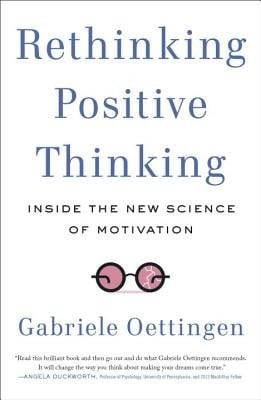
Rethinking Positive Thinking
By Gabriele Oettingen
Learn how psychological research challenges common myths about positive thinking and motivation.
Did you know? When you buy through Bookshop.org, you’re helping support independent bookstores.
RELATED POST: Growth Mindset Isn’t Just Positive Thinking: 7 Myths That Miss the Point
What Really Shapes Our Ability to Learn?
Mindset is only one piece of the puzzle.
Learning is shaped by many things.
- Prior knowledge matters.
- The quality of instruction matters.
- Practice matters.
- Feedback matters.
Motivation, attention, environment, opportunity, resources, and support can all play a part. Our brains also have the capacity to adapt through learning and experience—a phenomenon broadly known as neuroplasticity.
But even neuroplasticity shouldn’t be turned into a promise of unlimited potential. People don’t all start from the same circumstances, and believing in growth can’t remove every obstacle.
This is why the most useful version of growth mindset isn’t:
Anyone can become anything.
It’s closer to:
Our current abilities don’t always tell us how much we may be able to develop.
That leaves room for possibility without pretending that limitations and differences between people don’t exist.
If you’re curious about how practice and learning can shape what we’re capable of, Peak by Anders Ericsson and Robert Pool (available on Bookshop.org) is well worth exploring. It takes a closer look at how skills develop and what effective practice actually involves.
book tip

Peak
By Anders Ericsson and Robert Pool
This book challenges the idea of natural talent and shows how focused, structured practice can help anyone improve and perform at a higher level.
Did you know? When you buy through Bookshop.org, you’re helping support independent bookstores.
RELATED POST: Growth Mindset and the Brain: What Does Science Actually Say?
Why Does the Way We Interpret Struggle Matter?
Think about the last time you found something genuinely difficult. What did you tell yourself?
Perhaps:
I’m not good at this.
Maybe:
Everyone else understands this faster than me.
Or:
If I were talented, this wouldn’t be so difficult.
Those thoughts can shape what you do next.
If struggle feels like proof that you lack ability, avoiding the task can seem like the natural response. Why keep exposing yourself to evidence that you’re not good enough?
But if struggle means you’ve encountered something you haven’t mastered yet, other options begin to appear.
- You can practice.
- Ask questions.
- Get feedback.
- Find another explanation.
- Change your strategy.
- Take a break and return.
The belief itself doesn’t magically produce improvement. What it can do is change which responses feel possible.
And those responses can create more opportunities to learn.
If you’re interested in what it looks like to keep learning through challenge, The Art of Learning by Josh Waitzkin (available on Bookshop.org) is a natural follow-up. It explores the learning process itself, including how we can approach difficulty, performance, and improvement.
book tip

The Art of Learning
By Josh Waitzkin
This book explores how true mastery is built across any discipline. It reveals how performance, mindset, and learning strategies combine to create excellence.
Did you know? When you buy through Bookshop.org, you’re helping support independent bookstores.
RELATED POST: How to Develop a Growth Mindset When Giving Up Feels Easier
Do We All Have a Fixed or Growth Mindset?
Another common misconception is that people fall permanently into one of two categories. You either “have” a growth mindset or you don’t.
Real life isn’t that tidy.
You might strongly believe that you can improve professionally while also thinking:
I’m just not creative.
You may embrace mistakes when learning to cook but become defensive when receiving feedback at work.
You might believe physical skills can improve while assuming you’re “just bad” at mathematics.
Mindset can vary across different situations and areas of life. Even people who generally believe in development can slip into fixed thinking when something threatens an identity they care about.
So rather than asking:
Am I a growth mindset person?
a more revealing question might be:
Where do I tend to believe change isn’t possible?
The answer might surprise you.
RELATED POST: 12 Simple Growth Mindset Tips to Change the Way You Think
What Can the Growth Mindset Background Teach Us Today?
Perhaps the most useful lesson from the history of growth mindset isn’t that we should all become endlessly optimistic.
It’s that our beliefs about ability can shape how we respond when learning becomes uncomfortable.
- When you make a mistake, what do you think it means?
- When someone gives you feedback, do you hear useful information or judgment?
- When someone else succeeds, does their achievement inspire you or make you feel there’s less room for your own?
- When something doesn’t come naturally, do you become curious—or decide it’s simply not for you?
These moments can reveal far more about mindset than any inspirational quote. And they give you an opportunity to respond differently.
Final Thoughts
The growth mindset background tells a much richer story than “believe in yourself and you’ll succeed.”
The idea grew from psychological research into how people understand ability, respond to challenges, interpret failure, and approach learning.
Its most useful message isn’t that talent doesn’t matter or that everyone can achieve anything.
It’s that current performance isn’t always a reliable measure of future possibility.
- You may struggle with something today and understand it months from now.
- You may need a different strategy.
- You may need better instruction.
- You may need feedback, practice, support, or simply more time.
- And sometimes, you may discover that a particular path isn’t right for you.
Growth mindset doesn’t guarantee the destination. It changes how you think about the journey.
So perhaps the next time you catch yourself saying:
I’m just not good at this,
you don’t need to replace it with:
I’m amazing at this.
Try something more believable:
This is where I am right now. What could help me learn?
That question captures something important about the history and meaning of growth mindset.
Learning isn’t simply about proving what you already know. Sometimes it’s about discovering what you might still become capable of doing.
*This article is for informational and educational purposes only and should not be considered a substitute for professional mental health advice. If you are experiencing emotional distress or mental health challenges, please seek guidance from a licensed therapist or mental health professional.

Malin, co-founder of Courier Mind, is passionate about personal growth and mindset. With a focus on self-discovery and goal-setting, she creates content that inspires confidence, balance, and growth for the mind and spirit.