


How to Develop a Growth Mindset When Giving Up Feels Easier
There comes a point in almost every difficult journey when giving up starts to feel surprisingly reasonable.
You’ve tried. You’ve put in the effort. Maybe you’ve made progress, only to find yourself slipping backward again. What once felt exciting now feels frustrating, exhausting, or painfully slow.
And a little voice starts asking:
Why am I still doing this?
Whether you’re learning a new skill, working toward a career goal, building healthier habits, studying, creating something, or trying to make a meaningful change in your life, motivation rarely stays constant.
Sometimes, you simply don’t feel like continuing.
That doesn’t necessarily mean you’re on the wrong path. It may simply mean you’ve reached the point where growth stops feeling exciting and starts requiring patience.
This is where learning how to develop a growth mindset can make a real difference.
Not because a growth mindset magically makes hard things easy, but because it can help you respond differently when progress is slower than you hoped.
So, what can you do when giving up feels easier than continuing?
This post contains affiliate links, which means we may earn a commission if you purchase through our links—at no extra cost to you. As an Amazon Associate we earn from qualifying purchases. We only recommend products we use or trust. Learn more about affiliate marketing or read our full disclosure.
Why Do We Want to Give Up When Things Get Hard?
At the beginning of something new, motivation often comes easily.
You imagine the outcome. You picture yourself becoming fitter, more confident, more skilled, more successful, or finally finishing the thing you’ve wanted to accomplish.
Found this helpful? Pin it for later so you can come back anytime.

Then reality sets in.
- Progress isn’t linear.
- You make mistakes.
- You hit a plateau.
- Someone else seems to improve faster.
- The strategy that worked at first stops working.
And suddenly, the distance between where you are and where you want to be feels enormous.
This is often when fixed-mindset thoughts start to creep in:
- “Maybe I’m not good enough.”
- “If I were talented, this wouldn’t be so hard.”
- “I should be further ahead by now.”
- “Maybe this just isn’t for me.”
A growth mindset doesn’t ask you to ignore these thoughts.
Instead, it gives you another question to ask: “What is this difficult moment trying to teach me?”
- Sometimes the answer is to keep going.
- Sometimes it’s to change your approach.
- And occasionally, it may even be to choose a different direction.
A growth mindset isn’t about refusing to quit. It’s about learning from the situation before you decide what comes next.
RELATED POST: Fixed Mindset vs Growth Mindset: Which One Is Running Your Life?
So, how do you develop a growth mindset when part of you would rather give up?
Here are some practical ways to do that:
1. Separate “This Is Hard” From “I Can’t Do This”
When frustration builds, it’s easy to turn temporary experiences into permanent conclusions.
- “This is difficult” becomes: “I’m not capable of doing this.”
- “I haven’t made progress lately” becomes: “I’ll never get better.”
- “One strategy failed” becomes: “Nothing works for me.”
But those statements aren’t the same. Something can be difficult and learnable.
You can be stuck and still find another way forward. You can fail at one attempt without knowing what will happen on the next.
Try describing the situation without judging yourself in the process.
Instead of: “I’m terrible at this.”
say: “I’m struggling with this particular part.”
Instead of: “I’m getting nowhere.”
say: “My progress has slowed recently.”
Specific problems are much easier to work with than permanent labels you place on yourself.
If you want to understand the thinking behind a growth mindset more deeply, Mindset by Carol S. Dweck (available on Bookshop.org) is a great place to start. It explores how the way you think about ability can influence how you respond to challenges, mistakes, and learning.
book tip

Mindset: The New Psychology of Success
By Carol S. Dweck
Do you believe your abilities are fixed, or that you can grow with effort?
Did you know? When you buy through Bookshop.org, you’re helping support independent bookstores.
RELATED POST: The Ultimate Guide to Growth Mindset: From “I Can’t” to “I Can Learn”
2. Remember Why You Started—but Don’t Stop There
When you’re tempted to quit, people often tell you to “remember your why.” That can help.
- Why did you begin?
- What did you hope would change?
- Why did this matter enough for you to start?
Take a moment to reconnect with that reason.
But there’s another question worth asking:
Does it still matter to me now?
Goals can change. Priorities can shift. You may discover that something you wanted six months ago no longer fits the person you’re becoming.
A growth mindset isn’t about chaining yourself to every goal you’ve ever set.
It’s about being honest enough to distinguish between:
I want to quit because this is uncomfortable
and:
I want to stop because this no longer matters to me.
Those are two very different situations.
RELATED POST: The Growth Mindset Background: What Really Shapes Our Ability to Learn?
3. Stop Measuring Progress Only by the Finish Line
Imagine climbing a mountain while staring only at the summit. No matter how far you climb, the top still looks far away.
That’s what can happen when you measure progress only by the final outcome.
- If your goal is to write a book, the unfinished manuscript can make every writing session feel inadequate.
- If you’re learning a language, anything short of fluency can feel like failure.
- If you’re building a business, you may overlook your first customers because you’re focused on where you want to be years from now.
Found this helpful? Pin it for later so you can come back anytime.

Look backward occasionally.
- What can you do now that you couldn’t do when you started?
- What feels easier?
- What have you learned?
- Which mistakes no longer trip you up?
- What would the version of you who started this journey think about where you are today?
Progress is often much easier to see in the rearview mirror.
If you tend to focus more on how far you still have to go than how far you’ve already come, The Gap and The Gain by Dan Sullivan and Benjamin Hardy (available on Bookshop.org) is worth reading. It explores why measuring yourself against your past progress can change the way you see where you are today.
book tip
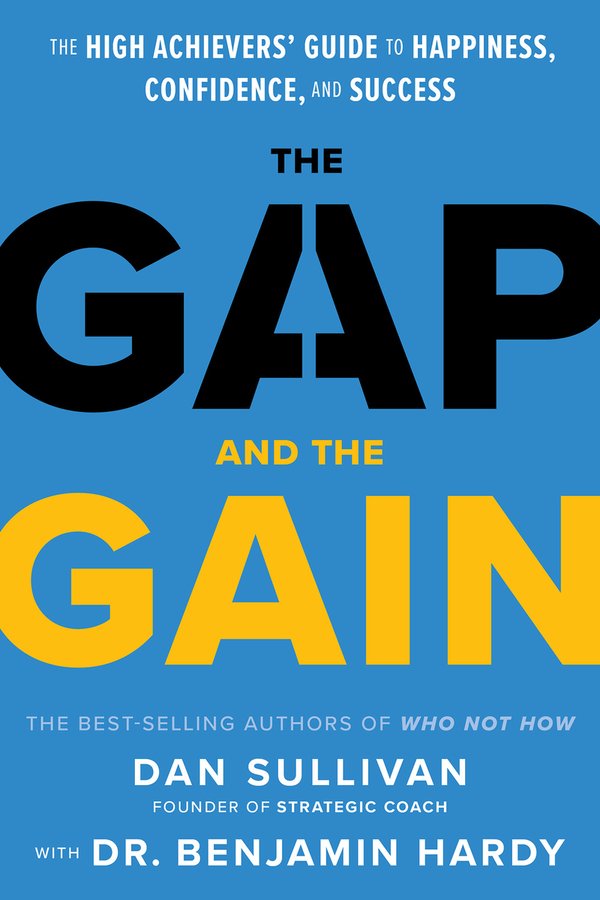
The Gap and The Gain
By Dan Sullivan and Dr. Benjamin Hardy
Discover how changing the way you measure progress can lead to greater motivation, confidence, and gratitude.
Did you know? When you buy through Bookshop.org, you’re helping support independent bookstores.
RELATED POST: 10 Inspiring Growth Mindset Examples—and What They Can Teach Us
4. Make the Next Step Almost Ridiculously Small
When giving up feels appealing, the problem may not be the goal itself. The next step may simply feel too big.
Instead of asking:
How am I going to finish all of this?
ask: “What is the smallest useful thing I can do next?”
- Write 100 words.
- Practice for ten minutes.
- Read two pages.
- Send one application.
- Make one phone call.
- Walk around the block.
- Open the document.
- Review one lesson.
A tiny action can feel almost meaningless compared with your bigger goal. But small actions have an important advantage:
They keep you in motion.
You don’t always need a dramatic breakthrough. Sometimes, you simply need a step small enough that your resistance doesn’t have time to argue with it.
If taking smaller steps is something you struggle with, Tiny Habits by BJ Fogg (available on Bookshop.org) is a helpful next read. It shows how making a behavior easier and starting small can help you create changes that are more likely to stick.
book tip
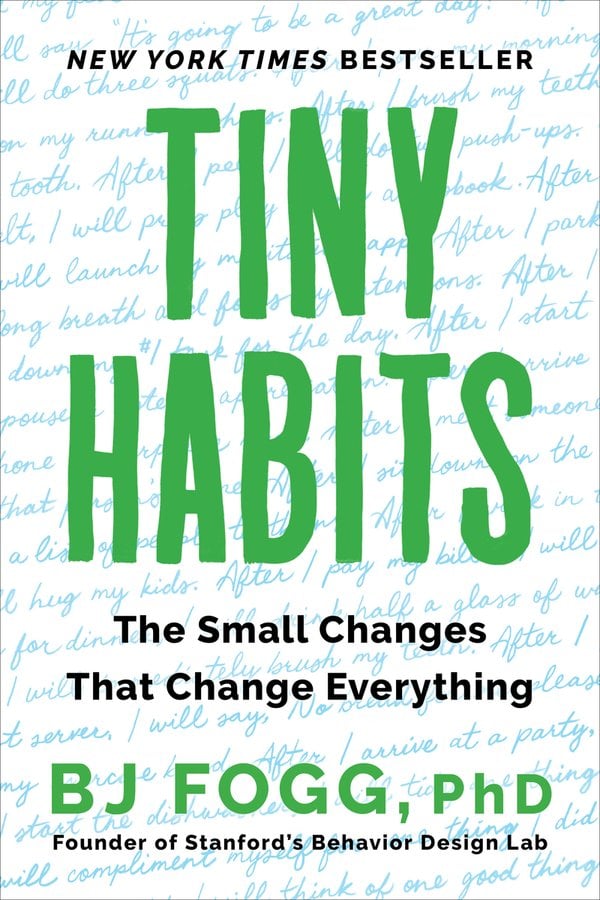
Tiny Habits
By BJ Fogg, PhD
Discover how tiny, consistent habits can lead to meaningful and lasting changes over time.
Did you know? When you buy through Bookshop.org, you’re helping support independent bookstores.
5. Ask Whether You Need More Effort or a Better Strategy
Persistence is valuable, but repeating an ineffective approach isn’t necessarily growth.
Imagine studying the same way for months without improving. Should you simply study longer?
Maybe.
But perhaps you need a different learning method. Maybe you need feedback, tutoring, better resources, more focused practice, or a completely different strategy.
When progress stalls, ask:
Is the problem my effort—or my approach?
This is one of the most important differences between a growth mindset and blind persistence. Growth-minded people aren’t simply willing to work. They’re willing to adapt.
If you’ve been pushing against the same wall for months, the solution may not be to push harder. Instead it may be to look for a door.
If you want to learn more about improving through smarter practice rather than simply putting in more hours, Peak by Anders Ericsson and Robert Pool (available on Bookshop.org) is a fascinating read. It explores what effective practice looks like and why the way you practice can matter as much as the effort you put in.
book tip

Peak
By Anders Ericsson and Robert Pool
This book challenges the idea of natural talent and shows how focused, structured practice can help anyone improve and perform at a higher level.
Did you know? When you buy through Bookshop.org, you’re helping support independent bookstores.
RELATED POST: Growth Mindset Isn’t Just Positive Thinking: 7 Myths That Miss the Point
6. Stop Expecting Motivation to Do All the Work
Motivation feels wonderful when it shows up. The problem is that it doesn’t always appear when you need it. If you only work toward your goals when you feel inspired, staying consistent becomes difficult.
Instead, create small systems that make it easier to take action.
- Set a regular time.
- Prepare what you need beforehand.
- Reduce distractions.
- Track your practice.
- Make the first step obvious.
- Decide what “good enough” looks like on low-energy days.
For example, perhaps your normal goal is to exercise for 45 minutes. On a difficult day, your minimum might be ten minutes.
Your minimum doesn’t have to produce spectacular results. Its job is simply to keep your connection with the habit alive.
Sometimes, maintaining momentum matters more than maximizing performance.
If you want more practical ways to stay consistent when motivation comes and goes, Atomic Habits by James Clear (available on Bookshop.org) is a useful read. It focuses on building systems and making small changes that can make good habits easier to maintain over time.
book tip

Atomic Habits
By James Clear
Want to change your life without relying on willpower?
Did you know? When you buy through Bookshop.org, you’re helping support independent bookstores.
7. Don’t Mistake a Plateau for a Lack of Progress
One of the hardest parts of learning is going through a period when you’re putting in the work but don’t feel like you’re improving.
This is the plateau.
Early progress can be exciting because the improvement is easy to see. Then progress becomes more subtle. You may be deepening your understanding, strengthening habits, correcting small mistakes, or building foundations that aren’t immediately visible.
This is often the point where people conclude:
It’s not working.
Before you quit, ask yourself whether you’re truly stuck or whether your progress has simply become harder to see.
- Could you measure something different?
- Could you ask someone experienced to evaluate your improvement?
- Could you compare your work today with something you produced three months ago?
You may be further ahead than you realize.
RELATED POST: Growth Mindset and the Brain: What Does Science Actually Say?
8. Stop Comparing Your Middle to Someone Else’s Highlight Reel
Nothing makes slow progress feel slower than watching someone else succeed.
- You see their promotion.
- Their finished painting.
- Their transformation.
- Their thriving business.
- Their confident performance.
What you usually don’t see are the hundreds of ordinary days that came before the result. Comparison can easily convince you that your struggle means you’re doing something wrong.
Instead of asking:
Why am I not where they are?
try asking:
Is there something I can learn from how they got there?
Someone else’s progress doesn’t have to become evidence against your own. It can become useful information.
9. Give Yourself Permission to Rest
Sometimes, “I want to give up” actually means:
I’m exhausted.
Those aren’t the same thing. When you’re tired, everything can feel more permanent and hopeless than it really is. Taking a break isn’t automatically a failure of discipline.
Rest can be part of a sustainable approach to growth.
- Step away.
- Sleep.
- Do something unrelated.
Give yourself a day without thinking about the problem. Then come back and see whether you still feel the same way. You don’t need to make permanent decisions when you’re temporarily exhausted.
Resting and quitting are two different choices.
If you find it difficult to give yourself some grace when you’re struggling, Self-Compassion by Kristin Neff (available on Bookshop.org) is worth exploring. It looks at how you can respond to difficult moments with greater kindness rather than adding self-criticism to an already hard experience.
book tip

Self-Compassion
By Dr. Kristin Neff
Ever notice how harshly we can treat ourselves — and wonder if it’s holding us back?
Did you know? When you buy through Bookshop.org, you’re helping support independent bookstores.
RELATED POST: How to Cultivate a Growth Mindset When You’re Afraid to Fail
10. Decide Whether You’re Quitting or Changing Direction
There are times when stopping is the right decision.
A growth mindset doesn’t require you to finish everything you’ve ever started.
- Perhaps you’ve learned enough to realize that the goal isn’t right for you.
- Maybe your circumstances have changed.
- Perhaps continuing would cost more than the outcome is worth.
- Or maybe another path now matters more.
Ask yourself:
If this suddenly became easier tomorrow, would I still want it?
It’s a useful question to sit with. If the answer is yes, the difficulty itself may be what’s pushing you toward quitting. If the answer is no, perhaps the goal itself needs reconsidering.
Changing direction after learning more about yourself isn’t necessarily a failure. Sometimes, growth means knowing what to release.
11. Keep Evidence That You Can Do Hard Things
When you’re discouraged, your brain can become strangely forgetful. You remember every mistake while overlooking everything you’ve already overcome.
So keep some evidence.
- Write down challenges you’ve handled.
- Skills you’ve learned.
- Situations that once scared you.
- Problems you’ve solved.
- Moments when you wanted to quit but found another way forward.
You don’t need these reminders to prove that you’ll succeed at everything. They’re simply there to remind you that your current frustration isn’t the first difficult thing you’ve faced.
You’ve learned before. You’ve adapted before. You’ve been a beginner before.
That matters.
12. Stop Asking “Can I Do This?” and Ask Better Questions
When giving up feels easiest, the question running through your head is often:
Can I actually do this?
The problem is that you may not know the answer yet.
So instead, ask questions you can answer:
- What am I learning?
- Where exactly am I stuck?
- What could I try differently?
- Who could help me?
- What’s one step I can take today?
- Do I need persistence, a new strategy, rest, or a different goal?
These questions shift your attention away from proving your ability and toward improving your approach. And that’s what a growth mindset looks like in practice.
RELATED POST: 12 Simple Growth Mindset Tips to Change the Way You Think
Final Thoughts
Learning how to develop a growth mindset when giving up feels easier isn’t about forcing yourself to stay endlessly positive.
It isn’t about pretending you’re not tired. And it certainly isn’t about sticking with every goal forever simply because you started it.
It’s about becoming curious before you decide to stop.
- Maybe you need more practice.
- Maybe you need a smaller next step.
- Maybe your strategy needs to change.
- Maybe you need help.
- Maybe you simply need to rest.
And yes, sometimes you may discover that it’s time to choose a different direction. The important thing is not to confuse difficulty with inability.
There will be moments when progress feels invisible and motivation disappears. There will be days when someone else’s success makes you question your own. There will be setbacks that make the finish line feel impossibly far away.
In those moments, you don’t have to know whether you’ll ultimately succeed.
You only need to ask:
What can I learn from where I am right now?
Then take the next useful step. It doesn’t have to be impressive. It doesn’t have to be big.
It just has to move you from “I can’t do this” toward:
I haven’t figured it out yet.
Sometimes, that small shift is enough to keep growth possible.
*This article is for informational and educational purposes only and should not be considered a substitute for professional mental health advice. If you are experiencing emotional distress or mental health challenges, please seek guidance from a licensed therapist or mental health professional.
Svensen, Elin. “Growth Mindset and Academic Achievement: A Multilevel Analysis of Upper Secondary School Completion.” Scandinavian Journal of Educational Research, vol. 70, no. 1, 2026, pp. 1–17. Taylor & Francis, https://doi.org/10.1080/00313831.2025.2459399. Adapted and used under the terms of the Creative Commons Attribution 4.0 International License.
Tao, Weidong et al. “The Influence of Growth Mindset on the Mental Health and Life Events of College Students.” Frontiers in psychology vol. 13 821206. 14 Apr. 2022, doi:10.3389/fpsyg.2022.821206. Adapted and used under the terms of the Creative Commons Attribution 4.0 International License.
Yu, Tao et al. “Growth Mindset and Job Crafting: A Trait Activation Perspective with Job Autonomy as Moderator.” Behavioral sciences (Basel, Switzerland) vol. 14,12 1221. 18 Dec. 2024, doi:10.3390/bs14121221. Adapted and used under the terms of the Creative Commons Attribution 4.0 International License.

Linda is the co-founder of Courier Mind and holds a Diploma in Natural Health Nutrition & Diet. Her passions include photography, personal growth, and travel, where she draws inspiration from diverse cultures and their approaches to mindset and self-discovery. She is committed to helping others set meaningful goals, overcome self-doubt, and become the best version of themselves.