
What Makes Certain Hobbies So Relaxing?

This post contains affiliate links, which means we may earn a commission if you purchase through our links—at no extra cost to you. As an Amazon Associate we earn from qualifying purchases. We only recommend products we use or trust. Learn more about affiliate marketing or read our full disclosure.
Have you ever noticed how an hour spent gardening can feel completely different from an hour spent answering emails?
Or how a simple activity like painting, knitting, or baking can make the stress of the day feel a little less overwhelming?
It raises an interesting question. Why do certain hobbies leave you feeling refreshed, while others can feel mentally exhausting?
The answer has less to do with the hobby itself and more to do with how your mind responds to the activity.
Some hobbies help you focus. Others give you space to be creative. Some connect you with nature, while others bring a satisfying sense of accomplishment. Many relaxing hobbies combine several of these elements at once.
And perhaps that’s why hobbies have become so valuable in a world filled with constant notifications, packed schedules, and endless distractions.
If you’ve ever wondered why some activities can feel almost therapeutic, here’s a closer look at what makes certain hobbies so relaxing.
Relaxing Hobbies Encourage You to Live in the Present
One of the biggest reasons hobbies feel so relaxing is that they bring your attention back to the present moment.
Modern life rarely gives us the chance to focus on just one thing.
- We’re answering messages while watching television.
- We’re checking our phones while eating dinner.
- We’re thinking about tomorrow while trying to finish today’s tasks.
Relaxing hobbies interrupt that cycle.
Activities like painting, pottery, knitting, gardening, and photography naturally encourage you to concentrate.
When you’re mixing colors on a canvas or carefully planting flowers, your attention shifts to the task in front of you. You stop replaying yesterday’s problems. You stop worrying about tomorrow’s responsibilities.
Instead, you become absorbed in what you’re doing right now. Many people describe this feeling as being “completely absorbed” in an activity.
And that shift in attention can feel incredibly calming.
If you’d like to try a simple hobby that encourages this kind of focus, 100 Amazing Patterns by Jade Summer (available on Amazon) is a great place to start. The easy, relaxing coloring pages give you something creative to concentrate on without requiring any previous experience.
RELATED POST: 15 Reasons Why Having a Hobby Is Important
They Create a Healthy Escape From Stress
Stress isn’t always something we can eliminate. Work deadlines, family responsibilities, financial concerns, and everyday obligations are simply part of life.
However, hobbies can give you a temporary escape from that stress. And that’s an important distinction.
A healthy escape isn’t about ignoring your responsibilities. It’s about giving your mind a chance to recover.
Think about how different you might feel after spending an hour reading a good book compared with spending that same hour worrying.
The external situation may not have changed. But your mental state probably has. Relaxing hobbies create a little space between you and whatever is causing you stress.
Sometimes that small break is enough to help you return to your responsibilities with more energy and a clearer perspective.
Many Relaxing Hobbies Involve Repetitive Movements
There’s a reason so many people find knitting, crocheting, embroidery, and gardening calming.
These hobbies often involve repetitive movements.
The steady rhythm of moving knitting needles, pulling weeds, shaping clay, or arranging puzzle pieces can feel soothing.
Repetition gives your brain something predictable to focus on. And that sense of predictability can be comforting.
Have you ever noticed how people absentmindedly doodle during meetings or tap their fingers while thinking?
Simple, repeated movements seem to satisfy something fundamental in the human brain. That’s one reason many traditional hobbies remain popular despite all the entertainment options available today.
If you’d like to see whether embroidery has the same calming effect for you, the Bradove Classic Embroidery Learning Kit (available on Amazon) is an easy way to give it a try. It’s designed for beginners, so you can focus on learning the repetitive stitches rather than figuring everything out from scratch.
RELATED POST: Why Are Traditional Creative Hobbies Making a Comeback?
Creativity Reduces Mental Fatigue
Many relaxing hobbies are creative hobbies too.
- Painting.
- Writing.
- Photography.
- Woodworking.
- Baking.
These activities give you the chance to create something that didn’t exist before. And that process can be surprisingly energizing.
Creative hobbies feel different from many everyday responsibilities because there isn’t always a right or wrong answer.
- There’s room for experimentation.
- There’s room for mistakes.
- There’s room for curiosity.
That freedom can feel incredibly refreshing.
You don’t have to create a masterpiece to enjoy the benefits. Often, the simple act of creating something is enough.
If painting sounds like the kind of creative break you’d enjoy, the koseibal Acrylic Paint Set (available on Amazon) is a beginner-friendly way to get started. You don’t need to create anything complicated—just experimenting with colors can be part of the enjoyment.
RELATED POST: Bored at Home? These 25 Hobbies Might Be Exactly What You Need
Relaxing Hobbies Get You Actively Involved
Many people spend their free time consuming content.
- Television.
- Social media.
- Streaming platforms.
- Videos.
- Podcasts.
There’s nothing inherently wrong with entertainment. But passive consumption doesn’t always leave you feeling refreshed.
Have you ever spent two hours scrolling through social media only to realize you didn’t feel any better afterward?
You’re certainly not alone.
Relaxing hobbies encourage you to actively participate instead.
- You’re building
- You’re learning
- You’re creating
- You’re experimenting
That shift from passive entertainment to active engagement can dramatically change how you experience your free time.
Instead of watching someone else do something interesting, you’re becoming part of the experience yourself.
RELATED POST: The Best Hobbies to Learn if You Love Trying New Things
Outdoor Hobbies Help You Reconnect With Nature
Some of the most relaxing hobbies take place outdoors.
- Gardening
- Birdwatching
- Fishing
- Hiking
- Nature photography
- Walking
There’s something uniquely calming about spending time outside.
Fresh air, natural light, open spaces, and changing scenery create an environment that feels very different from offices, screens, and indoor routines.
Many people instinctively feel more relaxed after spending time in nature. Perhaps you’ve noticed it yourself.
A short walk through a park can completely change your mood.A few hours in the garden can make stress feel less overwhelming. Nature-based hobbies encourage you to slow down and reconnect with your surroundings.
And sometimes that’s exactly what you need.
If nature photography appeals to you, the Fujifilm Instax Mini 12 (available on Amazon) offers a fun, simple way to start capturing what catches your eye outdoors. The instant prints can make the hobby feel especially rewarding because you have something tangible to keep from your walks and outings.
Relaxing Hobbies Create a Sense of Accomplishment
One of the most satisfying parts of having a hobby is seeing your progress.
- You finish a puzzle.
- You complete a painting.
- You bake a loaf of bread.
- You learn a new song.
Small achievements can create a powerful sense of satisfaction.
And unlike many long-term goals, hobbies often provide rewards you can enjoy right away.
- You can see your progress.
- You can touch it.
- You can share it.
That sense of accomplishment creates positive feelings and can encourage you to keep going. Even simple hobbies can give you a meaningful sense of achievement.
RELATED POST: 14 Simple Hobbies for Women That Boost Happiness
They Give Your Brain a Different Type of Work
Not all mental activity is exhausting. Many of us spend our days solving work-related problems, making decisions, responding to messages, and managing responsibilities.
Those tasks require a particular kind of concentration.
Relaxing hobbies give your brain a different kind of challenge.
- A crossword puzzle exercises language skills.
- Learning a musical instrument improves coordination and memory.
- Painting encourages visual thinking.
- Cooking combines creativity with practical problem-solving.
That change alone can feel refreshing. Your brain is still active, but it’s working in a completely different context.
Relaxing Hobbies Come With Less Pressure
This may be one of the most important reasons hobbies feel so enjoyable.
Most hobbies don’t come with deadlines.
- There are no quarterly reports.
- No performance evaluations.
- No grades.
- No pressure to achieve perfection.
Of course, some people turn hobbies into side businesses or competitive activities. But a hobby doesn’t have to become productive to be valuable.
You can paint simply because you enjoy painting. You can garden simply because you enjoy gardening.
That kind of freedom is incredibly important.
Many of us spend so much of our lives measuring progress and evaluating results that we forget what it feels like to do something simply because we enjoy it.
RELATED POST: The Best Hobbies for Beginners Who Want to Try Something New
They Create Routines That Support Well-Being
Relaxation doesn’t always happen by accident. Sometimes it becomes part of a routine.
Perhaps you read for 30 minutes before bed. Maybe you spend Sunday mornings working in the garden. Perhaps Friday evenings are reserved for pottery classes.
Those rituals create consistency. And consistency often brings comfort.
Many people underestimate the emotional benefits of having something enjoyable built into their weekly schedule.
Knowing you have time set aside for a favorite activity can make stressful periods feel more manageable.
If you’d like to make journaling part of your own relaxing routine, the VIVID SCRIBBLES A5 Bullet Dotted Journal (available on Amazon) gives you plenty of freedom to write, plan, doodle, or simply put your thoughts on paper. You can use it however feels most relaxing to you rather than following a strict format.
Relaxing Hobbies Can Strengthen Social Connections
Not every relaxing hobby has to be a solitary activity.
- Book clubs.
- Community gardens.
- Photography groups.
- Cooking classes.
- Dance lessons.
Shared hobbies create natural opportunities to connect with other people. And strong social connections are closely linked to emotional well-being.
Interestingly, many people begin a hobby because they want to learn a new skill and continue because of the community they find along the way.
Having people who share your interests can make an activity feel even more rewarding.
How to Find a Relaxing Hobby That Works for You
Not every hobby feels relaxing to every person.
Someone who loves painting might find woodworking frustrating. Someone who enjoys hiking might become bored sitting quietly with a puzzle.
That’s completely normal. The key is to experiment.
Start by asking yourself a few questions:
- Do you prefer indoor or outdoor activities?
- Do you enjoy working with your hands?
- Would you rather create something or learn a new skill?
- Do you want a hobby that involves other people?
- Are you looking for physical activity or quiet relaxation?
Then try one activity that sounds interesting.
And give yourself permission to be a beginner. One of the biggest mistakes people make is assuming they’ll instantly know whether a hobby is right for them.
Sometimes hobbies take a little time. You may need a few sessions before an activity starts to feel natural.
Some of the Most Relaxing Hobbies to Explore
If you’re not sure where to begin, consider trying one of these popular options:
- Painting
- Gardening
- Knitting
- Crocheting
- Origami
- Reading
- Baking
- Photography
- Journaling
- Walking
- Birdwatching
- Pottery
- Yoga
- Puzzle solving
- Learning a musical instrument
You don’t need expensive equipment or years of experience. You only need some curiosity and a willingness to try something new.
If origami catches your interest, Easy Origami by John Montroll (available on Bookshop.org) is a beginner-friendly place to start, with more than 30 simple projects to work through at your own pace. All you really need is some paper and a little curiosity to give it a try.
Start Folding Today
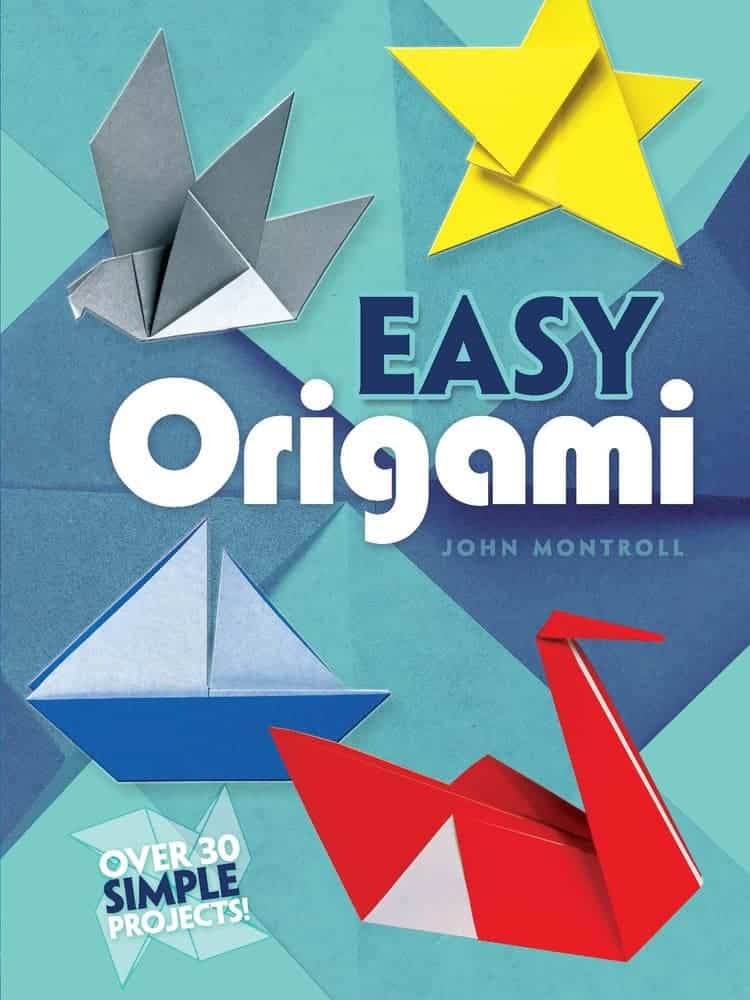
Easy Origami
By John Montroll
Learn the art of origami with easy step-by-step projects designed for beginners.
Did you know? When you buy through Bookshop.org, you’re helping support independent bookstores.
RELATED POST: 101 Hobbies to Add to Your Bucket List
Final Thoughts
What makes certain hobbies so relaxing? It’s rarely just one thing.
Relaxing hobbies encourage mindfulness, creativity, movement, learning, accomplishment, and connection.
- They help you slow down.
- They shift your attention away from stress.
- They remind you that your free time doesn’t have to be filled with distractions.
Sometimes the most relaxing activity isn’t the one you’d expect.
- It might be painting a watercolor landscape.
- It might be planting herbs in your kitchen.
- It might be taking an evening walk while listening to your favorite music.
The only way to discover which hobby relaxes you the most is to start exploring. Your perfect hobby might be waiting for you right now.
*This article is for informational and educational purposes only and should not be considered a substitute for professional mental health advice. If you are experiencing emotional distress or mental health challenges, please seek guidance from a licensed therapist or mental health professional.
Chang, Yu-Hung et al. “Reading activity prevents long-term decline in cognitive function in older people: evidence from a 14-year longitudinal study.” International psychogeriatrics vol. 33,1 (2021): 63-74. doi:10.1017/S1041610220000812. Adapted and used under the terms of the Creative Commons Attribution 4.0 International License.
Fissler, Patrick et al. “Jigsaw Puzzling Taps Multiple Cognitive Abilities and Is a Potential Protective Factor for Cognitive Aging.” Frontiers in aging neuroscience vol. 10 299. 1 Oct. 2018, doi:10.3389/fnagi.2018.00299. Adapted and used under the terms of the Creative Commons Attribution 4.0 International License.
Flett, J. A. M., et al. “Sharpen Your Pencils: Preliminary Evidence That Adult Coloring Reduces Depressive Symptoms and Anxiety.” Creativity Research Journal, vol. 29, no. 4, 2017, pp. 409–416. https://doi.org/10.1080/10400419.2017.1376505. Abstract only.
Fujii, Kazuya et al. “Association of employment and hobbies with depressive symptoms: A cross-sectional study.” Journal of psychiatric research vol. 183 (2025): 100-105. doi:10.1016/j.jpsychires.2025.02.001. Adapted and used under the terms of the Creative Commons Attribution 4.0 International License.
Gothe, Neha P et al. “Yoga Effects on Brain Health: A Systematic Review of the Current Literature.” Brain plasticity (Amsterdam, Netherlands) vol. 5,1 105-122. 26 Dec. 2019, doi:10.3233/BPL-190084. Abstract only.
Hingst, R., et al. “Occupational Therapy and Cooking: A Scoping Review and Future Directions.” Scandinavian Journal of Occupational Therapy, vol. 31, no. 1, 2024, https://doi.org/10.1080/11038128.2023.2267081. Adapted and used under Public Domain Mark 1.0 Universal (PDM 1.0), Deed.
Huang, Weicheng et al. “Positive association between hobby participation and objective and subjective cognition among adults aged 50 years and over in 24 countries.” Social science & medicine (1982) vol. 383 (2025): 118487. doi:10.1016/j.socscimed.2025.118487. Abstract only.
Jamil, Aneeque et al. “Meditation and Its Mental and Physical Health Benefits in 2023.” Cureus vol. 15,6 e40650. 19 Jun. 2023, doi:10.7759/cureus.40650. Adapted and used under the terms of the Creative Commons Attribution 4.0 International License.
Lin, P., P. G. Morris, and J. M. Williams. “Perceived Benefits and Barriers of Gardening Amongst Urban Older Adults: A Chinese Perspective.” Journal of Community & Applied Social Psychology, vol. 35, no. 1, 2025, article e70052, pp. 1–15, https://doi.org/10.1002/casp.70052. Adapted and used under the terms of the Creative Commons Attribution 4.0 International License.
Mueller, Shirley M, M.D. "Mental Health and Collecting." Psychology Today, June 4, 2025, https://www.psychologytoday.com/us/blog/the-mind-of-a-collector/202506/mental-health-and-collecting. Accessed 1 January 2026.
Rebecchini, Lavinia. “Music, mental health, and immunity.” Brain, behavior, & immunity - health vol. 18 100374. 21 Oct. 2021, doi:10.1016/j.bbih.2021.100374. Adapted and used under the terms of the Creative Commons Attribution 4.0 International License.
Rogier, Guyonne, et al. “Emotion Regulation Process in Creative Context: The Role of Dysregulation of Both Positive and Negative Emotions.” Thinking Skills and Creativity, vol. 57, 2025, article 101838, https://doi.org/10.1016/j.tsc.2025.101838. Adapted and used under the terms of the Creative Commons Attribution 4.0 International License.
Ungvari, Zoltan et al. “The multifaceted benefits of walking for healthy aging: from Blue Zones to molecular mechanisms.” GeroScience vol. 45,6 (2023): 3211-3239. doi:10.1007/s11357-023-00873-8. Adapted and used under the terms of the Creative Commons Attribution 4.0 International License.
Wang, Jianing, and Kaizhi Tang. “The association of calligraphy activities with peace of mind, stress self-management, and perceived health status in older adults.” Frontiers in psychology vol. 15 1455720. 9 Sep. 2024, doi:10.3389/fpsyg.2024.1455720. Adapted and used under the terms of the Creative Commons Attribution 4.0 International License.
Wolpert, Stuart. “Putting Feelings Into Words Produces Therapeutic Effects in the Brain; UCLA Neuroimaging Study Supports Ancient Buddhist Teachings.” UCLA Magazine, 21 June 2007, https://newsroom.ucla.edu/stories/putting-feelings-into-words-produces-therapeutic-effects-in-the-brain-ucla-neuroimaging-study-supports-ancient-buddhist-teachings. Accessed 1 January 2026.

Malin, co-founder of Courier Mind, is passionate about personal growth and mindset. With a focus on self-discovery and goal-setting, she creates content that inspires confidence, balance, and growth for the mind and spirit.