


Set Goals Like a Pro: The Ultimate Step-by-Step Guide
Most people set goals with the best intentions. They start the year feeling motivated, buy a planner, create a vision board, or write down a list of big dreams they hope to achieve.
Then life gets busy, motivation begins to fade, and within a few weeks, those goals are forgotten.
The problem usually isn’t laziness or a lack of ambition. More often, it comes down to how those goals were set in the first place.
Learning how to set goals the right way can completely change the direction of your life.
Whether you want to improve your health, grow your career, save more money, build self-confidence, or simply feel more in control of your life, this guide will walk you through the exact process to set goals that actually work.
This post contains affiliate links, which means we may earn a commission if you purchase through our links—at no extra cost to you. As an Amazon Associate we earn from qualifying purchases. We only recommend products we use or trust. Learn more about affiliate marketing or read our full disclosure.
Why Goal Setting Matters
Without goals, it’s surprisingly easy to go through life simply reacting to whatever comes your way.
Found this helpful? Pin it for later so you can come back anytime.
You may stay busy and even have productive days, but it can still feel like you’re not making real progress.
Goals give you a sense of direction. They act as a guide, helping you decide where your time and energy are best spent—and what doesn’t deserve your attention.
They help you:
- Prioritize what matters most
- Stay motivated when progress feels slow or challenges come up
- Track your progress in a clear and honest way
- Make more intentional and confident decisions
- Build confidence through small, consistent wins
- Turn ideas and good intentions into meaningful action
At the end of the day, simply having goals isn’t enough. Learning how to set goals in a way that supports the life you want to create is what truly makes the difference.
RELATED POST: The Hidden Mistake People Make When Setting Goals
Step 1: Decide What You Actually Want
One of the biggest mistakes people make is setting goals based on what they think they should want instead of what truly matters to them.
Before you start creating goals, take a moment to pause and reflect on what you genuinely want.
Ask yourself:
- What would genuinely improve my life right now?
- What feels like it’s missing?
- What am I truly excited about?
- What drains my energy on a daily basis?
- What kind of person do I want to become?
Your goals should reflect your values, priorities, and the life you genuinely want to live—not someone else’s expectations or outside pressure.
For example:
- Don’t set a fitness goal simply because social media makes it seem necessary.
- Don’t pursue a career goal that you secretly dislike or feel stuck in.
- Don’t overwhelm yourself with unrealistic productivity goals that only lead to burnout.
When you set goals around what truly matters to you, they stop feeling like random tasks and become something much more meaningful.
The strongest goals are the ones that matter enough to keep you moving forward, even when your motivation fades.
If you enjoy reflecting through writing before setting goals, the Manifesting: A Day and Night Reflection Journal available on Bookshop.org is a great choice.
Its guided prompts encourage deeper self-reflection, making it easier to clarify what you truly want before creating your goals.
Set Your Intentions

Manifesting Journal by Insight Editions
Turn your goals into clear intentions—and start taking action toward them every day.
Did you know? By buying from Bookshop.org, you help support independent bookstores.
Step 2: Choose the Areas of Life You Want to Improve
People who know how to set goals effectively don’t focus on just one part of life—they take a step back, look at the bigger picture, and work toward a greater sense of balance.
Start by thinking about the key areas of your life, such as:
- Health
- Career
- Finances
- Relationships
- Mental health
- Personal growth
- Spirituality
- Fun and hobbies
- Family
- Productivity
- Lifestyle
- Education
You don’t need goals in every area all at once. In fact, trying to improve everything at the same time often leads to overwhelm instead of progress.
A better approach is to focus on just two to four areas that would have the biggest positive impact on your life right now.
For example:
- Improving your health
- Paying off debt
- Building confidence
- Strengthening relationships
When you narrow your focus this way, everything becomes much easier to manage.
Instead of spreading yourself in every direction, you create a clear path forward—and that’s what turns goals into real progress instead of ongoing stress.
RELATED POST: The 7 Areas of Life You Should Be Setting Goals In (Most People Ignore #3)
Step 3: Create a Clear Vision Before Setting Specific Goals
Before diving into detailed plans and long to-do lists, it helps to step back and think about the bigger picture.
Try imagining your ideal life one to three years from now.
Ask yourself:
- What does your daily routine look like?
- How do you feel most days?
- What habits are part of your life?
- What kind of work are you doing?
- Who are you spending time with?
- What problems have you already solved or moved beyond?
This kind of vision works like a compass. It may not show you every step right away, but it points you in the direction you genuinely want to go.
From there, you can work backward from that vision, breaking it down into smaller, practical goals that move you closer to it.
For example, if your vision includes financial freedom, your goals might include:
- Building an emergency fund
- Increasing your income
- Learning how to invest
- Reducing unnecessary spending
When your goals are connected to a clear vision, they stop feeling random or unrelated.
Instead, they begin working together to help you build the future you actually want, rather than pulling you in different directions.
If you like turning big ideas into a practical plan, the Full Focus Linen Planner by Michael Hyatt, available on Amazon, is an excellent choice. It’s designed to help you connect your long-term vision with clear daily and weekly actions.
Step 4: Use SMART Goals
One of the most common reasons people struggle to achieve their goals is that those goals are simply too vague.
- “I want to get healthier.”
- “I want to save money.”
- “I want to be more productive.”
These are great intentions, but they don’t provide enough clarity to take focused action. That’s where the SMART framework can help.
SMART stands for:
- Specific
- Measurable
- Achievable
- Relevant
- Time-bound
Each element helps turn a broad intention into a goal that is clear, structured, and actionable.
Research suggests that when people turn general intentions into specific plans, they’re more likely to follow through and experience a stronger sense of progress.
For example:
- Instead of saying: “I want to exercise more.”
- You could say: “I will work out for 30 minutes, four times a week, for the next three months.”
Now the goal is clear. You know exactly what you’ll do, how often you’ll do it, and the timeframe you’re working toward.
SMART goals give you a clear target to aim for. They reduce uncertainty, remove guesswork, and make it much easier to measure meaningful progress over time.
If you’d like to dive deeper into effective goal setting, Goals! by Brian Tracy (available on Bookshop.org) is a classic resource. It expands on many of the principles in this guide and offers practical strategies for turning goals into achievable results.
book tip
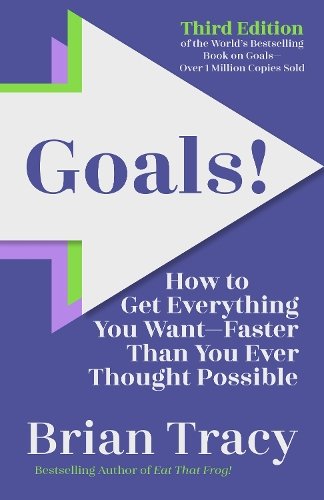
Goals!
By Brian Tracy
A practical guide to setting clear goals and turning them into consistent action.
Did you know? When you buy through Bookshop.org, you’re helping support independent bookstores.
RELATED POST: Why SMART Goals Work Better Than Regular Goals
Step 5: Break Big Goals Into Small Goals
Big goals are exciting—but they can also feel overwhelming when you look at them as one enormous task.
That’s why people who know how to set goals effectively don’t stop at the big picture. They break larger goals into smaller, manageable actions that are much easier to start and stick with.
For example:
Big goal: Write a book.
Small goals:
- Brainstorm chapter ideas
- Write 500 words each day
- Outline the introduction
- Edit one chapter every week
Suddenly, what once felt intimidating becomes a series of clear, achievable steps.
This is where momentum starts to make a real difference. In fact, momentum is often far more reliable than motivation.
One common mistake is waiting until you feel inspired before taking action.
But successful people don’t depend on inspiration every day. Instead, they build simple systems that keep them moving forward—even when motivation is low.
When you consistently accomplish small goals, you build something incredibly valuable:
Confidence
Over time, that confidence turns into consistency, and consistency is what leads to lasting results.
If breaking big goals into manageable tasks helps you stay focused, the Taja To Do List Notepad, available on Amazon, is a simple but effective tool. It’s perfect for keeping your next small steps visible and easy to tackle each day.
RELATED POST: How to Break Down Goals So They Actually Feel Easy to Start
Step 6: Focus on Systems, Not Just Outcomes
One mistake many people make when they set goals is putting too much emphasis on the outcome while overlooking the process that gets them there.
It’s natural to focus on the end result, but meaningful progress usually comes from what you do consistently—not just what you hope to achieve.
For example:
Outcome goal: Lose 20 pounds.
System:
- Meal prep every Sunday
- Walk 8,000 steps each day
- Strength train 3 times per week
Or:
Outcome goal: Save $10,000.
System:
- Automate savings
- Reduce impulse purchases
- Track expenses weekly
The difference is important. Outcomes are what you want to achieve, but systems are what produce those results day after day.
If your attention stays fixed only on the end goal, it’s easy to feel discouraged when progress seems slow or inconsistent. Meaningful results rarely happen overnight.
But when you focus on your daily systems and habits, progress becomes much more steady and sustainable.
Instead of chasing motivation or constantly checking for results, you begin building the habits and routines that naturally lead to success over time.
If you’re ready to build habits that support your goals, Atomic Habits by James Clear (available on Bookshop.org) is one of the best books on the subject. It explains how small daily systems can lead to remarkable long-term results.
book tip

Atomic Habits
By James Clear
Want to change your life without relying on willpower?
Did you know? When you buy through Bookshop.org, you’re helping support independent bookstores.
Step 7: Set Realistic Goals You Can Actually Stick To
Ambition is valuable. Unrealistic expectations usually aren’t.
One of the biggest reasons people give up after just a few weeks is that they try to change everything at once. It feels exciting at first, but it’s rarely sustainable.
For example:
- Waking up at 5 a.m. immediately after years of following a different routine
- Working out every day without gradually building up to it
- Eliminating all sugar overnight
- Reading 100 books in a year without making room in your schedule
- Starting a business while already feeling overwhelmed
Your goals should challenge you, but they should still feel achievable within the reality of your life—not an idealized version of it.
Realistic goals are powerful because they help you stay consistent. And consistency is what creates meaningful results over time.
In most cases, consistency beats intensity.
It’s better to work out three times a week for an entire year than to work out seven times a week for 10 days and then quit.
Long-term success isn’t built through short bursts of extreme effort. It comes from steady, sustainable progress that you can maintain over time.
Step 8: Write Your Goals Down
Writing your goals down may seem simple, but it can make a powerful difference. It can increase the likelihood that you’ll follow through on them.
There are many ways to do this:
- In a journal
- On your phone
- In a planner
- On sticky notes
- In a digital tracker
The method matters far less than making your goals visible.
Your goals shouldn’t exist only in your head. When they do, it’s easy to forget them, put them off, or lose sight of them during a busy week.
Writing them down makes them feel more tangible and real.
And when you review them regularly, they stop being something you decided once and become something you actively work toward.
If you prefer putting pen to paper, the VICTORIA’S JOURNALS Leatherette Vintage Journal, available on Amazon, is a beautiful place to write down your goals, ideas, and progress. Having a dedicated journal can make your goals feel more tangible and easier to revisit.
Step 9: Create an Action Plan
Goals without an action plan often remain exactly that—goals written on paper or wishes you keep thinking about.
To turn your goals into reality, break them down into clear, practical actions.
A helpful way to do that is by asking:
- What exactly will I do?
- When will I do it?
- How often will I do it?
- What tools or resources do I need?
- What obstacles might come up?
For example:
Goal: Improve fitness.
Action plan:
- Go to the gym on Mondays, Wednesdays, and Fridays
- Prepare gym clothes the night before
- Follow a beginner strength program
- Track workouts in an app
When your plan is this clear, you remove much of the uncertainty. You no longer have to decide what to do in the moment because you’ve already made that decision.
That’s the real value of an action plan. Clear actions create clarity, and clarity makes it much easier to avoid procrastination and overthinking.
Step 10: Prepare for Obstacles
Many people set goals assuming everything will go smoothly once they get started.
In reality, that’s rarely how things work.
Life gets busy. Motivation comes and goes. Unexpected challenges arise. And even when things are going well, there will still be days that feel harder than expected.
That’s why people who are good at setting goals don’t just prepare for success—they prepare for setbacks too.
Research on goal-setting strategies suggests that anticipating obstacles ahead of time can improve your chances of achieving your goals.
When you think through potential setbacks before they happen, you’re more likely to stay consistent and less likely to give up when challenges arise.
Ask yourself:
- What could get in my way?
- What habits tend to throw me off track?
- What will I do when motivation disappears?
Thinking about these questions in advance helps you see challenges as part of the process rather than signs of failure.
For example:
- If you miss one workout, don’t let it become two or three.
- If you overspend one week, get back on track the following week.
- If you lose momentum, adjust the goal instead of giving up on it completely.
Flexibility is more important than perfection.
Progress isn’t about doing everything perfectly. It’s about continuing to move forward, even when things don’t go exactly as planned.
If you often find yourself struggling with self-doubt or self-sabotage, The Mountain Is You by Brianna Wiest (available on Amazon) is well worth reading. It offers thoughtful insights into overcoming the internal obstacles that can stand between you and your goals.
RELATED POST: Why Your Brain Creates Obstacles to Your Own Goals
Step 11: Track Your Progress
Tracking your progress is what keeps your goals from fading into the background.
When you can clearly see your progress—even the small wins—your motivation often grows naturally. It’s much easier to stay consistent when you have visible proof that your efforts are making a difference.
You can track things like:
- Habits
- Workouts
- Savings
- Reading
- Productivity
- Mood
- Milestones
Even the smallest signs of progress matter more than you might think.
A simple checklist, habit tracker, or progress log can be incredibly motivating because it gives you tangible evidence that you’re showing up and improving over time.
Tracking also serves another important purpose—it helps you see what’s working and what isn’t.
Instead of relying on guesswork, you begin to spot patterns in your habits and results, making it easier to adjust your approach and continue improving.
If you enjoy tracking your habits and measuring your progress, the Legend Planner PRO Premium, available on Amazon, is a great option. It combines goal planning, habit tracking, and weekly reviews in one place, making it easier to stay consistent over time.
Step 12: Review and Adjust Your Goals Regularly
Your goals aren’t meant to stay exactly the same forever. As your life changes, your goals should evolve with it.
Something that felt important six months ago may no longer reflect your current priorities, and that’s completely normal.
That’s why it’s helpful to review your goals on a regular basis:
- Weekly
- Monthly
- Quarterly
During these reviews, ask yourself:
- Is this goal still important to me?
- Am I genuinely making progress?
- What’s working well right now?
- What should I change or improve?
These questions help keep your goals aligned with your current reality instead of your past intentions.
People who are successful at setting goals don’t force themselves to stick with goals that no longer fit.
Instead, they adapt. They refine, adjust, and sometimes replace goals when needed so their efforts continue moving them toward something that still feels meaningful and worthwhile.
Common Goal-Setting Mistakes to Avoid
Now that you know how to set goals effectively, it’s just as important to understand the common mistakes that can slow your progress.
1. Setting Too Many Goals
When you try to pursue too many goals at once, your focus becomes divided.
A handful of meaningful goals is usually far more effective than a long list of unrelated goals competing for your attention and energy.
2. Relying Only on Motivation
Motivation naturally rises and falls—it’s not something you can depend on every day.
That’s why systems, habits, and routines are so important. They help you keep moving forward even when motivation is low.
3. Making Goals Too Vague
Clear goals are what turn good intentions into action.
When your goals are vague, it’s easy to hesitate or procrastinate because you’re never quite sure what to do next.
4. Comparing Yourself to Others
It’s easy to focus on what other people are doing, but your goals should be based on your own life, values, and priorities—not someone else’s journey.
What works for someone else may not be the right fit for your situation.
5. Quitting After Small Failures
Missing a day or making one mistake doesn’t erase the progress you’ve already made.
What matters most is how you respond afterward. Long-term consistency will always matter more than short-term perfection.
Examples of Good Goals
Here are a few examples of balanced and realistic goals across different areas of life:
Health goals:
- Walk daily
- Drink more water
- Improve your sleep schedule
- Strength train weekly
Financial goals:
- Build an emergency fund
- Pay off debt
- Track your monthly spending
Personal growth goals:
- Read regularly
- Journal daily
- Learn a new skill
Relationship goals:
- Spend quality time with family
- Communicate more intentionally
- Reconnect with friends
Productivity goals:
- Reduce screen time
- Improve focus
- Create a morning routine
The best goals are the ones that improve your overall quality of life—not just your productivity or output.
The Secret to Long-Term Success
People who achieve meaningful goals aren’t always the smartest, the most talented, or even the most motivated.
More often, they’re simply the most consistent.
- They keep showing up, even when they don’t feel like it.
- They make adjustments when something isn’t working instead of giving up altogether.
- And they focus on progress rather than perfection.
That’s the real difference.
Success is rarely the result of one big breakthrough. More often, it comes from small actions repeated consistently over time—especially on the days when it would be easier not to take action.
Small improvements rarely feel dramatic in the moment. You may not even notice them from one day to the next. But over weeks, months, and years, those small efforts add up to meaningful change.
That’s the real secret to long-term success: not intensity, but consistency that lasts.
Final Thoughts
Learning how to set goals like a pro isn’t about creating the perfect plan from the start.
It’s about building a simple system that helps you keep moving forward consistently, even when life gets busy or your motivation starts to fade.
The most effective goals are usually:
- Clear
- Meaningful
- Realistic
- Actionable
- Flexible
- Connected to your values
You don’t need to completely transform your life overnight to make real progress.
Instead, start small. Stay consistent. Make adjustments as you learn what works best for you. And keep your focus on progress rather than perfection.
Because ultimately, the goals you choose to commit to today don’t just shape your daily routine—they can gradually shape the direction of your future.
*This article is for informational and educational purposes only and should not be considered a substitute for professional mental health advice. If you are experiencing emotional distress or mental health challenges, please seek guidance from a licensed therapist or mental health professional.
Wang, Guoxia et al. “A Meta-Analysis of the Effects of Mental Contrasting With Implementation Intentions on Goal Attainment.” Frontiers in psychology vol. 12 565202. 12 May. 2021, doi:10.3389/fpsyg.2021.565202. Adapted and used under the terms of the Creative Commons Attribution 4.0 International License.

Linda is the co-founder of Courier Mind and holds a Diploma in Natural Health Nutrition & Diet. Her passions include photography, personal growth, and travel, where she draws inspiration from diverse cultures and their approaches to mindset and self-discovery. She is committed to helping others set meaningful goals, overcome self-doubt, and become the best version of themselves.