
The Hidden Mistake People Make When Setting Goals

This post contains affiliate links, which means we may earn a commission if you purchase through our links—at no extra cost to you. As an Amazon Associate we earn from qualifying purchases. We only recommend products we use or trust. Learn more about affiliate marketing or read our full disclosure.
Most people believe they fall short of their goals because they don’t have enough discipline. They tell themselves they need more motivation, better habits, or stronger willpower.
But in many cases, that’s not the real problem.
The hidden mistake people make when setting goals happens long before motivation begins to fade or discipline is put to the test. It starts at the very moment the goal is created.
Many goals don’t fail because they’re too difficult. They fail because they’re built for a version of ourselves that doesn’t exist yet.
We often set goals based on the person we hope to become instead of the person we are today.
And it’s that gap that often causes the entire process to fall apart.
Why Most Goal Failures Have Nothing to Do With Effort
When people talk about setting goals, the conversation usually revolves around effort.
- Work harder.
- Stay consistent.
- Push through challenges.
- Don’t give up.

While those ideas have value, they often overlook a more important question:
Is the goal actually realistic for the person trying to achieve it?
Many people set goals in moments of excitement and inspiration. They picture a future version of themselves—the disciplined version, the productive version, the healthy version.
Then they build their goals around that future identity. But the reality is that they still have to live as the person they are today.
If the gap between those two versions is too wide, the goal becomes difficult to sustain, no matter how motivated they feel at the beginning.
RELATED POST: Why Positive Thinking Isn’t Enough to Reach Your Goals
The Identity Gap
One of the most common mistakes people make when setting goals is overlooking what can be called the identity gap.
The identity gap is the distance between who you are today and who you want to become.
For example, imagine someone who rarely exercises deciding they’ll suddenly start going to the gym six days a week.
On paper, that goal sounds impressive. But it assumes the person already has the habits, routines, energy, and mindset needed to support that kind of behavior.
In reality, they may be starting from a completely different place.
The goal itself isn’t necessarily the problem. The challenge is that it demands an immediate transformation instead of allowing room for gradual growth.
Many goals fail because they expect a finished identity instead of helping create one.
If you’d like to learn more about how small habits shape your identity over time, Atomic Habits by James Clear (available on Bookshop.org) is one of the best books on the subject. It explains why lasting change comes from becoming the kind of person who naturally does the things you want to achieve, rather than relying on motivation alone.
book tip

Atomic Habits
By James Clear
Want to change your life without relying on willpower?
Did you know? When you buy through Bookshop.org, you’re helping support independent bookstores.
The Problem With Setting Goals for Your Future Self
When setting goals, it’s natural to picture your ideal future.
- You imagine yourself exercising regularly.
- You imagine yourself getting up early.
- You imagine yourself staying focused and productive every day.
The challenge is that your future self doesn’t have to deal with today’s obstacles.
- Your future self isn’t exhausted after a stressful week.
- Your future self doesn’t have to manage unexpected interruptions.
- Your future self isn’t struggling with the habits you’re trying to change.
But your current self is.
When goals are built around an idealized version of your future self, they often become disconnected from reality.
And when reality inevitably shows up, the goal can begin to feel impossible.
RELATED POST: Why Your Brain Creates Obstacles to Your Own Goals
Why Motivation Isn’t the Answer
When people struggle with their goals, their first instinct is often to look for more motivation.
- They watch motivational videos.
- They read stories about successful people.
- They tell themselves they’ll work harder this time.
For a while, this can help. Motivation creates excitement. It builds momentum. It makes change feel possible.
But motivation is temporary by nature.
- Everyone has days when their energy is low.
- Everyone experiences setbacks.
- Everyone faces distractions and unexpected challenges.
If a goal only works when motivation is high, it’s probably not a sustainable goal.
That’s why relying on motivation alone rarely solves the problem. It can help you get started, but it can’t carry you all the way to the finish line.
RELATED POST: How to Set Goals Without Burning Out After 2 Weeks
The Bridge Most People Skip
Think of personal growth as building a bridge. On one side is your current identity. On the other side is the person you want to become.
Most people try to leap straight from one side to the other. They attempt a complete transformation overnight.
But lasting change usually happens by building a bridge one step at a time.
This middle stage is often overlooked.
- It’s the transition stage.
- It’s where new habits are practiced.
- It’s where routines become stronger.
- It’s where consistency develops over time.
Without this stage, goals often collapse under their own weight.
If you’re looking for a practical way to turn big goals into manageable daily actions, the Full Focus Planner by Michael Hyatt (available on Amazon) is an excellent choice. It helps you break long-term goals into realistic weekly and daily steps, making steady progress much easier to maintain.
RELATED POST: How to Break Down Goals So They Actually Feel Easy to Start
A Simple Example of the Identity Gap
Imagine someone who currently works out only once every few weeks. They decide their new goal is to exercise six days a week.
For the first week, everything feels great.
- They’re motivated.
- They’re excited.
- They’re fully committed.
Then life gets in the way.
- Work becomes stressful.
- Energy levels drop.
- A few workouts are missed.
Before long, they begin to feel like they’re failing.

The problem isn’t that they’re incapable. The problem is that the goal demands a massive identity shift from the very beginning.
A more effective approach might look like this:
- Walk three times per week.
- Complete two short workouts each week.
- Focus on consistency before intensity.
At first, these goals may not seem as impressive. But they’re much more likely to succeed because they fit the person’s current reality.
And success builds momentum.
RELATED POST: Why SMART Goals Work Better Than Regular Goals
Small Wins Create New Identities
One reason people often overlook small goals is that they’re focused only on the outcome.
- They want visible results.
- They want fast progress.
- They want dramatic change.
But small goals serve another important purpose: They help create evidence.
- Every time you complete a planned workout, you build evidence that you’re someone who exercises.
- Every time you follow through on a commitment, you build evidence that you’re dependable.
- Every time you repeat a positive behavior, you reinforce a new identity.
Over time, that identity becomes more powerful than motivation.
You stop trying to force yourself to act differently and begin to see yourself differently.
That’s when lasting change begins.
If you want to reinforce positive habits and recognize your progress along the way, the UrBestSelf 6-Minute Gratitude Journal (available on Amazon) is a simple but effective tool. Spending just a few minutes each day reflecting on your actions can help you build a positive mindset and strengthen the identity you’re working to build.
RELATED POST: The Psychology of Starting Over Again and Again
The Danger of Overestimating Future Behavior
Another hidden mistake people make when setting goals is assuming their future behavior will be better than their current behavior.
Most people set goals when they’re feeling optimistic.
- They feel energized.
- Focused.
- Inspired.
As a result, they create goals based on their best day instead of their average day.
- They assume they’ll wake up early every morning.
- They assume they’ll always stay focused.
- They assume they’ll never lose motivation.
But real life is rarely that predictable.
- Some days are productive.
- Some days aren’t.
- Some days are full of energy.
- Others are exhausting.
A goal that only works under perfect conditions is a fragile goal. The strongest goals are designed to hold up even when conditions are less than perfect.
RELATED POST: Why Visualizing Failure Makes WOOP Goal Setting So Powerful
Designing Goals Around Reality
Effective goal setting starts with honesty. Not optimism. Not wishful thinking. Honesty.
- Where are you right now?
- What habits do you currently have?
- What obstacles regularly show up in your life?
- What level of consistency can you realistically maintain?
These questions may not seem exciting, but they create a much stronger foundation.
The best goals don’t ignore reality—they work with it. When your goals are aligned with your current circumstances, progress becomes much more sustainable.
If you tend to overcomplicate your plans, a simple daily to-do list can be surprisingly effective. The Taja To Do List Notepad (available on Amazon) makes it easy to focus on a few realistic priorities each day without feeling overwhelmed.
What Better Goal Setting Looks Like
Better goal setting doesn’t mean lowering your standards. It means creating a path that genuinely leads to success.
Instead of focusing only on the final destination, focus on the next step.
Instead of asking:
What would my ideal self do?
Ask:
What can I consistently do from where I am today?
That simple shift changes everything. It turns goals from distant ambitions into actions you can actually take.
And those achievable actions are what create real progress.
If you’re ready to put these ideas into practice, the Legend Planner PRO (available on Amazon) can help you stay organized without feeling overwhelmed. Its goal-setting pages, habit trackers, and weekly planning sections make it easier to build consistency one step at a time.
RELATED POST: 13 New Year’s Resolutions That Finally Work—Here’s the Method
The Power of Gradual Change
Many people underestimate just how powerful gradual improvement can be.
- They want immediate results.
- Immediate transformation.
- Immediate success.
But most meaningful achievements are built through small actions repeated consistently over time.
- A single workout won’t transform your health.
- A single productive day won’t transform your career.
- A single habit won’t transform your life.
But hundreds of small actions, repeated over time, can.
The challenge is that gradual change doesn’t always feel exciting. It often feels ordinary. Yet ordinary actions, repeated consistently, often lead to extraordinary results.
If you’d like to dive deeper into the science of small, lasting changes, Tiny Habits by BJ Fogg (available on Bookshop.org) is an excellent read. It explains why tiny actions are often the fastest path to meaningful, long-term transformation.
book tip
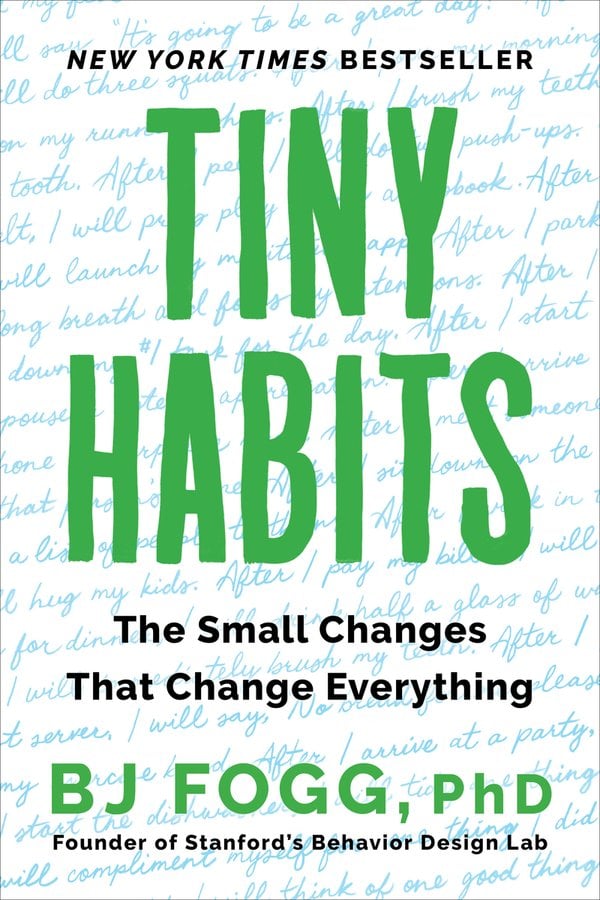
Tiny Habits
By BJ Fogg, PhD
Discover how tiny, consistent habits can lead to meaningful and lasting changes over time.
Did you know? When you buy through Bookshop.org, you’re helping support independent bookstores.
RELATED POST: The 7 Areas of Life You Should Be Setting Goals In (Most People Ignore #3)
Final Thoughts
The hidden mistake people make when setting goals isn’t a lack of motivation, discipline, or willpower. It’s creating goals that assume they’ve already become someone they’re still working to become.
When goals are disconnected from reality, they rely on constant motivation to survive. When goals are grounded in reality, they can keep moving forward even after motivation fades.
That’s why successful goal setting isn’t about creating the biggest goal possible. It’s about building a bridge between who you are today and who you want to become tomorrow.
The people who create lasting change aren’t necessarily the most motivated. More often, they’re the people who understand that transformation happens gradually.
They build goals that fit their current reality, focus on consistent action, and give themselves room to grow.
And in the long run, those are the goals that truly last.
*This article is for informational and educational purposes only and should not be considered a substitute for professional mental health advice. If you are experiencing emotional distress or mental health challenges, please seek guidance from a licensed therapist or mental health professional.

Malin, co-founder of Courier Mind, is passionate about personal growth and mindset. With a focus on self-discovery and goal-setting, she creates content that inspires confidence, balance, and growth for the mind and spirit.