
Should You Accept Mediocrity to Be Happier? A Deep Look

This post contains affiliate links, which means we may earn a commission if you purchase through our links—at no extra cost to you. As an Amazon Associate we earn from qualifying purchases. We only recommend products we use or trust. Learn more about affiliate marketing or read our full disclosure.
Modern self-improvement culture sends a very clear message:
Never settle for mediocrity.
You see it everywhere:
- Push harder
- Become exceptional
- Maximize your potential
- Constantly improve yourself
At first, this kind of message can feel motivating and even inspiring.
But after a while, many people start asking themselves something:
What if constantly chasing more is actually making me unhappy?
That question creates a real conflict. Because on one hand, ambition seems necessary for growth. On the other hand, constantly striving for more can feel exhausting.
So should you accept mediocrity to become happier?
The answer is more complex than most motivational advice makes it seem. The real issue isn’t mediocrity itself.
It’s the relationship between:
- Growth
- Contentment
- Identity
- Expectations
- and Emotional well-being
In this article, we’ll take a deep look at whether accepting mediocrity actually leads to greater happiness—and what many people misunderstand about both happiness and ambition.
What Does “Mediocrity” Actually Mean?
Before answering that question, it helps to slow down and take a closer look at what the word really means.

Most people don’t use “mediocrity” in a technical or precise way. They use it emotionally, often as a judgment rather than a definition.
People usually associate it with things like:
- Failure
- Wasted potential
- Being average
- Lack of ambition
But mediocrity isn’t necessarily the same thing as being ordinary or not standing out.
A more helpful way to think about it is:
Living below your own conscious potential for an extended period of time.
That distinction is more important than it may seem at first.
Because not everyone needs extraordinary success or achievement to feel fulfilled and secure in life. But most people do need some level of growth, purpose, or engagement to feel truly alive and grounded.
The confusion often comes from mixing up two very different states: peaceful simplicity and passive stagnation.
They can look similar from the outside, but internally they feel completely different.
RELATED POST: Am I Mediocre? The Truth Most People Don’t Want to Face
Why People Start Questioning Ambition
Most people start out with a pretty strong sense of motivation. In the beginning, ambition feels clear and easy to understand. It gives us a direction to move toward.
We want:
- Success
- Achievement
- Self-improvement
- Growth
And for a while, that sense of momentum can feel really rewarding.
But over time, constantly pushing for more can start to feel emotionally exhausting in a way that’s difficult to ignore.
Why does that happen?
Because modern achievement culture rarely tells you when enough is enough.
There is always:
- Another goal
- Another milestone
- Another level of optimization
So the finish line keeps moving, even when you’ve already made meaningful progress.
Eventually, that leads to questions like:
- “Why do I still feel empty?”
- “Why does achievement never fully satisfy me?”
- “Why am I always chasing more?”
At that point, accepting mediocrity can begin to sound appealing—not necessarily because ambition has disappeared, but because peace starts to feel more valuable than constant pressure to keep moving forward.
The Hidden Exhaustion Behind “Never Settle”
The phrase “never settle” sounds empowering at first. It feels like encouragement to keep growing and to become a better version of yourself than you were yesterday.
But psychologically, it can also create pressure, especially when it turns into a constant way of thinking rather than an occasional source of motivation.
It can lead to:
- Chronic dissatisfaction
- Comparison addiction
- Inability to appreciate progress
- Fear of slowing down

Over time, some people find themselves trapped in a repeating cycle where:
- Achievement feels rewarding for a short time
- Then it quickly becomes the new normal
- Then a new target appears
And the cycle begins again.
The problem is that this can make happiness feel conditional without you even realizing it:
I’ll feel enough once I achieve more.
But “more” rarely acts like a destination. It keeps moving, which makes it difficult to ever feel like you’ve truly arrived.
RELATED POST: This Is What “Never Settle for Mediocrity” Gets Wrong
Why Some People Are Happier After Lowering Their Expectations
This is where the conversation can start to feel a little uncomfortable for a lot of people.
Some people genuinely notice a positive change in their well-being when they:
- Stop obsessing over status
- Stop constantly comparing themselves to others
- Stop chasing unrealistic ideals
- Stop linking their self-worth to achievement
So what actually changes?
Because psychological peace often improves when:
- Pressure decreases
- Expectations become more realistic
- Self-acceptance becomes more consistent
In other words, letting go of impossible standards can genuinely lead to greater happiness and emotional stability.
But it’s important not to confuse that with fully embracing mediocrity.
Reducing internal pressure isn’t the same as giving up on growth—it’s more about giving yourself room to breathe without constantly judging yourself against an ideal that keeps moving further out of reach.
The Difference Between Acceptance and Resignation
This distinction is incredibly important.
Healthy acceptance sounds more like:
- “I don’t need to constantly prove my worth.”
- “I can appreciate my life while continuing to grow.”
- “Rest and simplicity have real value.”
It feels grounded, calm, and doesn’t rely on constant achievement to feel okay.
Resignation, on the other hand, sounds more like:
- “Nothing is going to change anyway.”
- “Why even bother trying?”
- “Growth is pointless.”

Even though they can sometimes look similar from the outside—both may involve slowing down or stepping back—they come from very different places internally.
One tends to create a greater sense of peace and stability. The other tends to lead to stagnation and disengagement.
And the challenging part is that people don’t always realize which direction they’re moving in until they’ve already arrived there.
This distinction between acceptance and resignation is explored in greater depth in Radical Acceptance by Tara Brach (available on Bookshop.org), which examines how self-acceptance can coexist with growth and meaningful change.
book tip

Radical Acceptance
By Tara Brach
In the busyness of everyday life, it’s easy to forget the present moment. This book is a gentle reminder to slow down and truly live.
Did you know? When you buy through Bookshop.org, you’re helping support independent bookstores.
Why We Need Growth More Than We Realize
One reason fully accepting mediocrity often doesn’t work is that we naturally crave some form of growth and expansion.
Most of us feel more alive when we experience:
- Progress
- Challenge
- Learning
- Purpose
- Meaningful effort
Without any sense of growth, life can gradually start to feel emotionally flat, even when everything appears fine on the surface.
This is why:
- Endless comfort can eventually become boring
- Routines can slowly begin to feel empty
- Stagnation can create a sense of restlessness
It’s not necessarily that people need constant intensity, but rather that something within us naturally looks for movement, growth, and direction.
Most of us need both stability and growth. When one starts to dominate too much, imbalance tends to show up in different ways.
Why Comfort Alone Does Not Create Happiness
A common assumption is:
If life becomes easier, I’ll finally feel fulfilled.
But comfort by itself rarely creates deep or lasting satisfaction.
Why is that?
Because psychological fulfillment often comes from:
- Overcoming meaningful challenges
- Developing competence
- Creating purpose
- Contributing something valuable
When those elements are missing, comfort can gradually turn into something that feels less like peace and more like emotional numbness.
This helps explain why some people feel surprisingly unhappy even when their lives are, by most external measures, fairly easy or stable.
The Real Problem Is Comparison, Not Mediocrity
Many people aren’t actually struggling with mediocrity itself. What they’re really struggling with is comparison.
Modern culture constantly exposes us to:
- Exceptional success stories
- Curated lifestyles
- High achievement standards
- Unrealistic productivity expectations
And because of that constant exposure:
- Ordinary progress can start to feel like it’s not enough
- Simple lives can seem unimpressive
- Realistic growth can feel frustratingly slow
Research suggests that upward social comparison can negatively affect well-being and lower self-esteem.
Over time, it becomes easy to absorb an unspoken message:
If I’m not exceptional, I’m failing.
That belief doesn’t just raise your standards—it can also distort how you see your own life, often creating dissatisfaction that has very little to do with your actual circumstances.
RELATED POST: 7 Signs You’re Stuck in a Mediocre Mindset and How to Change It
Why Ordinary Lives Can Be Deeply Fulfilled
One of the most overlooked truths in this conversation is this:
Some people with objectively ordinary lives feel deeply fulfilled.
And it’s not necessarily because they lack ambition or because ambition has disappeared from the picture—it’s often because their attention is focused on different things.
They tend to:
- Value relationships
- Appreciate simplicity
- Maintain meaningful routines
- Pursue steady growth without becoming obsessed with it
From the outside, their lives may not seem especially extraordinary or impressive. But internally, the experience can be very different.
They often describe a strong sense of:
- Connection
- Peace
- Purpose
- Emotional stability
And for many people, those qualities ultimately matter far more than external status or recognition.

The Danger of Fully Accepting Mediocrity
At the same time, there’s a real risk in completely giving up on growth.
When people stop challenging themselves altogether, they often start to experience:
- Emotional stagnation
- Loss of motivation
- Reduced confidence
- Shrinking comfort zones
- Dissatisfaction
Because avoiding growth doesn’t actually eliminate discomfort.
In many cases, it simply replaces it with a slower, quieter kind of discomfort:
Regret
As human beings we generally want to feel:
- Capable
- Engaged
- Evolving in some meaningful way
So while stepping back from constant pressure can be healthy, complete passivity rarely creates lasting happiness on its own.
RELATED POST: Why Most People Never Escape Mediocrity (Even When They Try)
The Sweet Spot: Ambition Without Self-Rejection
The healthiest approach is usually neither obsessive striving nor complete resignation. Instead, it tends to be something more balanced—steady, grounded growth.
That means continuing to pursue improvement while also appreciating the life you already have.
In practice, this can look like being able to:
- Have goals
- Build skills
- Challenge yourself
without tying your self-worth entirely to achievement, or falling into beliefs like:
- Your worth is determined by what you achieve
- Rest means failure
- Ordinary moments have no value
Research suggests that self-compassion promotes more adaptive responses to setbacks. Rather than becoming discouraged by mistakes, people who treat themselves with kindness may be more likely to stay engaged with their goals and continue moving forward.
Similar ideas are explored in Self-Compassion by Kristin Neff (available on Bookshop.org), which argues that personal growth tends to be more sustainable when it comes from self-respect rather than self-criticism.
book tip

Self-Compassion
By Dr. Kristin Neff
Ever notice how harshly we can treat ourselves — and wonder if it’s holding us back?
Did you know? When you buy through Bookshop.org, you’re helping support independent bookstores.
When those extremes begin to soften, ambition becomes less exhausting and much more sustainable.
This kind of balance is often what allows long-term motivation to feel emotionally steady rather than draining.
RELATED POST: How to Overcome Mediocrity and Finally Stand Out in Life
Why “Enough” Is Such a Difficult Concept
One reason many people struggle with happiness is that they never clearly define what “enough” actually looks like.
Without that boundary, ambition tends to become endless by default.
There is always:
- Someone more successful
- Another milestone to reach
- Another opportunity for improvement
So the pursuit continues, but without any clear point where it feels okay to stop—or even pause for a moment.
But happiness often depends on having at least some ability to say:
This part of my life is already meaningful.
Without that mindset, progress can start to lose its emotional impact, because nothing ever feels fully achieved or truly appreciated in the present moment.
One practical way to develop this mindset is through a regular gratitude practice.
Tools such as the Insight Editions Gratitude: A Day and Night Reflection Journal (available on Bookshop.org) can help you build a habit of noticing the meaningful things that are already present in your life.
daily gratitude
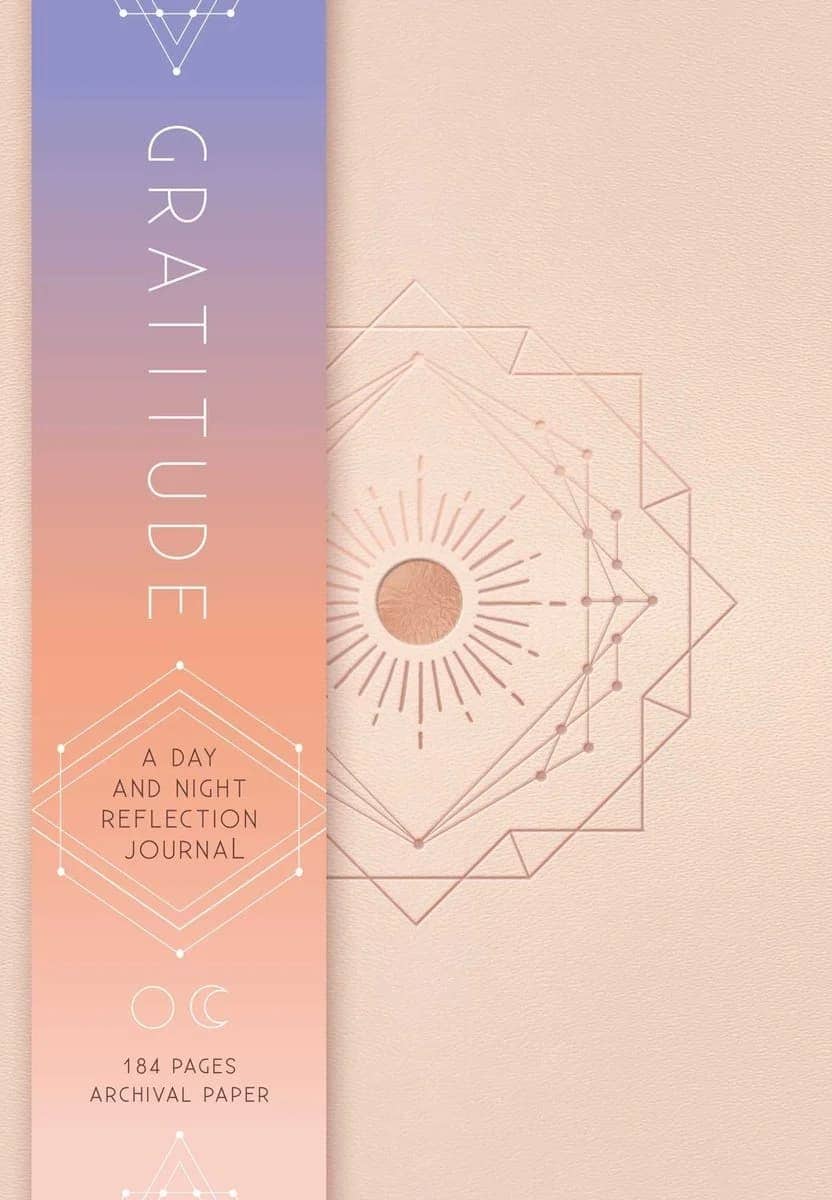
Gratitude Journal by Insight Editions
Boost your mood and mindset with a simple daily habit of gratitude and reflection.
Did you know? By buying from Bookshop.org, you help support independent bookstores.
Growth Feels Better When It Comes From Curiosity
Where your ambition comes from matters more than it may seem at first.
Growth driven by:
- Curiosity
- Excitement
- Purpose
- Personal meaning
tends to feel energizing. It creates a sense of direction that feels chosen rather than something you’re forced into.
Growth driven by:
- Insecurity
- Comparison
- Fear of being average
tends to feel exhausting over time, even if it leads to visible results.
From the outside, both can look equally ambitious. They may even result in similar achievements.
But emotionally, they can create two very different experiences of life.
You Don’t Need to Be Extraordinary to Live Meaningfully
This is one of the deeper truths that many people struggle to accept.
You do not need:
- Fame
- Elite success
- Constant achievement
to justify your existence or to live a meaningful life. Meaning often shows up in quieter, less visible ways.
It can be built through:
- Deep relationships
- Emotional presence
- Personal growth
- Useful work
- Fulfillment
Modern culture often undervalues these things because they don’t attract public attention or easily translate into status.
But psychologically, they matter enormously—often more than the types of achievements that receive the most recognition and praise.
Evidence shows that pursuing intrinsic goals such as personal growth, meaningful relationships, and community involvement is generally associated with greater well-being than pursuing extrinsic goals focused on status, image, or external validation.
RELATED POST: Why Mediocre Relationships Feel “Fine” But Still Hurt You
So… Should You Accept Mediocrity to Be Happier?
The honest answer is:
Partially — but carefully.
You can benefit from accepting:
- That perfection is impossible
- That comparison never truly ends
- That you don’t need to be exceptional to have value
- That rest and simplicity matter
But it’s just as important not to fall into accepting:
- Permanent stagnation
- Avoidance of growth
- Shrinking your life out of fear
- Giving up on meaningful potential
The healthiest path usually isn’t about rejecting ambition completely.
Instead, it’s about removing the unhealthy emotional pressure that often becomes attached to it—so you can continue growing without rejecting yourself, and so your sense of contentment doesn’t depend on constantly proving your worth.
Final Thoughts
The question “Should you accept mediocrity to be happier?” is really a question about balance.
Too much striving leads to exhaustion.
Too much comfort leads to stagnation.
Most of us need both peace and growth.
The problem usually isn’t ambition itself. It’s when ambition becomes tied to self-worth, constant comparison, or a never-ending feeling of dissatisfaction.
You don’t need to become extraordinary to live a meaningful life.
But you also don’t need to give up on growth completely just to escape pressure.
The healthiest life is rarely built through obsessive self-optimization or passive acceptance. Instead, it tends to come from intentional growth combined with the ability to appreciate where you already are.
Because happiness doesn’t come from becoming perfect.
It comes from learning how to keep growing without constantly feeling like you’re not enough.
*This article is for informational and educational purposes only and should not be considered a substitute for professional mental health advice. If you are experiencing emotional distress or mental health challenges, please seek guidance from a licensed therapist or mental health professional.
Le Blanc-Brillon, Justine et al. “The associations between social comparison on social media and young adults' mental health.” Frontiers in psychology vol. 16 1597241. 8 Aug. 2025, doi:10.3389/fpsyg.2025.1597241. Adapted and used under the terms of the Creative Commons Attribution 4.0 International License.
Niemiec, Christopher P et al. “The Path Taken: Consequences of Attaining Intrinsic and Extrinsic Aspirations in Post-College Life.” Journal of research in personality vol. 73,3 (2009): 291-306. doi:10.1016/j.jrp.2008.09.001. Abstract only.

Malin, co-founder of Courier Mind, is passionate about personal growth and mindset. With a focus on self-discovery and goal-setting, she creates content that inspires confidence, balance, and growth for the mind and spirit.