


This Is What “Never Settle for Mediocrity” Gets Wrong
“Never settle for mediocrity.” It sounds like great advice.
- Ambitious.
- Motivating.
- Maybe even essential for personal growth.
But there’s a hidden problem. When taken too literally, “never settle for mediocrity” can create a life where nothing ever feels good enough.
Every achievement becomes temporary. Every milestone becomes a new starting line. And instead of feeling fulfilled, we may end up trapped in a cycle of dissatisfaction, perfectionism, burnout, and constant comparison.
That doesn’t mean the phrase is completely wrong. It means it’s incomplete. Because refusing stagnation is very different from refusing peace.
In this article, we’ll explore what the “never settle” mindset gets wrong, why it can become psychologically unhealthy, and what a more balanced approach to growth actually looks like.
This post contains affiliate links, which means we may earn a commission if you purchase through our links—at no extra cost to you. As an Amazon Associate we earn from qualifying purchases. We only recommend products we use or trust. Learn more about affiliate marketing or read our full disclosure.
Why “Never Settle” Feels So Powerful
This phrase resonates because it speaks directly to your ambition, your sense of identity, and the belief that life can become more than it is right now.
Found this helpful? Pin it for later so you can come back anytime.

At its core, it suggests:
- You are capable of more
- Your current limitations are not permanent
- Growth is possible
- Comfort should not define your life
And those ideas matter. A lot of people genuinely stay stuck because they:
- Avoid discomfort
- Fear change
- Settle into routines that no longer challenge or fulfill them
In that sense, “never settle” can absolutely serve as a wake-up call.
It encourages people to:
- Question complacency
- Raise their standards
- Pursue meaningful growth instead of simply choosing comfort
That’s the positive side of the mindset. The problem starts when “keep growing” slowly turns into “nothing is ever enough.”
RELATED POST: How to Overcome Mediocrity and Finally Stand Out in Life
The Hidden Problem: The Goalposts Keep Moving
One of the biggest issues with the “never settle” mindset is that it can leave you in a constant state of dissatisfaction.
Why?
Because every achievement starts to feel short-lived.
The moment you reach one goal:
- Another one shows up
- Your expectations immediately increase
- The satisfaction fades faster than you thought it would
Instead of feeling fulfilled, many people end up feeling like they’re already falling behind again.
And over time, that creates a frustrating cycle where:
- Progress is clearly happening
- But fulfillment never quite arrives
There’s always another milestone. Another level. Another version of yourself that you’re supposed to become.
Eventually, people can become addicted to self-improvement itself—constantly chasing growth while rarely giving themselves permission to enjoy where they already are.
And growth without appreciation almost always leads to emotional exhaustion.

Growth and Self-Worth Become Fused Together
Another issue with the “never settle” mindset is that you can start connecting your self-worth to constant achievement.
At first, the mindset sounds healthy:
I want to improve.
But over time, it can shift into:
I am only valuable if I keep improving.
And that changes the entire experience of growth.
What once felt motivating starts to feel emotionally heavy.
- Rest begins to feel like laziness.
- Contentment starts to feel like weakness.
- Slowing down feels like failure instead of recovery.
The pressure becomes internalized.
Instead of growing because they genuinely want to, people start feeling like they always have to prove their worth through productivity, progress, or achievement.
And eventually, life starts to feel like a performance—as if your value depends on what you accomplish next.
Research suggests that self-compassion is associated with greater emotional resilience and well-being. But basing self-worth primarily on achievement or positive self-evaluation may create a more fragile sense of self-worth.
A deeper exploration of this idea can be found in Self-Compassion by Kristin Neff (available on Bookshop.org), which discusses why many people become trapped in cycles of self-judgment and conditional self-worth.
book tip

Self-Compassion
By Dr. Kristin Neff
Ever notice how harshly we can treat ourselves — and wonder if it’s holding us back?
Did you know? When you buy through Bookshop.org, you’re helping support independent bookstores.
The Pressure to Always Want More
Modern self-improvement culture constantly reinforces the idea that:
- You should optimize everything
- Average is not acceptable
- High performance should never slow down
- There is always another level waiting to be reached
And after hearing those messages long enough, it’s easy to start believing that simply being human isn’t enough anymore—you always need to be improving, achieving, or becoming something better.
That creates pressure to:
- Constantly improve yourself
- Maximize productivity
- Chase bigger goals
- Outperform the people around you
At first, that can feel incredibly motivating. Even exciting.

But over time, it can slowly pull people away from the very things that make life feel meaningful:
- Enjoyment
- Gratitude
- Presence
- Emotional balance
Because life stops being something you experience and starts becoming something you constantly try to optimize. Everything becomes a project.
Eventually, life starts revolving around becoming rather than simply being.
Studies on hedonic adaptation suggest that the positive emotions associated with achievements often diminish over time as people return toward their usual level of well-being.
Similar concerns are explored in Four Thousand Weeks by Oliver Burkeman (available on Bookshop.org) which challenges the modern obsession with productivity and argues that a meaningful life requires accepting our limits rather than constantly trying to optimize every aspect of ourselves.
book tip
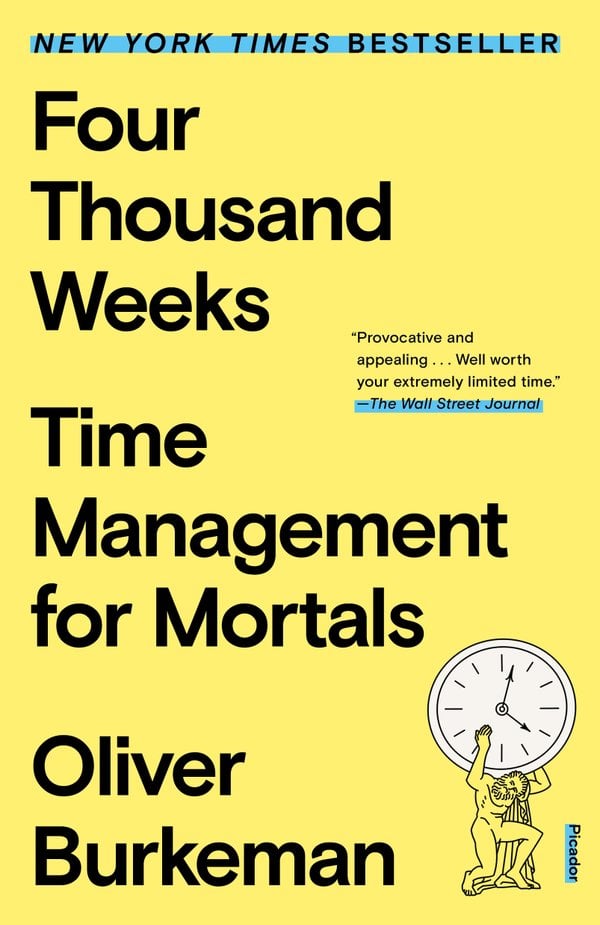
Four Thousand Weeks
By Oliver Burkeman
Discover a different approach to time management by focusing less on doing more and more on what matters most.
Did you know? When you buy through Bookshop.org, you’re helping support independent bookstores.
The Fear of Being “Average”
A big reason people hold so tightly to the “never settle” mindset is fear.
More specifically:
Fear of being ordinary.
People fear:
- Being overlooked
- Not living up to their potential
- Living a small life
- Feeling insignificant
So they pursue constant self-improvement, at least in part, to avoid those feelings.
But there’s an uncomfortable truth here:
Most people are ordinary in many ways.
And that’s not automatically something tragic or shameful. The real danger isn’t being average. The real danger is living unconsciously or without intention.
Found this helpful? Pin it for later so you can come back anytime.

Peaceful normalcy and stagnant mediocrity are not the same thing.
But the “never settle” mindset often lumps those two together, as if any form of ordinariness should be resisted at all costs.
RELATED POST: Am I Mediocre? The Truth Most People Don’t Want to Face
Why Constant Dissatisfaction Becomes Toxic
Healthy ambition helps move you forward. But chronic dissatisfaction slowly wears away your ability to enjoy life as it is.
When people internalize “never settle for mediocrity” too deeply, they may:
- Downplay their own progress
- Constantly compare themselves to others
- Feel behind no matter what they achieve
- Struggle to feel genuinely fulfilled
Nothing ever feels quite enough because the standard keeps moving higher right after every milestone.
What you once thought would be “enough” quickly becomes the new baseline rather than the finish line.
Research suggests that frequent upward social comparison can contribute to lower self-esteem and reduced well-being, particularly when people compare themselves to idealized versions of others.
Over time, this creates a kind of psychological instability where brief highs from achievement are quickly followed by a sense of emotional emptiness.
And then the cycle starts all over again—chase, achieve, reset, repeat—with very little lasting satisfaction in between.
If this pattern feels familiar, tools like the Switch Research Self-Talk Journal (available on Amazon) can help you become more aware of the thought patterns that fuel self-criticism and make it difficult to recognize your own progress.
The Difference Between Growth and Escaping Yourself
This is one of the most important distinctions in the entire discussion.
Healthy growth comes from:
- Curiosity
- Meaning
- A sense of expansion
- Self-respect
It feels grounded. Even when it’s difficult, there’s a sense that you’re moving toward something that genuinely matters to you.
Unhealthy striving, on the other hand, often comes from:
- Insecurity
- Comparison
- Fear of inadequacy
- Fear of being “not enough”
From the outside, both can look like ambition. Both can look like drive. Both can even lead to similar results in terms of achievement and output.
But internally, they feel completely different.
One creates energy—it strengthens you as you move forward. The other creates pressure—as if you’re constantly trying to outrun something within yourself.
Why “Never Settle” Can Create Burnout
Burnout isn’t always caused by working too hard.
Sometimes it comes from something more subtle:
Feeling like you’re never allowed to stop pushing yourself.
The “never settle” mindset can make people feel guilty for:
- Resting
- Slowing down
- Enjoying simple things
- Feeling content with where they are
Even moments that should feel restorative can start to feel unproductive, as though they need to be justified.
Slowly, everything becomes another opportunity to optimize—another area to improve, another habit to refine, another version of yourself to upgrade.
And over time:
- Life starts to feel draining
- Achievement loses some of its emotional meaning
- Productivity becomes part of your identity rather than simply something you do
This is often the point where self-improvement stops improving your life and starts becoming something you need to recover from.
When Ambition Stops Feeling Fulfilling
People often assume that ambition automatically leads to fulfillment. But ambition by itself is emotionally incomplete.
Without balance, ambitious people may:
- Constantly chase future goals
- Struggle to enjoy the present moment
- Put off happiness indefinitely, always waiting for “after the next milestone”
- Feel emotionally disconnected even when things are objectively going well
And that can feel confusing from the inside—because success is happening, but it doesn’t always feel successful.
Why does this happen?
Because fulfillment doesn’t come from progress alone. It also depends on:
- Connection
- Meaning
- Appreciation
- Emotional presence
These aren’t just byproducts of achievement. They’re separate human needs altogether.
And they don’t automatically grow stronger just because you’re improving faster.
In fact, when life becomes one ongoing self-improvement project, those experiences often get pushed to the side—as if they can wait until everything is “handled” or “optimized.”
But they rarely show up later on their own.
Why Comfort Isn’t the Real Enemy
Many motivational messages portray comfort as something dangerous. And sometimes, that can be true.
Comfort can turn into stagnation when it consistently holds you back from growth or keeps you from taking on challenges that genuinely matter.
But comfort itself isn’t the real problem.
As human beings, we need:
- Rest
- Emotional safety
- Stability
- Recovery
Without these things, growth doesn’t just slow down—it becomes unsustainable.
Because the real issue isn’t comfort. It’s unconscious comfort—the kind that quietly shrinks your life without you even realizing it.
Healthy peace and passive stagnation may look similar on the surface, but they’re not the same thing.
One helps restore you so you can continue growing. The other slowly makes your world smaller while convincing you that nothing needs to change.
RELATED POST: Should You Accept Mediocrity to Be Happier? A Deep Look
You Don’t Need to Become Exceptional to Live Meaningfully
This is another truth that many people struggle to accept.
You don’t need:
- Massive status
- Extreme success
- Constant achievement
in order to live a meaningful life.
Meaning doesn’t only exist at the top of some imagined hierarchy. It can be found in much simpler places.
A meaningful life can include:
- Deep relationships
- Emotional health
- Purposeful work
- Personal growth
- Simple, everyday joy
Research suggests that strong social connections are consistently associated with greater emotional well-being and overall life satisfaction.
But the “never settle” mindset can sometimes imply, even if unintentionally, that ordinary happiness is somehow not enough—or not worth pursuing.
And that belief often creates unnecessary pressure, as if meaning must always be earned through greater achievement rather than recognized in what already exists.
Similar ideas are explored in The Gifts of Imperfection by Brené Brown (available on Bookshop.org), which argues that a meaningful life is built not through perfection or constant achievement, but through authenticity, self-acceptance, and connection.
book tip

The Gifts of Imperfection
By Brené Brown
Ever feel like you’re trying too hard to be perfect—and it’s exhausting? Then this book is for you.
Did you know? When you buy through Bookshop.org, you’re helping support independent bookstores.
When that assumption takes hold, it becomes harder to appreciate life as it is—not because life lacks meaning, but because meaning is constantly being postponed.
RELATED POST: Why Mediocre Relationships Feel “Fine” But Still Hurt You
Why Comparison Fuels the “Never Settle” Mentality
Social comparison strengthens this mindset in a powerful way.
People are constantly exposed to:
- Curated success
- Visible achievement
- Highlight reels of other people’s lives
And because we rarely see the full story behind those moments, it creates a distorted sense of what’s normal.
Suddenly:
- Normal progress feels too slow
- Average effort feels inadequate
- Simple happiness starts to seem unimpressive
So people push harder—not always because they genuinely want more, but because they’re afraid of falling behind.
In that environment, “never settle” stops feeling like personal motivation and starts feeling more like a reaction to constant comparison.
And it becomes harder to tell the difference between what you truly want and what you feel pressured to keep up with.
RELATED POST: Why Most People Never Escape Mediocrity (Even When They Try)
What “Never Settle” Gets Right
Despite its flaws, the phrase “never settle” does contain an important truth.
People shouldn’t:
- Give up on growth entirely
- Let fear make their decisions
- Stay stuck forever
- Ignore their potential

Comfort zones can absolutely make life smaller when they go unchallenged for too long.
- Growth matters.
- Challenge matters.
- Expanding your capabilities matters.
Those parts of the message are genuinely valuable.
The issue isn’t ambition itself.
The issue is what happens when ambition becomes disconnected from emotional well-being—when growth is treated as the only thing that matters, regardless of how it affects your sense of peace, balance, or self-worth.
RELATED POST: 7 Signs You’re Stuck in a Mediocre Mindset and How to Change It
A Better Alternative: Grow Without Rejecting Where You Are
The healthiest mindset isn’t:
Never settle.
It’s something more grounded:
Keep growing without making your worth depend on constant achievement.
That shift changes the entire experience of ambition.
It allows you to:
- Pursue goals
- Challenge yourself
- Improve your life
while still:
- Appreciating where you are right now
- Giving yourself permission to rest without guilt
- Enjoying simplicity without overanalyzing it
- Feeling emotionally enough in the present, not just in some future version of yourself
Similar themes are explored in Radical Acceptance by Tara Brach (available on Bookshop.org), which challenges the belief that we must constantly fix, improve, or prove ourselves before we can feel whole.
book tip

Radical Acceptance
By Tara Brach
In the busyness of everyday life, it’s easy to forget the present moment. This book is a gentle reminder to slow down and truly live.
Did you know? When you buy through Bookshop.org, you’re helping support independent bookstores.
Growth, in this perspective, becomes additive rather than compensatory.
You’re not trying to fix yourself through achievement—you’re building on a life that already has value, even as you continue to grow and expand it.
RELATED POST: Why Mediocre Relationships Feel “Fine” But Still Hurt You
The Real Goal Is Expansion, Not Perfection
A healthier approach to self-improvement isn’t about becoming perfect.
It’s about:
- Expanding your life
- Increasing your capacity
- Becoming more intentional about how you live
- Creating experiences that genuinely feel meaningful to you
When you see it this way, growth stops being a race toward some perfect version of yourself and becomes a more human process—something that unfolds gradually over time.
And that process naturally includes:
- Setbacks
- Pauses
- Imperfect phases
- Ordinary moments that may not seem particularly impressive on the surface
None of those experiences mean you’re doing life wrong.
And none of them make your life “mediocre.”
They’re simply part of what growth and expansion actually look like in real life—uneven, nonlinear, and often much less polished than motivational slogans would have you believe.
Final Thoughts
“This Is What ‘Never Settle for Mediocrity’ Gets Wrong” is not an argument against growth.
Growth is deeply valuable.
The issue is that the phrase often leaves out an equally important truth:
A meaningful life is not built through constant striving alone.
When taken too far, “never settle for mediocrity” can turn into:
- Endless dissatisfaction
- Constant comparison
- Burnout
- An inability to enjoy life as it is right now
None of those are signs of healthy ambition—they’re signs that something has fallen out of balance.
The healthiest form of ambition isn’t self-rejection or relentless pressure. It’s intentional growth grounded in self-awareness.
Because the goal of life isn’t to endlessly prove your worth through achievement.
It’s to grow in meaningful ways while still being able to experience peace, gratitude, connection, and presence along the way.
*This article is for informational and educational purposes only and should not be considered a substitute for professional mental health advice. If you are experiencing emotional distress or mental health challenges, please seek guidance from a licensed therapist or mental health professional.
Mathias, J. D., Nicolas Pellerin, G. Carrero, et al. "Running on the Hedonic Treadmill: A Dynamical Model of Happiness Based on an Approach–Avoidance Framework." Journal of Happiness Studies, vol. 25, article 58, 2024. https://doi.org/10.1007/s10902-024-00766-3. Abstract only.
Neff, Kristin D. "Self-Compassion, Self-Esteem, and Well-Being." Social and Personality Psychology Compass, vol. 5, 2011, pp. 1-12. https://doi.org/10.1111/j.1751-9004.2010.00330.x. Abstract only.
Pezirkianidis, Christos et al. “Adult friendship and wellbeing: A systematic review with practical implications.” Frontiers in psychology vol. 14 1059057. 24 Jan. 2023, doi:10.3389/fpsyg.2023.1059057. Adapted and used under the terms of the Creative Commons Attribution 4.0 International License.

Linda is the co-founder of Courier Mind and holds a Diploma in Natural Health Nutrition & Diet. Her passions include photography, personal growth, and travel, where she draws inspiration from diverse cultures and their approaches to mindset and self-discovery. She is committed to helping others set meaningful goals, overcome self-doubt, and become the best version of themselves.