


Growth Mindset Isn’t Just Positive Thinking: 7 Myths That Miss the Point
Many people misunderstand what a growth mindset really means.
- “Just believe in yourself.”
- “Stay positive.”
- “You can do anything if you try hard enough.”
These ideas are often linked to having a growth mindset. They sound encouraging, and sometimes they can be. But they don’t quite get to the heart of what a growth mindset actually means.
A growth mindset isn’t about convincing yourself that everything will work out. It isn’t about brushing aside disappointment, praising every effort, or refusing to quit no matter what.
At its heart, a growth mindset is about believing that abilities can develop.
Instead of treating your current abilities as the final word on what you can achieve, you recognize that you can improve through learning, practice, effective strategies, feedback, and experience.
That distinction matters.
When growth mindset gets reduced to “think positively” or “try harder,” it’s easy to miss some of its most useful lessons.
So, how well do you really understand growth mindset?
Let’s look at seven common myths—and what they can teach us about what having a growth mindset actually looks like.
This post contains affiliate links, which means we may earn a commission if you purchase through our links—at no extra cost to you. As an Amazon Associate we earn from qualifying purchases. We only recommend products we use or trust. Learn more about affiliate marketing or read our full disclosure.
What I Used to Get Wrong About Growth Mindset
For years, I thought having a growth mindset meant being stubborn. If something wasn’t working, you kept going. If you failed, you tried again.
Found this helpful? Pin it for later so you can come back anytime.

Put in enough effort, stay persistent, and eventually you would get results.
So when that didn’t happen, it could be heartbreaking. After all, if you had worked hard, refused to give up, and done everything you thought you were supposed to do, surely all that effort should have paid off.
It felt deeply unfair when it didn’t. Over time, though, I realized that persistence and growth aren’t quite the same thing. Sometimes you do need to keep going.
But sometimes you need to stop and ask whether your strategy is working, whether you need help or feedback, or whether it’s time to try a completely different approach.
Being willing to change direction can be just as much a part of growth as refusing to give up. And that’s where many of the common ideas about growth mindset start to fall apart.
If you want to explore the idea behind growth mindset more deeply, Mindset by Carol S. Dweck (available on Bookshop.org) is a natural place to start. It looks at how the beliefs we hold about our abilities can shape the way we approach learning, challenges, and improvement.
book tip

Mindset: The New Psychology of Success
By Carol S. Dweck
Do you believe your abilities are fixed, or that you can grow with effort?
Did you know? When you buy through Bookshop.org, you’re helping support independent bookstores.
RELATED POST: The Ultimate Guide to Growth Mindset: From “I Can’t” to “I Can Learn”
So, let’s look at some of the biggest myths—and what growth mindset actually asks of us:
Myth #1: Growth Mindset Means Always Thinking Positively
Perhaps the biggest misconception about growth mindset is that it means staying positive no matter what happens.
- Failed an exam? Stay positive.
- Didn’t get the promotion? Look on the bright side.
- Made a huge mistake? Just think happy thoughts.
But a growth mindset doesn’t require you to pretend that difficult experiences aren’t difficult.
- You can feel disappointed.
- You can be frustrated.
- You can admit that something went badly.
- You can even wonder whether you’re capable of doing it.
The difference is what happens after those thoughts and emotions show up.
A fixed response might sound like:
I failed, so clearly I’m not good at this.
A growth-oriented response sounds more like:
That didn’t go the way I hoped. What happened, and what could I do differently?
The second response isn’t necessarily more cheerful. It’s more curious.
Growth mindset is less about replacing every negative thought with a positive one and more about replacing final conclusions with questions.
Instead of “I can’t do this,” you might ask:
- “What am I missing?”
- “What could I practice?”
- “Who could help me?”
- “What should I try next?”
Sometimes growth starts with curiosity, not positivity.
If you’re curious about why positive thinking alone isn’t always enough, Rethinking Positive Thinking by Gabriele Oettingen (available on Bookshop.org) is a fascinating next read. It explores what can happen when we pair our hopes for the future with an honest look at the obstacles standing in the way.
book tip
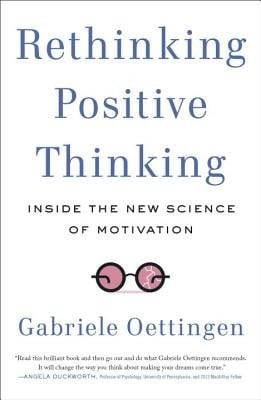
Rethinking Positive Thinking
By Gabriele Oettingen
Learn how psychological research challenges common myths about positive thinking and motivation.
Did you know? When you buy through Bookshop.org, you’re helping support independent bookstores.
RELATED POST: 12 Simple Growth Mindset Tips to Change the Way You Think
Myth #2: Failure Means Your Belief Was Wrong
Believing that you can do something doesn’t mean you’ll succeed the first time you try.
Sometimes you’ll fail. Sometimes you’ll work incredibly hard and still not get the result you hoped for. And in those moments, it’s easy to think, “Maybe I was wrong to believe I could do this.”
But one disappointing result doesn’t tell you what you’re ultimately capable of.
- You may be bad at public speaking today and become much better with practice.
- You might struggle with writing and gradually develop stronger skills.
- You could find mathematics difficult and discover strategies that help you understand it more effectively.
Belief matters because what you believe about yourself can influence what you’re willing to attempt, how you respond when things get difficult, and whether you keep looking for a way forward.
Found this helpful? Pin it for later so you can come back anytime.

But continuing doesn’t always mean doing the same thing again.
- Sometimes you need more practice.
- Sometimes you need a different strategy.
- Sometimes you need feedback, help, or knowledge you don’t have yet.
- And sometimes you need to rethink your approach entirely.
That’s where growth mindset becomes more than simply believing in yourself.
Instead of thinking:
I failed, so maybe I can’t do this.
you can ask:
It didn’t work this time. What do I need to learn or change before I try again?
You don’t have to know exactly when you’ll succeed or what the path will look like. You simply don’t have to let one failure decide what you’re capable of becoming.
If you want to dig deeper into just how much our expectations can shape our experiences, The Expectation Effect by David Robson (available on Bookshop.org) is worth exploring. It takes a research-based look at the surprising ways our beliefs and expectations can influence what happens next.
book tip
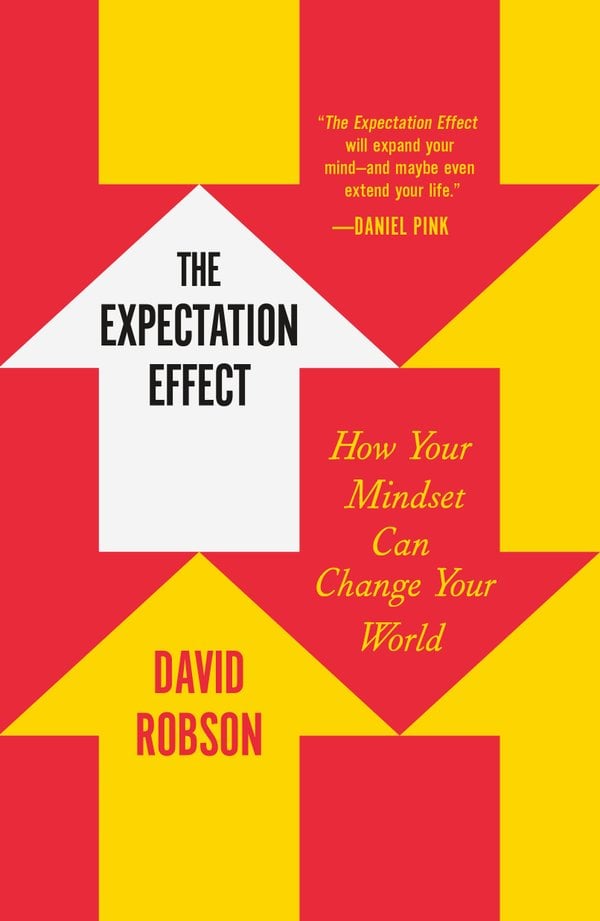
The Expectation Effect
By David Robson
Discover how your expectations can influence your thoughts, behaviors, and everyday experiences.
Did you know? When you buy through Bookshop.org, you’re helping support independent bookstores.
RELATED POST: How to Cultivate a Growth Mindset When You’re Afraid to Fail
Myth #3: Growth Mindset Is All About Trying Harder
This is one of the easiest growth mindset ideas to misunderstand. If effort helps us improve, it can seem as though the answer to every difficulty is simply to try harder.
Well, not necessarily.
Imagine trying to open a locked door by repeatedly pushing against it.
- You can push harder.
- You can push longer.
- You can congratulate yourself for your persistence.
But if the door requires a key, effort alone isn’t going to solve the problem.
Learning works in much the same way.
- Sometimes you need a different strategy.
- Sometimes you need feedback.
- Sometimes you need instruction.
- Sometimes you need more information.
And sometimes you need to stop, reconsider the problem, and approach it from another direction.
A growth mindset values effort because meaningful improvement usually requires it. But effective effort matters more than effort for effort’s sake.
When something isn’t working, ask:
Do I need to try harder—or do I need to try differently?
That question can help you avoid turning persistence into frustration.
If you want to understand why how you practice can matter as much as how hard you practice, Peak by Anders Ericsson and Robert Pool (available on Bookshop.org) is an excellent next read. It explores the science of developing expertise and what effective practice actually looks like.
book tip

Peak
By Anders Ericsson and Robert Pool
This book challenges the idea of natural talent and shows how focused, structured practice can help anyone improve and perform at a higher level.
Did you know? When you buy through Bookshop.org, you’re helping support independent bookstores.
RELATED POST: 10 Inspiring Growth Mindset Examples—and What They Can Teach Us
Myth #4: Failure Is Always a Good Thing
You may have heard phrases such as “failure is good” or “failure is how we grow.”
There’s truth behind them, but they can make the process sound simpler than it really is.
Failure by itself doesn’t automatically lead to growth.
- You can make the same mistake repeatedly without learning anything from it.
- You can fail and blame everyone else.
- You can fail and immediately give up.
Or you can fail, look closely at what happened, adjust your approach, and use the experience to make a better decision next time.
The growth isn’t necessarily in the failure. It’s in the response to it.
Suppose you launch a project and it doesn’t work. Simply saying, “Failure is good!” doesn’t tell you very much.
Instead, you could ask:
- “What assumptions did I make?”
- “What worked better than expected?”
- “Where did things go wrong?”
- “What would I change if I started again?”
Those questions can turn an unpleasant outcome into useful information.
You don’t have to celebrate every failure. Sometimes failure hurts. Sometimes it costs time, money, confidence, or opportunity.
A growth mindset simply gives you room to ask whether something useful can still come from the experience.
If you want to explore how setbacks can become part of the learning process, The Art of Learning by Josh Waitzkin (available on Bookshop.org) is a thoughtful next step. It looks at learning, performance, mistakes, and what it takes to keep developing when things don’t go as planned.
book tip

The Art of Learning
By Josh Waitzkin
This book explores how true mastery is built across any discipline. It reveals how performance, mindset, and learning strategies combine to create excellence.
Did you know? When you buy through Bookshop.org, you’re helping support independent bookstores.
Myth #5: You Should Never Give Up
“Never give up” sounds like the ultimate growth mindset motto. But sometimes giving up is exactly what you should do.
There’s a difference between giving up because something is difficult and deciding that a particular goal, strategy, or direction is no longer worth pursuing.
- Maybe your priorities have changed.
- Maybe new information has shown you that the goal isn’t right for you.
- Maybe continuing would require sacrifices you’re no longer willing to make.
- Or perhaps you’re still pursuing something simply because you don’t want to admit that you’ve changed your mind.
Growth mindset isn’t stubbornness. In fact, growth often requires flexibility.
You can stop pursuing one goal and use everything you learned along the way somewhere else. You can abandon a strategy without abandoning your ability to improve.
You can decide:
This isn’t working. What else could I do?
That isn’t necessarily quitting. Sometimes it’s adapting.
The better question may not be:
How can I force myself to keep going?
It might be:
Am I facing a challenge I need to work through, or am I receiving information I need to listen to?
Knowing the difference is part of growth too.
If you struggle to know when to keep going and when to change direction, The Dip by Seth Godin (available on Amazon) explores exactly that tension. It offers a useful way to think about persistence, quitting, and deciding which challenges are actually worth pushing through.
RELATED POST: How to Develop a Growth Mindset When Giving Up Feels Easier
Myth #6: Praising Effort Builds a Growth Mindset
Once people learn that growth mindset values effort, it can be tempting to praise effort at every opportunity.
- “You worked so hard!”
- “Great effort!”
- “At least you tried!”
But praise loses its meaning when it’s disconnected from learning.
Imagine someone studies for hours using an ineffective method and then performs poorly on a test. Simply praising how many hours they studied doesn’t help them understand what they could change.
A more useful conversation might explore what they actually did:
- Which study strategies worked?
- What didn’t?
- What did they understand better afterward?
- Where did they get stuck?
- What could they try differently next time?
The goal isn’t to teach someone that effort itself equals success. It’s to help them see the connection between their actions, strategies, learning, and improvement.
That means praise can be more specific.
Instead of only saying:
You worked really hard.
You might notice:
You changed your approach when the first one didn’t work.
Or:
You asked for feedback and used it to improve.
Or:
You kept practicing, and your technique became much stronger.
Now the focus isn’t simply on trying. It’s on learning.
RELATED POST: Growth Mindset and the Brain: What Does Science Actually Say?
Myth #7: You Either Have a Growth Mindset or You Don’t
It would be convenient if everyone could be neatly divided into two groups:
- Growth mindset people.
- Fixed mindset people.
But people are rarely that simple.
- You might have a growth mindset about your career but a fixed mindset about creativity.
- You might believe you can improve your fitness while thinking, “I’m just terrible with money.”
- You may happily learn from mistakes when cooking but become defensive when someone gives you feedback at work.
Context matters.
Even someone who generally embraces learning can slip into fixed-mindset thinking when something threatens an important part of their identity.
That’s why paying attention to your reactions can be so useful.
- When do you feel most defensive?
- What kinds of challenges do you avoid?
- When do you compare yourself with other people?
- What abilities have you quietly labeled as things you “just aren’t good at”?
Those moments can reveal where fixed beliefs may be hiding.
The goal isn’t to earn the label “growth mindset person.” It’s to get better at noticing when your thinking becomes fixed—and learning how to respond differently.
RELATED POST: Fixed Mindset vs Growth Mindset: Which One Is Running Your Life?
So, What Does a Growth Mindset Actually Look Like?
Once you strip away the myths, growth mindset becomes both more realistic and more useful.
- It doesn’t require endless optimism.
- It doesn’t guarantee unlimited potential.
- It doesn’t mean trying harder forever.
- It doesn’t make every failure valuable.
- And it doesn’t demand that you never quit.
Instead, it might look like admitting:
I don’t know how to do this yet.
Then finding someone who can teach you.
It might mean receiving criticism without immediately deciding that the criticism defines you. It could mean noticing that your strategy isn’t working and being flexible enough to change it.
It might mean allowing yourself to be a beginner. Or recognizing that one disappointing result doesn’t tell you everything about what you’re capable of becoming.
These moments aren’t particularly dramatic. But repeated over time, they can change your relationship with learning.
You stop feeling as though you need to prove that you’re already good enough. You give yourself permission to get better.
If you’re wondering how to turn the idea of growth into small changes you can actually practice, Tiny Habits by BJ Fogg (available on Bookshop.org) is a practical place to continue. It shows how small, manageable changes can gradually shape the way you behave and help larger changes become easier.
book tip

Tiny Habits
By BJ Fogg, PhD
Discover how tiny, consistent habits can lead to meaningful and lasting changes over time.
Did you know? When you buy through Bookshop.org, you’re helping support independent bookstores.
RELATED POST: The Growth Mindset Background: What Really Shapes Our Ability to Learn?
Final Thoughts
Growth mindset can sound simple on the surface: believe you can improve.
But putting that idea into practice is more complicated—and much more interesting.
- You can believe in growth while still feeling discouraged.
- You can work hard and still realize you need a better strategy.
- You can learn from failure without pretending you enjoyed it.
- You can walk away from one path without deciding you’re incapable of succeeding on another.
And you can have a growth mindset in one area while discovering surprisingly fixed beliefs somewhere else.
Perhaps that’s the biggest myth worth letting go of: that having a growth mindset means getting your thinking “right” all the time.
It doesn’t. The real opportunity comes from noticing what happens when you’re challenged.
When you make a mistake, do you treat it as proof of what you can’t do—or as information about what you could learn?
When something feels difficult, do you immediately assume you lack ability—or wonder which skills you haven’t developed yet?
And when your first approach fails, do you simply try harder—or become curious enough to try differently?
Growth mindset isn’t about looking at every situation and saying, “Everything will be fine.” Sometimes you simply don’t know if it will be.
It’s about being able to say:
Whatever happens, there may still be something here for me to learn.
And that is much more powerful than positive thinking.
*This article is for informational and educational purposes only and should not be considered a substitute for professional mental health advice. If you are experiencing emotional distress or mental health challenges, please seek guidance from a licensed therapist or mental health professional.
Gaudreau, P., et al. "Is perfectionism associated to a fixed mindset? A review and two studies with the Model of Excellencism and Perfectionism." Soc Psychol Educ 28, 179 (2025), https://doi.org/10.1007/s11218-025-10130-9.
Gazerani, Parisa. “The neuroplastic brain: current breakthroughs and emerging frontiers.” Brain research vol. 1858 (2025): 149643. doi:10.1016/j.brainres.2025.149643. Adapted and used under the terms of the Creative Commons Attribution 4.0 International License.
Schroder, Hans S. “Mindsets in the clinic: Applying mindset theory to clinical psychology.” Clinical psychology review vol. 83 (2021): 101957. doi:10.1016/j.cpr.2020.101957. Abstract only.
Sheffler, P., et al. "Growth mindset and social comparison effects in a peer virtual learning environment." Soc Psychol Educ 27, 493–521 (2024), https://doi.org/10.1007/s11218-023-09850-7. Adapted and used under the terms of the Creative Commons Attribution 4.0 International License.

Linda is the co-founder of Courier Mind and holds a Diploma in Natural Health Nutrition & Diet. Her passions include photography, personal growth, and travel, where she draws inspiration from diverse cultures and their approaches to mindset and self-discovery. She is committed to helping others set meaningful goals, overcome self-doubt, and become the best version of themselves.