


How to Overcome Mediocrity and Finally Stand Out in Life
Most people don’t set out to become mediocre.
They begin with ambition. With dreams. With potential. With a clear vision of the person they want to be.
But somewhere along the way, life becomes repetitive.
- Days blend together.
- Goals remain unfinished.
- Comfort slowly replaces growth.
And before long, many people find themselves asking a difficult question:
Am I settling for an average version of my life?
That question is uncomfortable because deep down, most people know they’re capable of more. The truth is, mediocrity rarely happens all at once.
It develops gradually through:
- Repeated comfort
- Avoiding discomfort
- Inconsistent effort
- Lowered expectations
- Passive routines
Over time, those habits start to feel normal.
But mediocrity isn’t permanent. It’s not a fixed identity or something you have to live with forever. It’s the result of repeated behaviors—and anything built through behavior can be changed through behavior.
In this article, you’ll learn why people get stuck in mediocrity, what causes average living, and how to overcome mediocrity in a realistic and sustainable way.
This post contains affiliate links, which means we may earn a commission if you purchase through our links—at no extra cost to you. As an Amazon Associate we earn from qualifying purchases. We only recommend products we use or trust. Learn more about affiliate marketing or read our full disclosure.
What Mediocrity Actually Means
Before you can overcome mediocrity, it’s helpful to slow down for a moment and clearly define what it really means.
Found this helpful? Pin it for later so you can come back anytime.

This is a word that often gets misunderstood in everyday conversations.
Mediocrity is not:
- Being average at everything
- Not having talent
- Going through a temporary struggle
- Failing once in a while
Those experiences are simply part of being human. Mediocrity is something different. It’s the habit of consistently staying away from your deeper potential over time.
It shows up as the growing gap between who you know you could become and what your actions repeatedly produce.
That gap is where mediocrity really lives. Not in a single moment. Not in one mistake. But in repetition—in the choices you keep making day after day, even when you know there’s more potential within you.
This distinction matters because mediocrity is not an identity you’re born with or a label you carry forever. It’s a pattern.
And patterns, by their very nature, can be changed.
RELATED POST: Am I Mediocre? The Truth Most People Don’t Want to Face
Now let’s take a closer look at why people stay stuck in mediocrity:
1. How Comfort Keeps You Stuck
One of the biggest reasons people remain mediocre isn’t because they lack ability. It’s because of comfort.
We naturally gravitate toward things that feel safe, familiar, and predictable. In many situations, that’s actually a healthy instinct.
Comfort gives you exactly that:
- Safety
- Familiarity
- Predictability
The challenge is that growth rarely happens in the same place as comfort.
Most meaningful progress requires things like:
- Uncertainty
- Discomfort
- Emotional risk
- Temporary failure
And that’s where the struggle begins.

Because in real life, you rarely decide to choose mediocrity outright. Instead, you make small decisions that favor comfort—again and again—even when part of you wants something more.
Not because you lack ambition, but because comfort almost always feels better in the short term.
Over time, those small decisions start to build on each other, and staying where things feel safe gradually becomes your default way of living.
2. Most People Wait Until They “Feel Ready”
This is one of the most common misunderstandings about personal growth.
Many people tell themselves:
Once I feel confident, motivated, or fully prepared, I’ll finally make a change.
It sounds reasonable at first, but it often leads to delay. The reason is simple: feeling ready is rarely something you wait for—it’s something that develops through action, not before it.
In reality, waiting to feel ready often becomes a subtle form of avoidance.
Instead of taking action, you stay stuck in patterns like:
- Overthinking
- Overpreparing
- Endless information consumption
- Delaying uncomfortable action
Meanwhile, real growth doesn’t come from mental preparation alone.
It comes from taking action—imperfect, unfinished, and sometimes uncertain action that gradually builds your confidence and capability over time.
3. The Identity Trap That Keeps People Small
One of the most powerful forces behind mediocrity is identity. People naturally tend to act in ways that match how they see themselves.
So when someone carries beliefs like:
- “I’m lazy”
- “I’m inconsistent”
- “I’m not disciplined”
- “I’m just average”
those beliefs don’t remain as simple thoughts. They begin to influence your decisions, your habits, and how consistently you follow through.
Over time, your behavior starts to align with your identity—not because those beliefs are necessarily true, but because they feel familiar and consistent with the way you see yourself.
This creates a self-reinforcing cycle:
- Identity shapes behavior
- Behavior reinforces identity
And the cycle continues repeating until it starts to feel permanent.
That’s why overcoming mediocrity often requires more than simply changing what you do. It usually involves changing how you see yourself first—even in small ways—before any major external results begin to appear.
Research suggests that people who believe their abilities can improve through effort are more likely to persist through challenges and continue developing over time.
If you’d like to explore this idea further, Mindset by Carol S. Dweck (available on Bookshop.org) takes a deeper look at how your beliefs about yourself can influence your growth, habits, and long-term potential.
book tip

Mindset: The New Psychology of Success
By Carol S. Dweck
Do you believe your abilities are fixed, or that you can grow with effort?
Did you know? When you buy through Bookshop.org, you’re helping support independent bookstores.
4. Most People Fear Standing Out More Than They Admit
This may sound a little surprising at first, but many people have an unconscious fear of being seen. Standing out comes with a different kind of pressure.
It can mean:
- Being judged
- Risking failure in public
- Becoming noticeably different from others
- Stepping outside familiar social roles
And even if you’re not consciously aware of it, these factors can still influence the choices you make.

So instead of moving forward, many people keep themselves smaller than they could be—not because they don’t want to grow, but because staying unnoticed feels emotionally safer.
In that sense, mediocrity can act like a form of protection. It keeps you away from exposure, attention, and the discomfort that comes with being visibly “in progress.”
Growth, however, naturally does the opposite. It removes that protection and makes you more visible—and that’s often where resistance begins to show up.
RELATED POST: This Is What “Never Settle for Mediocrity” Gets Wrong
Why “Working Harder” Usually Doesn’t Work
Many people try to overcome mediocrity by simply turning up the intensity.
They assume the solution is to push harder, so they:
- Overload their schedules
- Chase short bursts of motivation
- Try to force big, sudden changes
- Rely heavily on willpower
At first, this can feel productive. There’s momentum, urgency, and a sense that you’re finally taking control. But intensity by itself is rarely sustainable.
After a while:
- Motivation starts to fade
- Exhaustion begins to build
- Routines start falling apart
And when that happens, many people slip back into old patterns and tell themselves:
Maybe I’m just not disciplined enough.
But in many cases, discipline wasn’t the real problem.
The real issue was an unsustainable approach—one that relied on short bursts of effort instead of a system that could actually be maintained over the long term.
RELATED POST: Why Most People Never Escape Mediocrity (Even When They Try)
The Real Secret: Small Consistent Actions
People who successfully overcome mediocrity rarely transform their lives overnight.
Instead, they:
- Improve little by little
- Repeat small behaviors consistently
- Learn to stay with discomfort longer than most people
- Build systems instead of depending on mood or motivation
At first glance, this may not look very impressive. It’s not dramatic, and it doesn’t feel like a life-changing breakthrough.
But it works.
Because real change is rarely the result of one big decision—it’s the result of many small decisions repeated consistently over time. And eventually, that consistency starts to shape something deeper than your habits.
It changes your identity.
Research suggests that consistent repetition strengthens habits and supports lasting behavior change. As behaviors become more automatic, they require less conscious effort and are more likely to persist over time.
If you’d like practical strategies for building better habits, Atomic Habits by James Clear (available on Bookshop.org) offers a simple framework for making small changes that can lead to meaningful results over time.
book tip

Atomic Habits
By James Clear
Want to change your life without relying on willpower?
Did you know? When you buy through Bookshop.org, you’re helping support independent bookstores.
How to Actually Overcome Mediocrity
Now let’s look at a more practical way to break this cycle.
1. Stop Waiting for Motivation
Motivation is naturally inconsistent. Some days you feel energized, focused, and ready to take action. Other days, even the simplest tasks can feel harder than they should.
If your actions depend on motivation, your consistency will eventually fall apart. That’s why relying on motivation is one of the easiest ways to stay stuck.
Instead, focus on building structure:
- Build routines
- Make it easier to get started by lowering the barrier to entry
- Prioritize repetition over intensity
This completely changes the equation. The people who succeed are not necessarily more motivated than everyone else.
They’re simply more consistent, even when their emotions change—even when they don’t feel like doing the work.
Found this helpful? Pin it for later so you can come back anytime.
2. Build Tolerance for Discomfort
Growth almost always feels uncomfortable in the beginning because it pushes you beyond what’s familiar.
That discomfort can show up as:
- Self-doubt
- Awkwardness
- Uncertainty
- Slow or invisible progress
And when you’re in the middle of it, it’s easy to misunderstand what those feelings mean.
Most people interpret them as:
This isn’t working.
But more often than not, that conclusion is wrong. Discomfort is often a sign that you’re stepping into something new—not a sign that you’re failing.
The goal isn’t to eliminate discomfort completely. The goal is to build your tolerance for it, so you don’t abandon your progress the moment things stop feeling easy or familiar.
For a deeper look at this idea, The Happiness Trap by Russ Harris (available on Bookshop.org) explores why avoiding discomfort often keeps people stuck and how learning to accept difficult thoughts and emotions can make personal growth more sustainable.
book tip
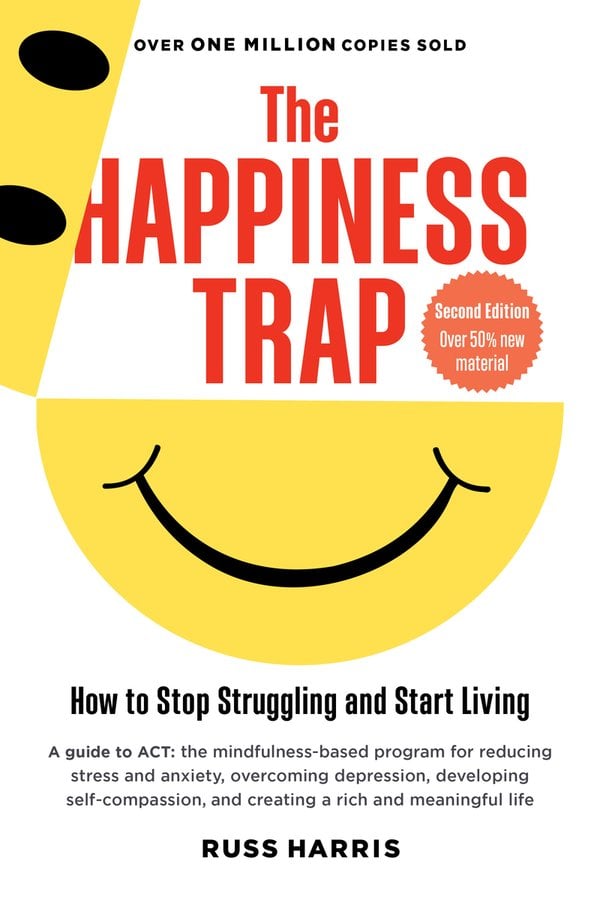
The Happiness Trap
By Russ Harris
Learn practical ACT-based strategies for handling difficult thoughts and emotions while building a more meaningful life.
Did you know? When you buy through Bookshop.org, you’re helping support independent bookstores.
3. Reduce Passive Consumption
One of the most overlooked causes of mediocrity is constantly taking in information without doing much with it.
Many people spend hours every day:
- Scrolling
- Watching
- Researching
- Comparing themselves to others online
And while it can feel like you’re engaged or making progress, it often doesn’t lead to meaningful results. It creates an illusion where you’re mentally involved, but your real-world actions aren’t actually moving forward.
Over time, that imbalance can reduce your initiative and make taking action feel more difficult than simply observing.
If you want to overcome mediocrity and stand out, that balance needs to change.
More of your time should go toward:
- Creating
- Practicing
- Building
- Learning actively through doing
and less time spent constantly watching other people’s lives instead of developing your own.
4. Focus on Fewer Goals
Many people stay stuck in mediocrity because their energy is spread in too many directions.
They try to improve:
- Everything
- All at once
- Right now
On the surface, it feels productive. In reality, it often leads to overwhelm and scattered effort.
When your attention is divided, progress slows down across the board, and nothing gets enough consistency to build real momentum.
Real growth usually comes from focus, not from spreading yourself too thin. Instead of chasing ten goals at a superficial level, it’s often more effective to focus on one or two and go deeper with them.
Because depth changes everything.
When your effort is focused, repetition becomes easier, progress becomes more visible, and momentum starts to build in a way that scattered effort rarely allows.
5. Change Your Environment, Change Your Behavior
Your environment has a much bigger influence on your behavior than most people realize.
It affects things like:
- Focus
- Habits
- Standards
- Expectations
And because it operates in the background, it often shapes your decisions without you even noticing.
When your environment constantly encourages distraction, comfort, or low-effort choices, it becomes much harder to maintain growth—even when your intentions are good.
This includes things like:
- Social circles
- Physical surroundings
- Digital habits
- Daily routines
Each of these either supports your growth or pulls you away from the direction you’re trying to go.
Research suggests that environmental cues play an important role in shaping habits and can make certain behaviors easier to repeat over time.
That’s why learning to overcome mediocrity isn’t just about willpower or motivation. Sometimes it also means changing what you’re exposed to every day—especially the things that keep reinforcing the patterns you’re trying to leave behind.
6. Stop Comparing Yourself Constantly
Constant comparison usually takes away more clarity than it gives.
When you keep comparing yourself to:
- Exceptional success stories
- Curated lives on social media
- Unrealistic or out-of-context standards
you can end up feeling like you’re always behind, no matter how much progress you’ve made.
Over time, that feeling can turn into discouragement and, in some cases, even emotional paralysis—where taking action starts to feel pointless because the gap always seems too large.
But the problem usually isn’t your ambition. It’s the reference point you’re using.
A healthier comparison is much simpler:
Am I improving compared to who I used to be?
That shift changes the entire experience of growth. It brings your attention back to progress that is real and measurable in your own life instead of progress defined by someone else’s highlight reel.
Research suggests that frequent upward social comparisons can contribute to lower self-esteem and reduced well-being.
If comparison has become a habit, the 6-Minute Diary by UrBestSelf (available on Amazon) can help redirect your attention toward your own growth through daily reflection, gratitude, and intentional goal-setting.
Because in the end, sustainable growth is personal—not performative.
RELATED POST: Should You Accept Mediocrity to Be Happier? A Deep Look
7. Become Someone Who Finishes Things
A lot of people are good at starting things. Far fewer are consistent about finishing them.
Over time, mediocrity is often not caused by a lack of ideas or ambition—it comes from a pattern of unfinished work:
- Projects that never get completed
- Goals that get abandoned halfway
- Repeated inconsistency in follow-through
This creates a cycle where effort starts strong but rarely reaches completion.
Finishing things, even small ones, begins to break that cycle. Because completion builds something deeper than motivation.
It builds:
- Confidence
- Identity strength
- Momentum
Every time you finish something you started, you reinforce a simple message to yourself:
I follow through.
And that repeated message matters more than most people realize. Over time, it gradually changes how you see yourself—and how you approach the next thing you decide to start.
Studies indicate that perseverance and commitment to long-term goals are associated with higher levels of achievement across many areas of life.
If follow-through is something you struggle with, the Full Focus Planner (available on Amazon) can help you break larger goals into manageable actions and create more consistency in your daily habits.
8. Accept That Progress Will Feel Slow
One of the biggest reasons people give up is that their expectations don’t match reality.
They expect:
- Fast transformation
- Quick, visible success
- Dramatic breakthroughs early on
But meaningful growth rarely works that way.
In the beginning, progress often feels almost too small to matter.
- Results are subtle
- Effort feels invisible
- Progress feels uncertain or difficult to measure
And this is the stage where most people lose momentum—not because nothing is happening, but because it doesn’t feel like enough is happening.
In reality, though, this slower phase is part of the process, not a sign that something is wrong.
Evidence shows that habit formation takes time and that lasting behavior change usually develops gradually rather than through immediate transformation.
The people who eventually stand out are often not the ones who moved the fastest, but the ones who kept going when progress still felt unclear.
Why Standing Out Is Not About Perfection
Many people assume that standing out means:
- Being extraordinary all the time
- Outperforming everyone around you
- Becoming flawless in every area
But in reality, that’s usually not what it looks like. People who make a real impact are rarely perfect.

Instead, they tend to be:
- Consistent
- Intentional
- Willing to keep learning and improving
- Comfortable being uncomfortable
What sets them apart isn’t constant excellence—it’s persistence and direction over time.
RELATED POST: 7 Signs You’re Stuck in a Mediocre Mindset and How to Change It
The Difference Between High Performers and Everyone Else
The biggest difference is rarely intelligence.
More often, it comes down to a few qualities that may not seem remarkable at first:
- Emotional resilience
- Consistency
- Tolerance for discomfort
- Focus
- A willingness to keep going even when progress feels slow
These aren’t flashy traits, but they often have a bigger impact on long-term results than raw ability.
Most people don’t fall short because they’re incapable of improving—they fall short because they give up too soon.
They:
- Get discouraged quickly
- Expect immediate results
- Return to comfort when things become difficult
And by doing that, they interrupt the very process that would have created change.
Meanwhile, high performers usually don’t experience growth as something dramatic. Instead, it develops quietly over time.
- Small efforts repeat.
- Habits stack.
- Skills compound.
And eventually, what looks like overnight success is often just the result of consistent effort that continued long after others decided to stop.
This idea is explored in greater detail in Grit by Angela Duckworth (available on Bookshop.org), which examines why perseverance and sustained effort often play a bigger role in success than natural talent.
book tip

Grit: The Power of Passion and Perseverance
By Angela Duckworth
This book dives into the science behind success, showing that it’s not just talent or intelligence that matters—but grit.
Did you know? When you buy through Bookshop.org, you’re helping support independent bookstores.
You Don’t Need to Become Famous to Escape Mediocrity
This is an important point to remember.
Learning to overcome mediocrity doesn’t mean you have to become:
- Rich
- Famous
- Elite
- Widely admired
Those things may happen for some people, but they’re not what growth is really about.
At its core, growth means becoming more aligned with your own potential—living in a way that reflects what you’re capable of instead of constantly operating below it.
A meaningful life can look very different from one person to another.
It might include:
- Purposeful work
- Emotional growth
- Healthy relationships
- Creative expression
- Personal discipline
None of these need external recognition to be valuable.
In that sense, standing out isn’t always something other people can see. Sometimes it simply means choosing not to live on autopilot—and instead taking responsibility for how you show up in your own life, day after day.
RELATED POST: Why Mediocre Relationships Feel “Fine” But Still Hurt You
Final Thoughts
Most people don’t overcome mediocrity because, in many ways, mediocrity feels comfortable, familiar, and safe. It rarely appears as something dramatic or obviously destructive.
Instead, it works quietly in the background, gradually limiting your potential through:
- Avoidance
- Inconsistency
- Comfort-seeking
- Distraction
- A steady fear of discomfort
Because it’s subtle, it can also be easy to live with—at least in the short term. But mediocrity is not your destiny.
It’s a pattern.
And patterns can be changed through:
- Repeated action
- Consistent effort
- Tolerance for discomfort
- Intentional living
The truth is, you don’t overcome mediocrity through one breakthrough moment or a single dramatic decision. You overcome it through small, repeated choices that gradually reshape your identity over time.
Not by becoming perfect. Not by becoming someone completely different.
But by becoming someone who consistently moves toward growth instead of repeatedly drifting back toward comfort.
*This article is for informational and educational purposes only and should not be considered a substitute for professional mental health advice. If you are experiencing emotional distress or mental health challenges, please seek guidance from a licensed therapist or mental health professional.
Gardner, Benjamin et al. “Making health habitual: the psychology of 'habit-formation' and general practice.” The British journal of general practice : the journal of the Royal College of General Practitioners vol. 62,605 (2012): 664-6. doi:10.3399/bjgp12X659466.
Lally, Phillippa, Cornelia H. M. van Jaarsveld, Henry W. W. Potts, and Jane Wardle. "How Are Habits Formed: Modelling Habit Formation in the Real World." European Journal of Social Psychology, vol. 40, no. 6, 2010, pp. 998–1009. https://doi.org/10.1002/ejsp.674.
Le Blanc-Brillon, Justine et al. “The associations between social comparison on social media and young adults' mental health.” Frontiers in psychology vol. 16 1597241. 8 Aug. 2025, doi:10.3389/fpsyg.2025.1597241. Adapted and used under the terms of the Creative Commons Attribution 4.0 International License.
Yeager, David S et al. “A national experiment reveals where a growth mindset improves achievement.” Nature vol. 573,7774 (2019): 364-369. doi:10.1038/s41586-019-1466-y. Adapted and used under the terms of the Creative Commons Attribution 4.0 International License.

Linda is the co-founder of Courier Mind and holds a Diploma in Natural Health Nutrition & Diet. Her passions include photography, personal growth, and travel, where she draws inspiration from diverse cultures and their approaches to mindset and self-discovery. She is committed to helping others set meaningful goals, overcome self-doubt, and become the best version of themselves.