


How to Cultivate a Growth Mindset When You’re Afraid to Fail
You want to try something new, but a familiar thought holds you back: What if I fail?
Maybe you’ve been thinking about applying for a new job, starting a business, learning a skill, going back to school, sharing your creative work, or simply doing something that takes you outside your comfort zone.
Part of you is curious to see what could happen. Another part feels much safer staying exactly where you are.
Fear of failure can be surprisingly persuasive. It can convince you that waiting is the sensible choice, that you need to feel more confident before you begin, or that making a mistake would somehow prove you weren’t capable in the first place.
But what if failure didn’t have to mean any of those things?
Learning to cultivate a growth mindset doesn’t mean you have to become fearless. It means changing the way you see challenges, mistakes, and uncertainty so that fear doesn’t automatically decide what you do next.
Instead of asking, “What if I fail?” you begin asking a much more useful question:
What could I learn if I try?
This post contains affiliate links, which means we may earn a commission if you purchase through our links—at no extra cost to you. As an Amazon Associate we earn from qualifying purchases. We only recommend products we use or trust. Learn more about affiliate marketing or read our full disclosure.
Why Does Fear of Failure Feel So Powerful?
Most of us don’t enjoy failing. But sometimes, we’re not simply afraid of the disappointing result. We’re afraid of what we think that result might say about us.
Found this helpful? Pin it for later so you can come back anytime.

You might worry that failing means you’re not talented enough, smart enough, capable enough, or ready enough.
That’s when fear of failure can pull you into a fixed-mindset trap.
With a fixed mindset, abilities can feel like something you either have or you don’t. Success starts to feel like proof that you’re capable, while failure can feel like proof that you aren’t.
So avoiding the challenge begins to feel safer.
- If you never apply, you can’t be rejected.
- If you never share your work, nobody can criticize it.
- If you never attempt the difficult thing, you never have to find out that you might not be good at it right away.
The problem is that avoiding failure often means avoiding the very experiences that help you grow.
RELATED POST: Fixed Mindset vs Growth Mindset: Which One Is Running Your Life?
What Does a Growth Mindset Have to Do With Failure?
A growth mindset is based on the idea that abilities can develop through learning, effective strategies, practice, feedback, and experience.
It doesn’t promise that you’ll succeed at everything you try. And it certainly doesn’t mean pretending that failure feels wonderful.
Instead, a growth mindset changes the meaning you give failure.
- A setback can become information rather than a verdict.
- A mistake can show you what needs more practice.
- Criticism can point out something you hadn’t noticed.
- A difficult beginning can simply mean you’re a beginner.
That shift may sound small, but it changes the question from:
Am I good at this?
to:
What would help me get better at this?
And that second question gives you somewhere to go.
If you want to understand the idea of a growth mindset more deeply, Mindset: The New Psychology of Success by Carol S. Dweck (available on Bookshop.org) is a great place to start. It explores how the way we think about ability, effort, and failure can shape how we approach learning and challenges.
book tip

Mindset: The New Psychology of Success
By Carol S. Dweck
Do you believe your abilities are fixed, or that you can grow with effort?
Did you know? When you buy through Bookshop.org, you’re helping support independent bookstores.
RELATED POST: Growth Mindset Isn’t Just Positive Thinking: 7 Myths That Miss the Point
Understanding the idea is one thing. Putting it into practice is where things begin to change. So, how can you cultivate a growth mindset when fear of failure is holding you back?
Here are some practical ways to start:
1. Notice the Story You Tell Yourself About Failure
When something goes wrong, pay attention to what happens immediately afterward. Not just on the outside, but in your own thoughts.
What do you tell yourself?
Maybe it sounds like:
- “I knew I couldn’t do this.”
- “Everyone else is better than me.”
- “I’m terrible at this.”
- “I should never have tried.”
These thoughts can feel like facts because they show up so quickly.
But there’s an important difference between describing what happened and creating a story about what happened.
“I didn’t get the job” describes an outcome.
“I didn’t get the job because I’m not good enough” is an interpretation of that outcome.
A growth mindset begins when you learn to separate the two.
Before accepting your first interpretation, ask yourself:
What actually happened, and what am I assuming it means?
That question alone can give you enough space to notice other possibilities.
RELATED POST: The Growth Mindset Background: What Really Shapes Our Ability to Learn?
2. Replace “I Can’t” With “I Can’t Yet”
The word yet is simple, but it can completely change the direction of a thought.
“I can’t do this” sounds final.“I can’t do this yet” leaves the door open.
- You might not understand something yet.
- You might not have the confidence yet.
- You might not have found the right strategy yet.
- You might simply need more practice.
Found this helpful? Pin it for later so you can come back anytime.

Adding “yet” doesn’t guarantee that everything will eventually become easy. It simply reminds you that what you can do today doesn’t necessarily define what you’ll be able to do tomorrow.
Instead of turning your current limitations into permanent identities, you begin to see them as starting points.
RELATED POST: The Ultimate Guide to Growth Mindset: From “I Can’t” to “I Can Learn”
3. Make the Goal Smaller Than Your Fear
One reason fear can feel overwhelming is that we often focus on the entire challenge at once.
- You’re not thinking about writing one paragraph. You’re thinking about writing the whole book.
- You’re not thinking about attending one class. You’re already wondering whether you’ll ever become good at the skill.
- You’re not thinking about sending one application. You’re already imagining the rejection.
When your mind jumps too far ahead, make the challenge smaller.
Ask:
What is the smallest action I can take that would still count as moving forward?
Maybe it’s researching the course. Writing the first 100 words. Practicing for ten minutes. Sending one email. Making one phone call. Taking one imperfect first attempt.
You don’t need enough courage for the entire journey. You only need enough for the next step.
If taking action still feels overwhelming, Tiny Habits by BJ Fogg (available on Bookshop.org) is a practical next read. It explores how making changes surprisingly small can help you get started and gradually build from there.
book tip
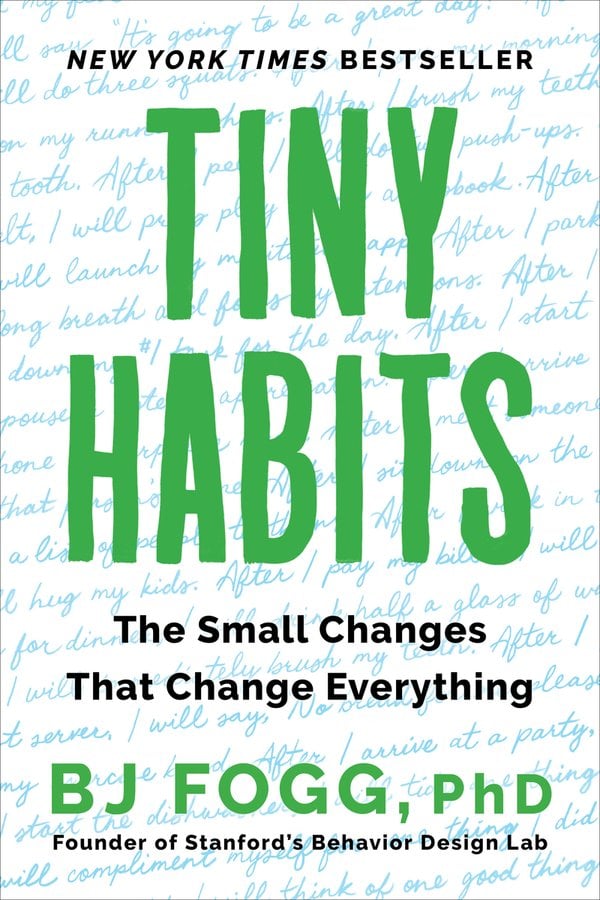
Tiny Habits
By BJ Fogg, PhD
Discover how tiny, consistent habits can lead to meaningful and lasting changes over time.
Did you know? When you buy through Bookshop.org, you’re helping support independent bookstores.
RELATED POST: 12 Simple Growth Mindset Tips to Change the Way You Think
4. Stop Treating Being a Beginner Like a Problem
There’s an uncomfortable stage in almost every learning process when your taste, expectations, or ambitions are far ahead of your abilities.
You know what good looks like. You just can’t produce it yet. That gap can be frustrating, especially when you compare your beginning with someone else’s years of experience.
But being bad at something new isn’t evidence that you shouldn’t be doing it. It’s often evidence that you’re learning.
People with impressive skills usually have something you don’t see: a long history of awkward attempts, mistakes, practice, corrections, and gradual improvement.
Give yourself permission to have that stage too.
Instead of saying:
I’m terrible at this.
Try:
This is what my beginning looks like.
If you’re curious about how people actually get better at difficult things, Peak by Anders Ericsson and Robert Pool (available on Bookshop.org) is well worth reading. It takes a closer look at how practice and learning can develop abilities that may once have seemed out of reach.
book tip

Peak
By Anders Ericsson and Robert Pool
This book challenges the idea of natural talent and shows how focused, structured practice can help anyone improve and perform at a higher level.
Did you know? When you buy through Bookshop.org, you’re helping support independent bookstores.
RELATED POST: 10 Inspiring Growth Mindset Examples—and What They Can Teach Us
5. Get Curious About Your Mistakes
Fear asks:
What if I get it wrong?
A growth mindset asks:
If I get it wrong, what can that teach me?
Imagine you give a presentation and it doesn’t go well.
You could decide:
I’m terrible at public speaking.
Or you could look a little closer.
- Were you underprepared?
- Did you speak too quickly?
- Were your slides unclear?
- Did nerves make you lose your place?
- Did you need more practice answering questions?
Suddenly, one vague judgment—I’m terrible—turns into several specific things you can actually work on. Curiosity makes failure feel less personal and more practical.
Try asking three questions after a setback:
- What worked?
- What didn’t?
- What will I try differently next time?
You’re no longer putting yourself on trial. You’re gathering useful information.
6. Change What You Count as Success
If success only means getting the perfect outcome, fear of failure will always have enormous power. So broaden your definition.
Sometimes success is:
- Trying when you wanted to avoid the situation.
- Asking for feedback.
- Completing something imperfectly.
- Speaking up.
- Learning what doesn’t work.
- Staying with a difficult problem longer than you normally would.
- Changing strategies.
- Discovering that something isn’t right for you.
None of these necessarily come with applause or obvious rewards. But they can still be signs of growth.
Try measuring yourself by something you can influence:
Did I learn? Did I practice? Did I adapt? Did I show up?
The outcome matters, but it doesn’t have to be the only measure of success.
If you often focus on how far you still have to go, The Gap and The Gain by Dan Sullivan and Dr. Benjamin Hardy (available on Bookshop.org) offers a useful change in perspective. It explores the value of measuring yourself against where you started rather than constantly comparing yourself with an ideal you haven’t reached yet.
book tip
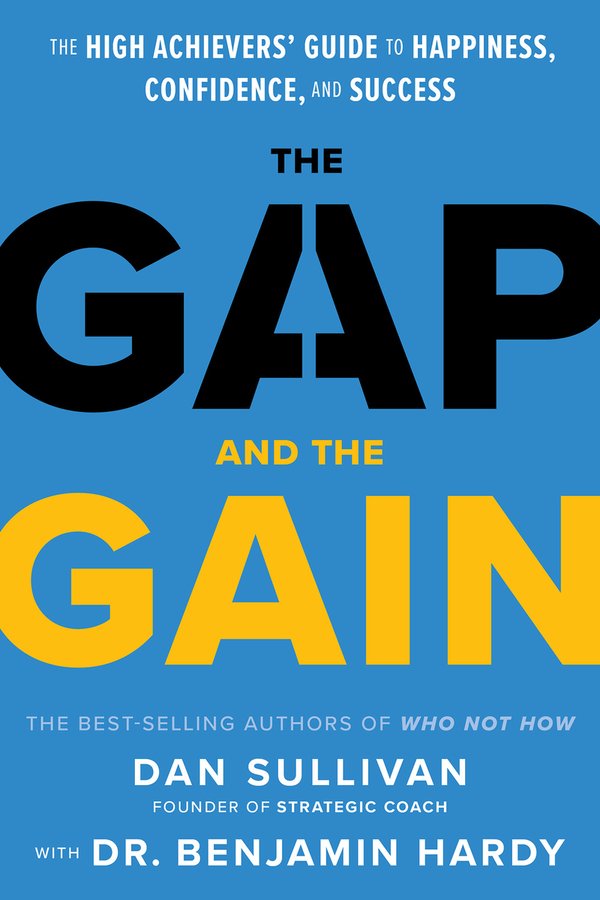
The Gap and The Gain
By Dan Sullivan and Dr. Benjamin Hardy
Discover how changing the way you measure progress can lead to greater motivation, confidence, and gratitude.
Did you know? When you buy through Bookshop.org, you’re helping support independent bookstores.
7. Don’t Confuse Growth Mindset With “Just Try Harder”
There’s an important distinction here. A growth mindset isn’t about endlessly repeating the same approach and hoping determination will eventually make it work.
Effort matters, but strategy matters too.
If something isn’t working, you may need to ask for help.
- Get feedback.
- Find a teacher.
- Change your approach.
- Take a break.
- Learn a missing skill.
- Study how someone with more experience approaches the problem.
Sometimes persistence means continuing. Sometimes persistence means being flexible enough to stop doing what isn’t working and try something else.
Growth isn’t simply about trying harder. It’s about learning better.
RELATED POST: Growth Mindset and the Brain: What Does Science Actually Say?
8. Get More Comfortable With Failure in Low-Stakes Situations
If you’ve spent years avoiding failure, you probably won’t suddenly feel comfortable with it because you read one encouraging sentence.
You can, however, get more comfortable with uncertainty through practice.
Choose small situations where the consequences of getting something wrong are relatively minor.
- Try a recipe you’ve never made.
- Attempt a difficult puzzle.
- Take a beginner class.
- Speak a few words in a language you’re learning.
- Draw something even if you don’t consider yourself artistic.
- Ask a question you worry might sound obvious.
These small experiences can teach you something valuable:
- You can feel uncomfortable without being overwhelmed by the discomfort.
- You can make mistakes and keep going.
- You can look inexperienced and be okay.
Over time, that matters.
RELATED POST: How to Develop a Growth Mindset When Giving Up Feels Easier
9. Compare Yourself With Your Past Self
Comparison can make it much harder to cultivate a growth mindset. You see someone performing brilliantly and forget that you’re looking at the result of experiences, practice, and setbacks you know nothing about.
Instead, look backward.
- What can you do now that once felt difficult?
- What do you understand today that confused you a year ago?
- What situations have become easier?
- What mistakes have you stopped making?
Growth often happens so gradually that it’s difficult to notice while you’re living through it.
Looking backward can make that progress easier to see. You may discover that you already have evidence that your abilities can change.
10. Let Yourself Be Proud of the Attempt
Not every brave attempt ends in success.
- Sometimes you apply and still get rejected.
- You practice and still lose.
- You create something and nobody notices.
- You take the risk and wish the outcome had been different.
A growth mindset doesn’t require you to pretend you’re happy about any of that.
You can be disappointed and still recognize something important:
You did the thing you were afraid to do.
That matters. Every time you act despite uncertainty, you weaken the idea that you need to know the outcome before you begin.
And sometimes, that is the growth.
If fear of not being good enough makes it difficult to put yourself out there, The Gifts of Imperfection by Brené Brown (available on Bookshop.org) is a thoughtful companion to this idea. It explores vulnerability, authenticity, and what can change when you stop making perfection a requirement for showing up.
book tip

The Gifts of Imperfection
By Brené Brown
Ever feel like you’re trying too hard to be perfect—and it’s exhausting? Then this book is for you.
Did you know? When you buy through Bookshop.org, you’re helping support independent bookstores.
Final Thoughts
It’s easy to imagine that confident people take action because they don’t experience fear. But often, they act with fear.
That distinction matters.
Waiting until you feel completely confident can leave you waiting indefinitely. Confidence often develops after you begin collecting evidence that you can handle challenges, mistakes, awkward beginnings, and unexpected outcomes.
So perhaps the goal isn’t:
How do I make sure I never fail?
Maybe it’s:
How do I become someone who knows what to do when I do?
That’s where a growth mindset becomes powerful.
You stop needing every attempt to prove that you’re capable. You allow yourself to learn. To adjust. To ask for help. To be a beginner. To try again.
And perhaps most importantly, you stop treating failure as the opposite of growth. Sometimes, it’s where growth begins.
*This article is for informational and educational purposes only and should not be considered a substitute for professional mental health advice. If you are experiencing emotional distress or mental health challenges, please seek guidance from a licensed therapist or mental health professional.
Bernstein, Jeffrey, Ph.D. "The Best Way to Feel Better." Psychology Today, 30 May 2024, https://www.psychologytoday.com/us/blog/liking-the-child-you-love/202405/the-best-way-to-feel-better. Accessed 14 August 2024.
Dweck, Carol S, and David S Yeager. “Mindsets: A View From Two Eras.” Perspectives on psychological science : a journal of the Association for Psychological Science vol. 14,3 (2019): 481-496. doi:10.1177/1745691618804166.
"Growth Mindset." Psychology Today, reviewed by Psychology Today Staff, https://www.psychologytoday.com/us/basics/growth-mindset. Accessed 14 August 2024.
Hall, Karyn, Ph.D. "Doing Something New Is Good for You." Psychology Today, 18 Mar. 2024, https://www.psychologytoday.com/intl/blog/pieces-of-mind/202201/doing-something-new-is-good-for-you. Accessed 14 August 2024.
Kidd, Celeste, and Benjamin Y Hayden. “The Psychology and Neuroscience of Curiosity.” Neuronvol. 88,3 (2015): 449-60. doi:10.1016/j.neuron.2015.09.010.
National Academies of Sciences, Engineering, and Medicine, Policy and Global Affairs, Board on Higher Education and Workforce, Committee on Effective Mentoring in STEMM. The Science of Effective Mentorship in STEMM. Edited by Dahlberg ML and Byars-Winston A, National Academies Press, 30 Oct. 2019. https://www.ncbi.nlm.nih.gov/books/NBK552775/.
Ng, Betsy. “The Neuroscience of Growth Mindset and Intrinsic Motivation.” Brain sciences vol. 8,2 20. 26 Jan. 2018, doi:10.3390/brainsci8020020. Adapted and used under the terms of the Creative Commons Attribution 4.0 International License.
Schroder, Hans S. "Mindsets in the Clinic: Applying Mindset Theory to Clinical Psychology." Clinical Psychology Review, vol. 83, 2021, 101957, https://doi.org/10.1016/j.cpr.2020.101957.
Styk, Wojciech et al. “Persistence Is Multi-Trait: Persistence Scale Development and Persistence Perseveration and Perfectionism Questionnaire into Polish Translation.” Brain sciences vol. 13,6 864. 26 May. 2023, doi:10.3390/brainsci13060864. Adapted and used under the terms of the Creative Commons Attribution 4.0 International License.

Linda is the co-founder of Courier Mind and holds a Diploma in Natural Health Nutrition & Diet. Her passions include photography, personal growth, and travel, where she draws inspiration from diverse cultures and their approaches to mindset and self-discovery. She is committed to helping others set meaningful goals, overcome self-doubt, and become the best version of themselves.