


Why SMART Goals Work Better Than Regular Goals
Most people start with goals that sound like this:
- “I want to get fit.”
- “I want to make more money.”
- “I want to be more productive.”
- “I want to read more.”
At first, these goals feel meaningful when you write them down. They’re simple, motivating, and easy to relate to, making it easy to picture the outcome you want.
But there’s a catch.
They’re too broad. They don’t tell you exactly what to do next or how to measure your progress.
Without a clear roadmap, it’s hard to know where to begin or how to keep moving forward. Because of that, they often fade into the background over time.
SMART goals work differently.
They turn broad intentions into clear, practical, and actionable plans that make it easier to take the first step and stay committed along the way.
Let’s take a closer look at what that means.
This post contains affiliate links, which means we may earn a commission if you purchase through our links—at no extra cost to you. As an Amazon Associate we earn from qualifying purchases. We only recommend products we use or trust. Learn more about affiliate marketing or read our full disclosure.
The Problem With Regular Goals
How many times have you set goals you genuinely wanted to achieve, only to never fully follow through?
Found this helpful? Pin it for later so you can come back anytime.

Goals that stayed in the back of your mind because you believed that, if you thought about them long enough, they would eventually become reality?
I’ve been there too.
And most of the time, the problem wasn’t a lack of motivation—it was simply not knowing where to start.
No clear first step. No framework. No direction for what to do next.
Regular goals are usually:
- Emotional
- Vague
- Outcome-focused
- Open-ended
They often sound motivating, but they don’t give you much structure.
For example: “I want to get in shape.”
But what does that actually mean?
- Lose weight?
- Build muscle?
- Run faster?
- Be healthier overall?
There’s no clear definition, so your brain naturally fills in the gaps—often with unrealistic expectations.
And that’s where the problems begin:
- No clear starting point
- No measurable progress
- No defined endpoint
- No feedback loop
Without clarity, taking consistent action becomes difficult. And without consistency, progress often stalls.
If you enjoy writing your goals down, a VIVID SCRIBBLES Bullet Journal (available on Amazon) is a simple but effective tool for turning ideas into actionable plans. It gives you the flexibility to organize your SMART goals, track your progress, and create a system that works for you.
What SMART Goals Actually Mean
SMART is an acronym:
- Specific
- Measurable
- Achievable
- Relevant
- Time-bound
Each part addresses a different weakness found in regular goals. But the real value of SMART goals isn’t the acronym itself—it’s the structure it encourages you to create.
Let’s break it down:
1. Specific Goals Remove Confusion
Regular goal: “I want to get better at fitness.”
SMART version: “I will go to the gym 3 times per week.”
The difference is clarity.
A specific goal answers questions like:
- What exactly am I doing?
- When am I doing it?
- How am I doing it?
Just as importantly, it removes the uncertainty that so often comes with vague goals.
Why this matters:
Your brain doesn’t respond well to unclear targets. It works much better when it has clear directions to follow—something concrete to act on instead of something it has to figure out.
When a goal is specific:
- You spend less energy deciding what to do next
- You reduce procrastination caused by uncertainty
- You eliminate unnecessary mental friction
- Clarity creates action. Confusion creates delay.
Research on goal-setting has consistently found that specific goals produce better results than vague intentions. Clear targets reduce uncertainty and make it easier to take meaningful action.
2. Measurable Goals Help You Track Progress
One of the biggest problems with regular goals is that it’s difficult to know whether you’re actually making progress.
For example: “I want to be more productive.”
But how would you measure that?
You can’t—not in a clear or reliable way. As a result, your brain doesn’t get meaningful feedback to work with.
SMART goals solve this:
I will complete 3 focused work sessions per day.
Now the goal is measurable.
You can ask:
- Did you do it or not?
- How often are you staying consistent?
- Are you improving over time?
Why this matters:
People naturally respond to signs of progress. It’s not enough to put in effort—you also need evidence that your effort is leading somewhere.
Research on self-regulation and goal progress has found that people are more likely to achieve their goals when they regularly track their progress.
Put simply, tracking increases awareness, supports consistency, and helps turn good intentions into meaningful action.
When you can see progress:
- Motivation increases
- Consistency improves
- Habits become stronger
Without measurement, your effort can feel invisible. And when progress feels invisible, it becomes much easier to lose momentum and eventually give up.
If you want an easy way to track your progress and stay consistent, the Legend Planner PRO (available on Amazon) is a great companion. It combines goal-setting pages, habit trackers, and weekly planning to help you measure what matters and stay on course.
Found this helpful? Pin it for later so you can come back anytime.

3. Achievable Goals Prevent Burnout
Regular goals are often broad, emotionally driven, and a little too ambitious in the moment:
- “I will completely change my lifestyle.”
- “I will become extremely disciplined.”
- “I will transform my life this month.”
These goals sound exciting, and they can feel incredibly motivating when you first set them. But they’re often not based on what’s realistically sustainable in everyday life.
SMART goals add an important reality check.
Instead of: “I will work out every day for 2 hours.”
You shift to: “I will work out 3 times per week for 45 minutes.”
The goal is still meaningful, but now it fits within the limits of your actual schedule and responsibilities.
This matter because when a goal is too difficult to maintain, it often leads to:
- Failure cycles
- Guilt
- Burnout
- Inconsistency
Over time, that combination makes it harder—not easier—to keep moving forward.
Achievable goals, on the other hand, help you build steady momentum instead of constant pressure. And that momentum is often what leads to lasting change.
4. Relevant Goals Keep You Focused
Regular goals often come from impulse:
- Inspiration from social media
- Comparing yourself to others
- Short-term bursts of motivation
The challenge is that not all of those goals actually fit what you need or want in your life right now.
SMART goals introduce relevance as a filter:
Does this goal actually matter to me at this stage of my life?
This matters because when a goal isn’t relevant:
- You lose interest quickly
- You struggle to stay consistent
- You feel internal resistance
It starts to feel like something you “should” do instead of something you genuinely want to do.
But when a goal is relevant:
- Your effort feels more meaningful
- Consistency becomes easier to maintain
- Motivation stays more stable over time
Relevance connects your actions to a deeper purpose. And while motivation naturally comes and goes, purpose is often what keeps you moving forward after the initial excitement fades.
5. Time-Bound Goals Create Urgency
Regular goals are often open-ended:
- “Someday I’ll do this.”
- “I want to eventually achieve that.”
The problem is simple: “Without a deadline, nothing feels urgent.”
SMART goals solve this by adding a clear timeframe: “I will achieve this in 8 weeks.”
Research on goal-setting suggests that time is one of the key characteristics of effective goals. A specific deadline helps organize your actions, guide your decisions, and prevent goals from dragging on indefinitely.
This matters because headlines do a few important things:
- Prevent procrastination
- Improve focus
- Create structure
- Force prioritization
When there’s a clear timeframe, you’re no longer just “working on it whenever.” You’re making decisions with a finish line in sight.
Without a deadline, goals often drift endlessly. And when goals drift, they rarely get finished.
If you want to get better at setting deadlines that lead to real progress, The 12 Week Year by Brian P Moran (available on Bookshop.org) offers a practical approach. It explains how working in shorter planning cycles can improve focus, accountability, and execution.
book tip
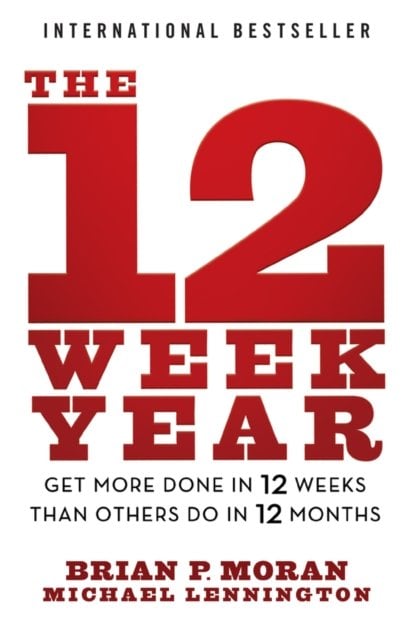
The 12 Week Year
By Brian P. Moran
Learn how shorter planning cycles can help you stay focused, motivated, and productive.
Did you know? When you buy through Bookshop.org, you’re helping support independent bookstores.
Why SMART Goals Work Better as a System (Not Just a Method)
The biggest advantage of SMART goals isn’t any single part of the framework on its own. It’s how all the pieces work together.
Each element addresses a different weakness in traditional goal setting, and together they create something far more effective than motivation alone.
They create a system where:
- Clarity replaces confusion
- Measurement replaces guesswork
- Structure replaces randomness
- Realism replaces burnout
- Deadlines replace procrastination
Each of these improvements is valuable on its own. Together, they completely change how goals work in everyday life.
Instead of remaining vague intentions that depend on motivation, SMART goals become something far more reliable—a system that guides your actions, measures your progress, and keeps your efforts aligned over time.
That’s what turns goals from ideas into action.
RELATED POST: Why Positive Thinking Isn’t Enough to Reach Your Goals
How SMART Goals Compare to Regular Goals
Regular Goal: “I want to save money.”
Problems:
- No amount defined
- No timeline
- No method
- No tracking
SMART Goal: “I will save $200 per month for 6 months by reducing dining out.”
Now you have:
- Clear target
- Clear timeline
- Clear behavior
- Measurable progress
The intention is the same. The difference lies in the quality of execution.
The SMART version takes an abstract idea and turns it into something you can actually do, track, and adjust over time.
Why SMART Goals Reduce Goal Failure
Most goals don’t fail because people lack motivation.
They fail for very predictable reasons:
- They’re too vague
- They’re too big to manage all at once
- There’s no way to track progress
- There’s no deadline pushing action forward
- There’s no real structure behind them
SMART goals are effective because they directly address each of these common reasons goals fail.
They:
- Define exactly what needs to be done
- Make progress visible and measurable
- Reduce overwhelm by narrowing your focus
- Increase accountability through clarity
- Create natural deadlines that encourage action
Rather than relying on motivation or guesswork, SMART goals provide a framework that makes consistent follow-through much more likely by design.
That’s why they consistently improve success rates—not because they make goals more exciting, but because they make them easier to execute.
RELATED POST: How to Set Goals Without Burning Out After 2 Weeks
The Psychological Advantage of SMART Goals
SMART goals don’t just improve planning—they also change how you think about and experience your progress.
They create:
- A stronger sense of control
- Less anxiety about what to do next
- Clearer expectations from the beginning
- Greater confidence through visible progress
Without structured goals, people often feel:
- Like they’re always behind
- Unsure of what to focus on
- Inconsistent in their actions
- Easily discouraged when progress feels unclear
SMART goals improve that experience by replacing uncertainty with clarity. And when you have clarity, there’s simply less mental friction getting in your way.
Instead of constantly wondering what to do next or whether you’re making progress, you can focus your energy on taking action.
That shift alone can make the entire process feel much more manageable.
One Hidden Benefit: Identity Reinforcement
Every time you complete a SMART goal, you reinforce the way you see yourself.
For example:
- “I went to the gym 3 times this week” → I am consistent
- “I saved money this month” → I am financially responsible
- “I studied every day” → I am disciplined
Regular goals don’t create this kind of reinforcement because they’re often too vague to measure or consistently complete.
There’s no clear moment of success for your brain to recognize.
SMART goals, however, turn actions into clear, repeatable evidence of who you’re becoming. Over time, that evidence becomes more powerful than motivation alone.
Identity drives long-term behavior. Once you begin to see yourself in a certain way, your actions naturally become more aligned with that belief than with temporary motivation.
If you’re interested in the science behind lasting behavior change, Tiny Habits by BJ Fogg (available on Bookshop.org) is well worth reading. It explains how small, repeatable behaviors can gradually reshape your habits—and even the way you see yourself.
book tip
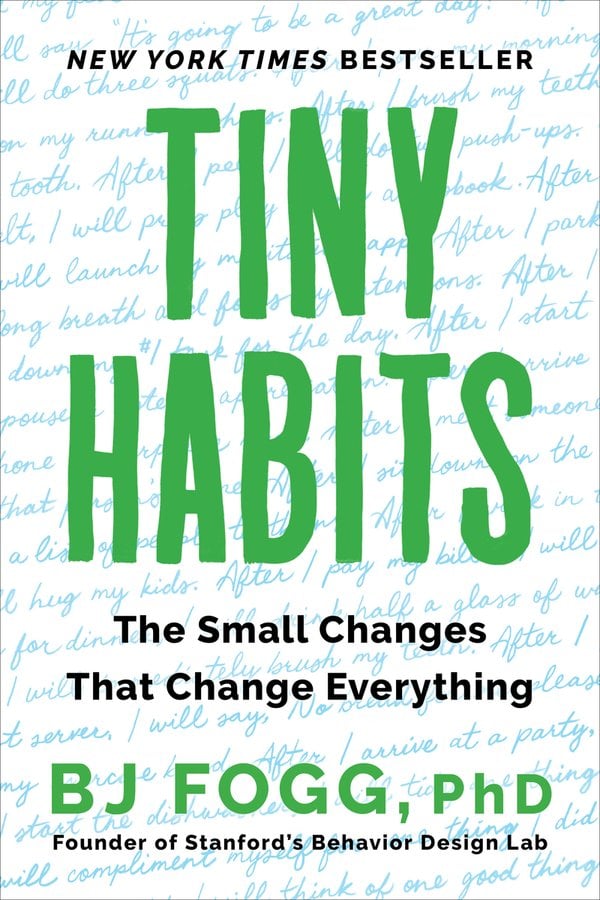
Tiny Habits
By BJ Fogg, PhD
Discover how tiny, consistent habits can lead to meaningful and lasting changes over time.
Did you know? When you buy through Bookshop.org, you’re helping support independent bookstores.
Common Mistake: Treating SMART Goals as Too Rigid
One common misconception is that SMART goals are restrictive or inflexible. But that isn’t really their purpose.
The goal isn’t restriction—it’s clarity.
Even so, people sometimes run into problems when they:
- Set too many SMART goals at once
- Make them more complicated than necessary
- Treat them like strict rules instead of practical guidelines
When that happens, the system can start to feel overwhelming rather than helpful.
The best SMART goals are:
- Simple
- Focused
- Flexible enough for real life
They’re designed to guide your behavior, not control it.
In practice, they work best when they provide structure while still leaving room to adapt, so you can stay consistent even when life doesn’t go exactly as planned.
How to Make SMART Goals Actually Work in Practice
Here’s a simple way to use them effectively:
- Step 1: Start With a Vague Goal – “I want to get healthier.”
- Step 2: Define One Clear Behavior – “I will walk 20 minutes daily.”
- Step 3: Make It Measurable – Track your daily walks.
- Step 4: Ensure It Is Realistic – Can you still do it on a bad day?
- Step 5: Set a Timeline – “For the next 30 days.”
This is how you turn intention into action.
If you’re ready to put SMART goals into action, the Full Focus Planner by Michael Hyatt (available on Amazon) is designed to help you do exactly that. It breaks bigger goals into manageable daily and weekly actions, making it easier to stay focused and follow through.
SMART Goals Still Require One Thing Most People Ignore
Even with the perfect structure in place, one factor ultimately determines success: consistency over intensity.
SMART goals don’t work because they look good on paper. They work because they’re realistic enough to repeat in everyday life.
A simple goal completed consistently will almost always outperform an ambitious goal completed inconsistently.
It’s easy to focus on making goals bigger, harder, or more impressive. But lasting progress usually comes from showing up and repeating manageable actions, even when motivation is low.
In the end, SMART goals aren’t about doing more—they’re about doing what matters most, consistently enough for the results to compound over time.
If you’d like to learn more about building lasting habits, Atomic Habits by James Clear (available on Bookshop.org) is an excellent next read. It shows why small, consistent actions often lead to much bigger results than relying on motivation alone.
book tip

Atomic Habits
By James Clear
Want to change your life without relying on willpower?
Did you know? When you buy through Bookshop.org, you’re helping support independent bookstores.
RELATED POST: 13 New Year’s Resolutions That Finally Work—Here’s the Method
Final Thoughts
SMART goals work better than regular goals because they address the core issues that cause most people to fall short:
- Lack of clarity
- Lack of measurement
- Unrealistic expectations
- Weak structure
- No deadlines
They take vague intentions and turn them into something practical and actionable.
More importantly, they shift your mindset from: “I hope I achieve this”
to: “I know exactly what I need to do next.”
That shift is more powerful than it may seem. It removes uncertainty from the process and replaces it with clear direction.
Because in the end, success usually doesn’t come from setting bigger or more ambitious goals.
It comes from setting better-designed goals—ones that are clear enough to act on and structured enough to follow through with consistently.
*This article is for informational and educational purposes only and should not be considered a substitute for professional mental health advice. If you are experiencing emotional distress or mental health challenges, please seek guidance from a licensed therapist or mental health professional.
Harkin, Benjamin, et al. “Does Monitoring Goal Progress Promote Goal Attainment? A Meta-Analysis of the Experimental Evidence.” Psychological Bulletin, vol. 142, no. 2, 2016, pp. 198–229. American Psychological Association, https://doi.org/10.1037/bul0000025. Abtract only.
Schkolski, A. "The influence of goal setting on the personal productivity of knowledge workers: a systematic literature review". International Journal of Productivity and Performance Management, Vol. 74 No. 11 pp. 93–118, 2025, doi: https://doi.org/10.1108/IJPPM-10-2024-0727. Adapted and used under the Creative Commons Attribution 4.0 International License.

Linda is the co-founder of Courier Mind and holds a Diploma in Natural Health Nutrition & Diet. Her passions include photography, personal growth, and travel, where she draws inspiration from diverse cultures and their approaches to mindset and self-discovery. She is committed to helping others set meaningful goals, overcome self-doubt, and become the best version of themselves.