


The Psychology of Starting Over Again and Again
There’s a moment that almost everyone can relate to. You tell yourself that this time will be different.
- Maybe it’s a fitness goal.
- A new habit.
- A business project.
- A budget.
- A morning routine.
- A promise you’ve made to yourself countless times before.
You feel motivated, focused, and ready to begin. You make a plan, choose a start date, and imagine how different your life could look in a few weeks or months.
Then something gets in the way.
- You miss a workout.
- You skip a few days.
- You fall behind on your schedule.
- Life gets busy.
And before you know it, you’re right back where you started.
Again.
At first, it’s simply frustrating. But when it keeps happening, that frustration often turns into something deeper.
- Disappointment.
- Self-doubt.
- Loss of confidence that becomes harder and harder to ignore.
You start asking yourself why you always seem to end up in the same place. Why do some people seem to stay consistent while others feel trapped in a cycle of constantly starting over?
The answer has more to do with the psychology of starting over than most people realize. The real problem usually isn’t failure itself.
It’s what repeated restarts do to the way you see yourself.
This post contains affiliate links, which means we may earn a commission if you purchase through our links—at no extra cost to you. As an Amazon Associate we earn from qualifying purchases. We only recommend products we use or trust. Learn more about affiliate marketing or read our full disclosure.
Why Starting Over Feels So Exhausting
Most people think the hardest part of making a change is the work itself.
- The workouts.
- The studying.
- The saving.
- The discipline.
Found this helpful? Pin it for later so you can come back anytime.
But for many people, the hardest part is actually starting again after they’ve fallen off track. That’s because every new attempt carries emotional baggage from the ones that came before it.
The first time you start working toward a goal, you feel optimistic. The second time, you’re still hopeful.
By the fifth time, things often begin to feel different.
- You remember the plans that never worked out.
- The habits you couldn’t maintain.
- The promises you made to yourself.
- The excitement that gradually faded.
Now you’re not just starting a new goal. You’re also carrying the memory of every unfinished goal that came before it.
That emotional weight can make even small changes feel much harder than they really are.
The Hidden Cost of Repeated Failure
Most people think failure only slows progress. But what often goes unnoticed is that repeated failure can also weaken your self-trust.
Self-trust is your belief that you’ll follow through on what you say you’re going to do. It’s one of the most important psychological foundations for long-term success.
- Every time you follow through on a commitment, your self-trust grows.
- Every time you keep a promise to yourself, your confidence becomes a little stronger.
But when your goals keep falling apart, something else begins to happen. The story you tell yourself starts to change.
Instead of thinking:
I didn’t stick with this goal.
You start thinking:
I never stick with anything.
That’s a very different conclusion. The first statement describes a behavior. The second describes an identity.
And changing an identity is much harder than changing a behavior.
This is where many people get stuck. They’re no longer struggling with a failed habit. They’re struggling with a growing belief that they’re the kind of person who always gives up.
If repeated setbacks leave you feeling like you’re never making enough progress, The Gap and The Gain by Dan Sullivan and Dr. Benjamin Hardy (available on Bookshop.org) offers a refreshing perspective. It explains why measuring yourself against your past progress—instead of an impossible ideal—can completely change how you experience growth.
book tip
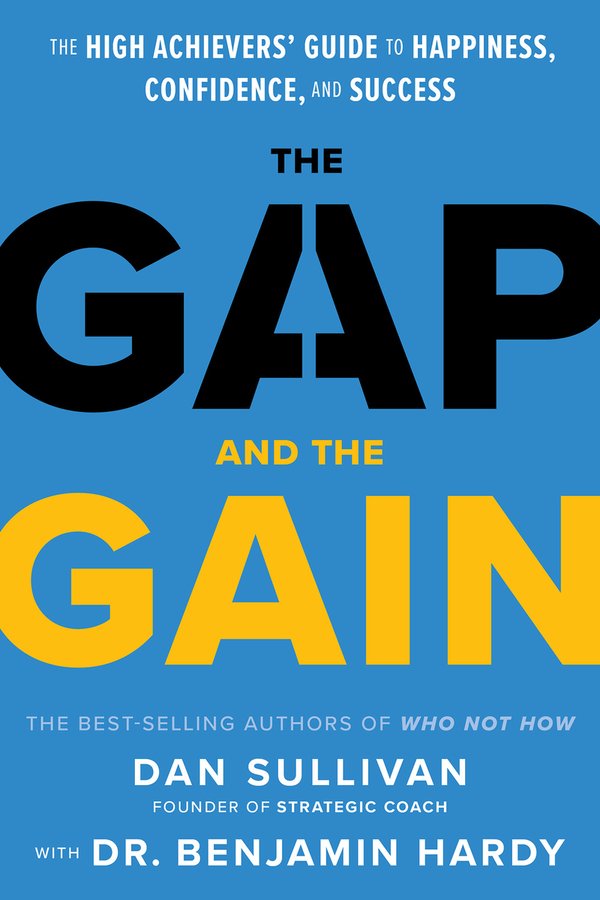
The Gap and The Gain
By Dan Sullivan and Dr. Benjamin Hardy
Discover how changing the way you measure progress can lead to greater motivation, confidence, and gratitude.
Did you know? When you buy through Bookshop.org, you’re helping support independent bookstores.
Why One Missed Day Becomes a Missed Month
One of the most interesting aspects of the psychology of starting over is how small setbacks can grow into much bigger ones.
- Objectively, missing one workout isn’t a major problem.
- Skipping one study session isn’t a major problem.
- Having one unhealthy meal isn’t a major problem.
Yet many people react as though they’ve completely failed.
Why?
Because the missed action becomes symbolic. It’s no longer just about the workout or the habit. It becomes evidence.
- Evidence that the goal is slipping away.
- Evidence that the pattern is happening again.
- Evidence that they’re failing once more.
As a result, one missed day often leads to guilt. That guilt leads to avoidance, and avoidance leads to longer periods of doing nothing.
The original setback was small. The emotional reaction is what makes it much bigger. This is one reason consistency is often more psychological than practical.
The challenge isn’t recovering from the missed day. The challenge is recovering from what that missed day means to you.
RELATED POST: The Hidden Mistake People Make When Setting Goals
The Cycle That Keeps You Starting Over
For many people, the cycle looks something like this:
- Motivation.
- Action.
- Setback.
- Self-criticism.
- Avoidance.
- Restart.
- Repeat.
Notice what’s missing?
Learning.
A lot of people start over without ever figuring out why the previous attempt didn’t work. They simply wait for motivation to come back.
Then they try again using the same approach.
When the same situation keeps leading to the same result, it’s easy to become even more discouraged. Over time, the cycle starts to feel emotionally exhausting.
Not because the goals are impossible. But because nothing really changes from one attempt to the next.
Why Motivation Is Often Misunderstood
Motivation gets a lot of attention in the self-improvement world.
People are always looking for ways to get more of it.
- More inspiration.
- More discipline.
- More determination.
But motivation is often misunderstood.
Motivation is great for getting started. It’s much less reliable when it comes to helping you keep going.
Everyone experiences ups and downs in energy, focus, and enthusiasm. The problem is that many goals are built on the assumption that motivation will stay high forever.
When motivation fades, people often take it as a sign that something is wrong. In reality, it’s completely normal for motivation to come and go.
The real question isn’t whether motivation will disappear. It’s whether your habits can continue when it does.
People who stay consistent aren’t necessarily more motivated than everyone else. They’ve simply built systems that don’t rely entirely on motivation.
If you’re ready to build habits that last even when motivation fades, Atomic Habits by James Clear (available on Bookshop.org) is one of the best books on the subject. It explains how small, consistent changes can create remarkable long-term results.
book tip

Atomic Habits
By James Clear
Want to change your life without relying on willpower?
Did you know? When you buy through Bookshop.org, you’re helping support independent bookstores.
RELATED POST: Why Visualizing Failure Makes WOOP Goal Setting So Powerful
When Starting Over Becomes Part of Your Identity
Repeated restarts often lead to an identity problem. After enough failed attempts, people begin to see the pattern as part of who they are.
They stop saying:
I failed at this goal.
And start saying:
- “I’m bad at consistency.”
- “I’m lazy.”
- “I’m undisciplined.”
- “I’m just not that kind of person.”
These conclusions feel true because they’re based on personal experience. But they’re often misleading.
Most people don’t fail because they’re incapable. They fail because the approach they’re using isn’t working.
There’s a big difference between those two explanations. One points to a personal flaw. The other points to a problem that can be solved.
Unfortunately, many people choose the first explanation without even realizing they’re doing it.
If this section resonated with you, Mindset by Carol Dweck (available on Bookshop.org) is well worth reading. It explains how the beliefs you hold about yourself shape your actions—and how shifting those beliefs can make change feel much more achievable.
book tip

Mindset: The New Psychology of Success
By Carol S. Dweck
Do you believe your abilities are fixed, or that you can grow with effort?
Did you know? When you buy through Bookshop.org, you’re helping support independent bookstores.
Why Most People Diagnose the Wrong Problem
Imagine someone decides they’re going to wake up at 5 a.m. every day.
- They stick to the routine for a week.
- Then life gets busy.
- They become tired.
- The habit disappears.
Many people immediately blame themselves. They assume they just don’t have enough discipline.
- But what if the goal itself was the problem?
- What if it was too ambitious?
- What if it didn’t fit their lifestyle?
- What if they were trying to change too many things at once?
- What if the system was flawed from the very beginning?
This is an important distinction.
Successful people don’t just look at the outcome. They look at the system behind it. When something isn’t working, they get curious instead of judgmental.
Instead of asking:
What’s wrong with me?
They ask:
What isn’t working here?
That question opens the door to improvement. The first question often leads to shame.
RELATED POST: Why SMART Goals Work Better Than Regular Goals
The Difference Between a Reset and a Restart
Most people think they’re restarting. In reality, they’re often just resetting.
A reset is emotional. It’s driven by frustration. You become disappointed with your lack of progress and decide to start over.
A restart is strategic. It begins with reflection.
It asks:
- What worked?
- What didn’t work?
- What obstacles showed up?
- What assumptions turned out to be wrong?
- What can be adjusted?
Without reflection, people often repeat the same process that failed before. With reflection, each new attempt becomes more informed than the last.
That’s how progress builds over time.
Building Self-Trust Again
If repeated failures weaken self-trust, how do you build it back up?
The answer is surprisingly simple:
Stop making promises to yourself that you can’t consistently keep.
Many people try to rebuild confidence through huge commitments.
- They create ambitious plans.
- Aggressive schedules.
- Dramatic transformations.
But self-trust isn’t built through intensity.
It’s built through evidence.
Small evidence.
Repeated evidence.
When you consistently do what you said you would do, your brain begins updating its beliefs. You start to see yourself as someone who follows through.
Not because you said you would. But because you’ve shown yourself that you can.
This is why small wins are so powerful.
They’re not important because of the immediate results they create. They’re important because of what they teach you about yourself.
Building self-trust isn’t just about what you accomplish—it’s also about noticing your progress along the way. The UrBestSelf 6-Minute Diary (available on Amazon) uses guided prompts for gratitude and reflection to help you recognize small wins and develop a more positive mindset over time.
RELATED POST: How to Break Down Goals So They Actually Feel Easy to Start
How to Break the Cycle
One of the most powerful shifts you can make is moving from emotional restarting to strategic restarting.
Instead of saying:
This time I’ll try harder.
You begin asking:
This time, what will I do differently?
That single question changes everything. It turns failure from a final judgment into useful information.
- The failed attempt becomes valuable.
- It reveals weaknesses in the system.
- It highlights unrealistic expectations.
- It shows where extra support might be needed.
The goal is no longer to avoid failure entirely. The goal is to learn something every time it happens.
That’s how growth becomes sustainable.
If you’re ready to stop starting over and begin working toward your goals with more intention, the Full Focus Planner by Michael Hyatt (available on Amazon) is a great companion. It helps you turn big goals into manageable daily actions so you can make steady progress without feeling overwhelmed.
RELATED POST: The 7 Areas of Life You Should Be Setting Goals In (Most People Ignore #3)
The Real Meaning of Resilience
Many people think resilience means never giving up. But resilience is often much more practical than that.
Resilience is the ability to keep going without turning every setback into a judgment about who you are.
- It’s the ability to separate behavior from identity.
- To recognize that a failed attempt doesn’t define you.
- To understand that consistency is a skill, not a personality trait.
And to keep adjusting instead of simply repeating the same pattern.
The strongest people aren’t always the ones who succeed right away. More often, they’re the people who learn how to restart in a smarter way.
Final Thoughts
The psychology of starting over isn’t really about failure. It’s about what failure leads you to believe about yourself.
When repeated setbacks weaken self-trust, every new beginning starts to feel harder.
Not because the goal has changed. But because your relationship with yourself has changed.
That’s why the solution isn’t finding endless amounts of motivation.
- It’s learning to look at setbacks differently.
- To see failure as feedback rather than evidence of personal weakness.
- To examine your systems instead of criticizing yourself.
- And to recognize that every successful person has had to start over many times.
The difference is that they didn’t just start over. They started differently.
And sometimes, that small shift changes everything.
*This article is for informational and educational purposes only and should not be considered a substitute for professional mental health advice. If you are experiencing emotional distress or mental health challenges, please seek guidance from a licensed therapist or mental health professional.

Malin, co-founder of Courier Mind, is passionate about personal growth and mindset. With a focus on self-discovery and goal-setting, she creates content that inspires confidence, balance, and growth for the mind and spirit.