


Your Comfort Zone Will Kill You—But Most People Never Realize It
The comfort zone seems harmless at first. It’s the place where you feel safe, where life feels predictable, and where nothing feels too stressful or uncomfortable.
On the surface, it can seem like exactly where you want to be.
But there’s a deeper truth that most people would rather avoid:
The comfort zone doesn’t feel dangerous while you’re living in it—it feels completely normal.
And that’s exactly what makes it so powerful… and so damaging.
Because the comfort zone doesn’t “kill” you in an obvious way. It doesn’t turn your life upside down overnight, and it doesn’t come with a warning sign.
Instead, it works little by little:
- Shrinking your potential
- Limiting your growth
- Dulling your ambition
- Keeping your life emotionally smaller than it could be
Most people never even realize it’s happening.
They simply wake up one day and think:
I’m not where I thought I would be.
In this article, I’ll explain why your comfort zone will kill you when it comes to making progress, why it feels so safe even when it isn’t, and how people end up trapped inside it without ever realizing it.
This post contains affiliate links, which means we may earn a commission if you purchase through our links—at no extra cost to you. As an Amazon Associate we earn from qualifying purchases. We only recommend products we use or trust. Learn more about affiliate marketing or read our full disclosure.
The Comfort Zone Isn’t Comfort — It’s Familiarity
The word “comfort” is a little misleading because your comfort zone isn’t always emotionally comfortable.
Found this helpful? Pin it for later so you can come back anytime.

More than anything, it’s familiar.
- It’s predictable
- Low-risk
- Habitual
- Known
And that changes everything.
You can be:
- Unhappy in it
- Stressed in it
- Bored in it
…and still not leave.
That’s the strange part. It doesn’t always make sense on the surface, but it happens all the time.
Why?
Because your brain doesn’t prioritize happiness as much as we often assume. Instead, it prioritizes familiarity and predictability.
So even a stressful routine can feel safer than stepping into an unknown situation that might actually be better. That’s the real trap.
It isn’t comfort itself—it’s the way familiarity disguises itself as comfort and keeps you exactly where you are.
RELATED POST: The Ultimate Guide to the Comfort Zone: What It Is and How to Break Free
Why the Comfort Zone Feels Safe (Even When It’s Not)
Your brain is constantly scanning for potential risks, whether you notice it or not.
And it follows a surprisingly simple rule:
If something is familiar, it feels safer than something that isn’t.
That tendency didn’t come from nowhere. For most of human history, unfamiliar situations could involve real danger, while familiar routines and environments were usually safer and easier to navigate.
But in modern life, that same system can work against you.
Because now:
- Staying stuck can feel safe
- Even when it limits your life
- Even when it slowly reduces your future opportunities
As a result, people often stay in situations that no longer serve them simply because the familiar feels easier to hold onto than the unknown.
They stay because:
- They already know how to navigate it
- They understand the likely outcomes
- They can predict the emotional ups and downs
In the moment, that sense of predictability matters more to the brain than growth. It reduces anxiety, even when the situation itself isn’t ideal.
And that’s where things become complicated. What feels safe isn’t always what’s best for you.
RELATED POST: Why Getting Out of Your Comfort Zone Feels So Hard
How the Comfort Zone Slowly Shrinks Your Life
Your comfort zone doesn’t destroy your life overnight. There’s no dramatic turning point and no single decision that causes the damage.
Instead, it slowly narrows what feels possible over time.
And it usually happens in stages:
Stage 1: Small Avoidance
At first, it’s easy to justify.
You start by avoiding small discomforts:
- Difficult conversations
- New opportunities
- Unfamiliar tasks
Nothing seems to change at first. You’re simply choosing the easier option in the moment. But over time, those small decisions begin to shape your behavior.
Stage 2: Habit Formation
At this point, avoidance stops feeling like a choice and starts feeling automatic. It becomes part of your routine before you even realize it.
You begin to consistently choose:
- What is easy
- What is known
- What requires less effort
Because each decision seems so small, it rarely feels important. There’s never a moment when you consciously decide to choose comfort over growth.
It simply becomes the pattern.
And once that pattern is established, it starts to feel like reality instead of something you’re actively creating.
If you enjoyed the section on how small acts of avoidance gradually become automatic, Atomic Habits (available on Bookshop.org) offers a practical framework for changing the behaviors that keep you stuck.It shows how small daily actions can gradually reshape both your habits and your identity.
book tip

Atomic Habits
By James Clear
Want to change your life without relying on willpower?
Did you know? When you buy through Bookshop.org, you’re helping support independent bookstores.
Stage 3: Identity Narrowing
Over time, something even more subtle begins to happen. It’s no longer just about your actions—it starts shaping the way you see yourself.
You begin to define yourself in fixed ways:
- “I’m just not that type of person.”
- “I’m not someone who does that.”
At first, these can sound like harmless observations. Simple preferences. Personal boundaries.
But over time, they become limitations that you stop questioning.
Without realizing it, your identity begins to adapt to your repeated choices. What started as avoiding discomfort gradually turns into a belief about who you are—and what you’re capable of.
Stage 4: Plateau
Eventually, life settles into something that looks stable from the outside.
There’s no major chaos. No obvious problems. On the surface, everything seems fine. But beneath that stability is stagnation.
Nothing is really going wrong… but nothing is moving forward either.
And that’s what makes it so easy to miss. It doesn’t feel like you’re falling behind. It simply feels like life has settled into a routine. Because the change happens so gradually, you adjust to it without even noticing.
And that’s the danger.
Found this helpful? Pin it for later so you can come back anytime.

Why People Don’t Notice They’re Stuck
One of the most powerful things about the comfort zone is that it rarely feels like being stuck while you’re in it.
There’s no alarm. No obvious moment when you suddenly realize something is wrong.
Instead, it shows up as everyday thoughts that sound completely reasonable:
- “I’m just busy.”
- “This is life right now.”
- “Things will change later.”
- “I’ll get to it eventually.”
None of these sound like avoidance. In fact, they often sound responsible. And that’s part of the trap.
Your brain naturally wants to protect stability. One way it does that is by treating your current situation as normal.
The longer something stays the same, the more normal it begins to feel—even if it’s no longer helping you grow.
So when progress slows, your perspective gradually adjusts along with it. Nothing feels urgently wrong, which means nothing feels urgent to change.
That’s how people can stay in the same patterns for years without fully recognizing the cost.
Sometimes the hardest part is recognizing where you’ve become comfortable. The Dig Deeper Journal (available on Amazon) uses guided prompts to help you reflect on your habits, beliefs, and patterns with greater honesty and clarity.
RELATED POST: 7 Signs You’re Stuck in Your Comfort Zone Without Realizing It
The Illusion of Progress
Another reason your comfort zone will kill you is that it doesn’t always look like inactivity. In fact, you can be doing plenty.
You might be:
- Working
- Planning
- Learning
- Staying “productive”
From the outside, it can all look like progress. But without challenge, discomfort, or growth, it’s easy for activity to feel like progress—even when it isn’t.
That’s where the illusion begins.
You stay busy, engaged, and occupied, but not necessarily moving forward. And because putting in effort feels productive, it’s easy to mistake being busy for making real progress.
Over time, busyness can replace genuine growth, and the difference becomes harder to recognize.
If you’re tired of staying busy without making meaningful progress, the Full Focus Planner (available on Amazon) can help you turn long-term goals into consistent action and keep growth from getting lost in your day-to-day routine.
Why Growth Always Feels Uncomfortable
Growth and comfort rarely exist in the same place.
Real growth requires things your brain naturally resists:
- Uncertainty
- Effort
- Emotional risk
- New behavior patterns
None of those things feel safe in the moment. They’re unfamiliar, and your brain often treats unfamiliarity as a potential threat.
So when you try to grow, you rarely feel immediate confidence or motivation.
Instead, you experience:
- Hesitation
- Resistance
- Procrastination
- Doubt
It’s easy to assume those feelings mean something is wrong. But they don’t.
They’re not proof that you’re incapable or heading in the wrong direction. They’re simply signs that your brain is doing what it evolved to do: protect stability and avoid uncertainty.
That’s exactly why growth almost always feels uncomfortable at first.
Growth often requires doing things that feel uncomfortable, uncertain, or outside your usual identity. The Courage to Be Disliked (available on Bookshop.org) challenges common assumptions about approval, fear, and personal freedom, making it a great companion for anyone trying to step beyond familiar limits.
book tip
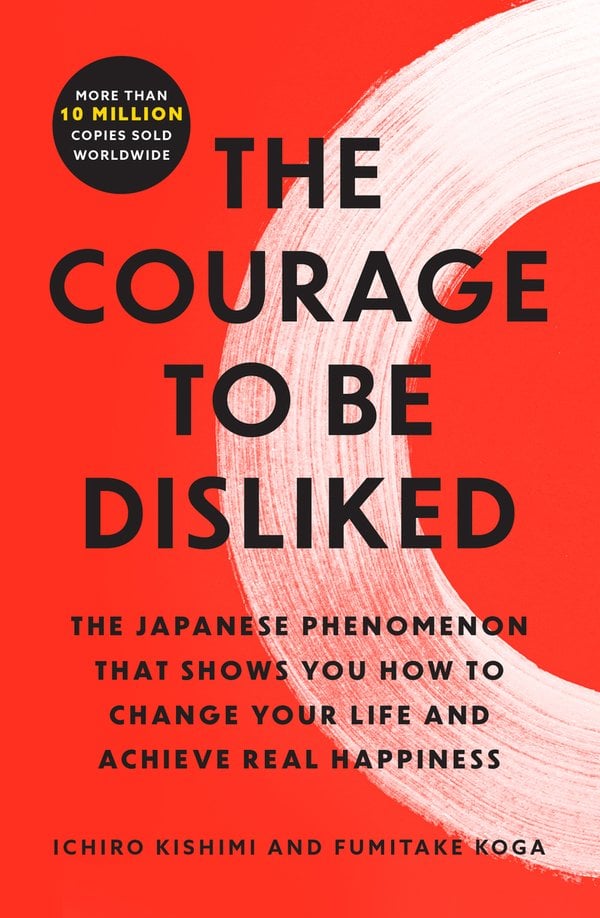
The Courage to Be Disliked
By Ichiro Kishimi and Fumitake Koga
Explore a different perspective on happiness, relationships, and the courage to live life on your own terms.
Did you know? When you buy through Bookshop.org, you’re helping support independent bookstores.
The Real Cost of Staying in the Comfort Zone
The cost isn’t immediate pain. It’s something slower, quieter, and much harder to notice.
It shows up as:
- Missed opportunities
- Unbuilt skills
- Unexplored paths
- Reduced confidence
- Emotional stagnation
- Long-term regret
Your comfort zone doesn’t take everything from you all at once. There’s no obvious loss while it’s happening. No single moment when you can clearly see what disappeared.
Instead, the possibilities slowly fade from view.
And because you never experience those alternatives, it’s easy to miss what’s absent from your life day to day.
That’s why the true cost often only becomes clear in hindsight, when you look back and realize how many paths were left unexplored.
One of the hidden costs of the comfort zone is time. Four Thousand Weeks (available on Bookshop.org) offers a refreshing perspective on how limited our time really is and why waiting for the perfect moment often keeps us from living more fully right now.
book tip
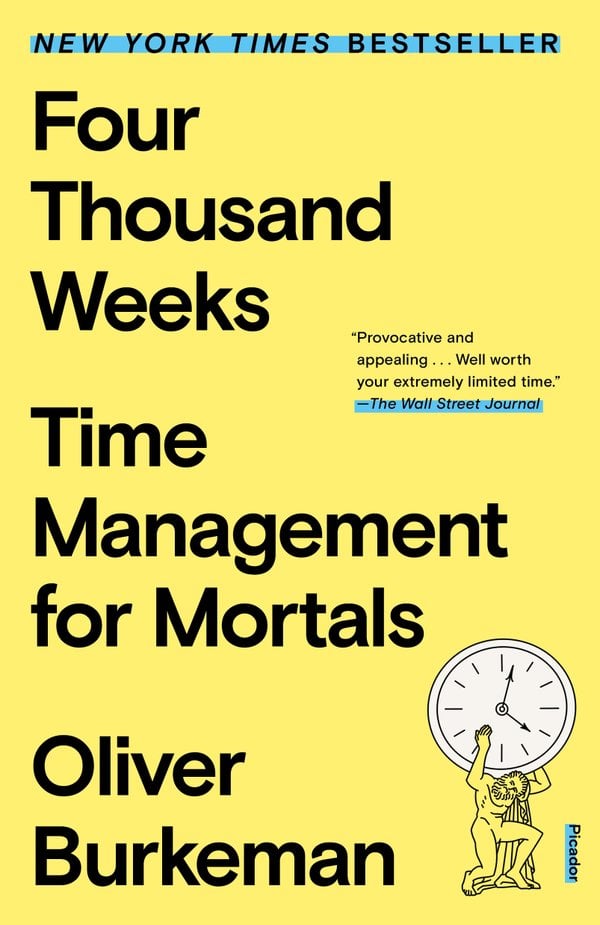
Four Thousand Weeks
By Oliver Burkeman
Discover a different approach to time management by focusing less on doing more and more on what matters most.
Did you know? When you buy through Bookshop.org, you’re helping support independent bookstores.
Leaving the Comfort Zone Is Harder Than It Looks
Comfort feels good because it reduces mental effort.
Inside the comfort zone:
- Fewer decisions are needed
- Fewer risks are taken
- Fewer emotional spikes occur
Everything becomes more predictable and easier to manage. And your brain naturally likes that.
Anything that helps conserve energy tends to feel rewarding in the short term, even when it isn’t helping you in the long run.
Over time, that creates a preference for ease over possibility. That’s how comfort becomes habit-forming.
Fear Is Not the Real Problem
Many people assume the comfort zone is driven by fear. But fear is only part of the story.
The deeper issue is uncertainty.
Because uncertainty creates discomfort through things like:
- Mental effort
- Emotional discomfort
- Loss of control
Your brain naturally tries to avoid those experiences. So even when fear is relatively small, uncertainty alone can be enough to keep someone stuck.
It’s rarely a clear thought like, “I’m afraid.”
More often, it’s something much simpler:
I don’t know what happens next, so I’ll stay where I am.
And sometimes, that small hesitation is all it takes.
Why We Settle for Less Than We’re Capable Of
One of the most counterintuitive truths about human behavior is this:
People often choose a known limitation over an unknown opportunity.
It feels safer in the moment.
The internal dialogue is often subtle:
- “We understand this.”
- “We know how this works.”
- “Let’s not risk destabilizing it.”
For many people, that’s enough to keep things exactly as they are.
This is a big reason people remain in:
- Unfulfilling jobs
- Stagnant routines
- Unchanging habits
- Unchallenging environments
RELATED POST: Why Most People Never Leave Their Comfort Zone
Motivation Alone Won’t Break the Comfort Zone
Motivation feels powerful, but it’s temporary. Your comfort zone is built into the way you live every day.
It isn’t just a feeling—it’s built from:
- Habits
- Routines
- Identity
- Environment
- Repeated behavior
Together, these create a system running quietly in the background.
Motivation can create momentum and push you into action for a while. But when that motivation fades, the system is still there, making it easy to fall back into familiar patterns.
That’s why people often:
- Start strong
- Then fall back
- Then repeat the cycle
Not because they lack discipline, but because nothing fundamental has changed. Without changing the system, motivation rarely lasts.
The Identity Trap
One of the strongest forces keeping people in the comfort zone is identity.
People don’t just think, “I don’t do that.”
They start believing:
- “That’s not me.”
- “I’m not that type of person.”
- “People like me don’t change like that.”
That’s where things become even more subtle.
Identity creates invisible boundaries around what feels possible. Those boundaries often feel more real than any external limitation.
It’s easier to believe who you are is fixed than to question how much of your identity has been shaped by repetition and habit.
So even when opportunities appear, identity can still keep you in the same place.
If you’ve ever caught yourself thinking, “That’s just who I am,” Mindset: The New Psychology of Success (available on Bookshop.org) explores how fixed beliefs can limit your growth. It helps you recognize and challenge the mental stories that keep you inside your comfort zone.
book tip

Mindset: The New Psychology of Success
By Carol S. Dweck
Do you believe your abilities are fixed, or that you can grow with effort?
Did you know? When you buy through Bookshop.org, you’re helping support independent bookstores.
Why People Stay “Almost Ready” Forever
Many people end up living in a state of permanent preparation. It rarely feels like avoidance. Instead, it feels responsible—even productive.
Thoughts like:
- “I’ll start when I’m ready.”
- “I need to figure it out first.”
- “I’ll do it soon.”
sound completely reasonable on the surface.
But readiness is often a moving target. As soon as one gap is filled, another appears. There’s always something else to learn, plan, or improve before taking action.
Underneath that pattern is a simple reality:
Preparation feels safer than action.
Preparation feels controlled. Action brings uncertainty, feedback, and risk.
As a result, people can spend years thinking, planning, and waiting while telling themselves they’re getting ready—instead of doing, adapting, and learning.
Over time, “almost ready” becomes a permanent state disguised as a temporary one.
The Comfort Zone Shrinks Over Time
One of the most important truths is this:
If you never expand your comfort zone, it doesn’t stay the same—it shrinks.
And it happens quietly.
Because unused skills weaken over time:
- Confidence drops
- Adaptability decreases
- Tolerance for discomfort lowers
Things that once felt manageable begin to feel harder. Over time, your comfort zone doesn’t just keep you in place—it reduces what feels possible.
How People Finally Leave Their Comfort Zone
Most people don’t leave their comfort zone through one dramatic breakthrough.
More often, it happens through:
- Small, repeated actions
- Moments of necessity
- Gradual exposure to discomfort
- An accumulation of dissatisfaction
No single step feels significant on its own. But over time, something begins to shift. Eventually, staying where you are becomes harder than moving forward.
That’s often when real progress begins.
RELATED POST: What Really Happens When You Step Out of Comfort Zone
The Real Danger of the Comfort Zone
The comfort zone isn’t dangerous because it hurts you. It’s dangerous because it doesn’t.
- It doesn’t force change.
- It doesn’t demand growth.
- It doesn’t create urgency.
Life keeps moving, but nothing really expands.
Because nothing feels actively wrong, it’s easy not to question it. There’s no pressure pushing you out and no obvious signal that something needs to change.
That’s what makes it so powerful. What doesn’t challenge you doesn’t change you.
Final Thoughts
Your comfort zone will kill you—but not in a dramatic way.
- It works quietly.
- It narrows your world without you noticing.
- Growth gets replaced by familiarity.
- Possibility gets replaced by predictability.
- Action gets replaced by comfort.
And because it all feels safe, it rarely gets questioned.
Most people don’t challenge something that feels stable, even when that stability is holding them back. Left unchecked, comfort gradually turns into limitation.
And limitation eventually becomes stagnation.
The goal isn’t to eliminate comfort. It’s to recognize when comfort is helping you recover—and when it’s keeping you from moving forward.
Because the real danger of the comfort zone isn’t that it hurts you.
It’s that it convinces you everything is fine exactly as it is.
*This article is for informational and educational purposes only and should not be considered a substitute for professional mental health advice. If you are experiencing emotional distress or mental health challenges, please seek guidance from a licensed therapist or mental health professional.

Linda is the co-founder of Courier Mind and holds a Diploma in Natural Health Nutrition & Diet. Her passions include photography, personal growth, and travel, where she draws inspiration from diverse cultures and their approaches to mindset and self-discovery. She is committed to helping others set meaningful goals, overcome self-doubt, and become the best version of themselves.