
7 Signs You’re Stuck in Your Comfort Zone Without Realizing It

This post contains affiliate links, which means we may earn a commission if you purchase through our links—at no extra cost to you. As an Amazon Associate we earn from qualifying purchases. We only recommend products we use or trust. Learn more about affiliate marketing or read our full disclosure.
Most people don’t realize they’re stuck in their comfort zone while it’s happening. That’s what makes it so tricky.
The truth is, being stuck rarely feels like being stuck.
It often feels like:
- Being busy
- Being careful
- Being practical
- Or “just waiting for the right time”
Life keeps moving. Your days stay full, and you continue getting things done. But beneath the surface, your personal growth quietly begins to slow.
Because nothing dramatic happens, it’s easy to overlook.
Your comfort zone doesn’t come with warning signs or obvious moments that make you stop and take notice. Instead, it gradually becomes your new normal.
Then one day, you look around and realize you’ve been repeating the same habits, making the same decisions, and telling yourself the same reasons why now isn’t the right time.
That’s often how people end up settling in comfort zone without even realizing it. At first, it doesn’t feel like settling at all. It simply feels familiar, safe, and easy to manage.
And that’s exactly why it’s so easy to stay there far longer than you ever intended.
Understanding Your Comfort Zone
Your comfort zone is a mental space where life feels familiar, predictable, and low risk. It’s where your routines come naturally, decisions feel easier, and uncertainty is kept to a minimum.

On the surface, that might not seem like a bad place to be. In fact, it can feel practical, comfortable, and even reassuring.
The problem is that staying there for too long can limit your growth, often without you even realizing it.
So instead of asking yourself, “Am I stuck?” it’s more helpful to look for the signs.
RELATED POST: The Ultimate Guide to the Comfort Zone: What It Is and How to Break Free
Here are 7 clear signs you’re stuck in your comfort zone without realizing it:
1. You Keep Thinking About Change More Than Actually Making It
One of the clearest signs you’re stuck in your comfort zone is getting caught in a cycle of thinking about change instead of taking action.
You might:
- Research endlessly
- Plan constantly
- Imagine different paths
- Mentally rehearse change
On the surface, it feels productive. But when it’s time to act, something always seems to get in the way or convince you to put off the next step a little longer.
And it often sounds like:
- “I’ll start next week.”
- “I just need a better plan.”
- “I’m not ready yet.”
Your comfort zone is incredibly good at keeping you in planning mode because planning feels safe. It creates the illusion of progress without requiring risk, discomfort, or uncertainty.
But real growth doesn’t come from simply thinking about change. It comes from taking action and experiencing it.
When most of your progress exists in your thoughts rather than your actions, it’s often a strong sign you’re settling in comfort zone patterns without even realizing it.
If you notice that your own thoughts often become the biggest obstacle to change, the Switch Research Self-Talk Journal (available on Amazon) can help you identify and challenge the internal narratives that keep you stuck in familiar patterns.
2. Your Life Feels Predictable — Even When You Don’t Like It
Predictability is one of the clearest signs that you may be stuck in a comfort zone pattern.
At first, predictability feels comforting. It reduces stress and makes everyday decisions easier. There’s a sense of security in knowing what to expect.
But over time, that same predictability can quietly turn into stagnation.
You might notice:
- Your days begin to feel almost identical
- Your routines rarely change
- Your challenges feel familiar instead of new
- Your emotional experiences tend to repeat themselves
Even if parts of your life aren’t especially satisfying, they can still feel predictable. And that’s where the trap lies.
Your mind often prefers familiar discomfort over uncertain improvement.
So instead of making changes, you stay where the outcome feels known, even when it’s no longer truly fulfilling.
If nothing in your life feels surprising anymore—even in small ways—it could be a sign that you’re settling in comfort zone habits more than you realize.
RELATED POST: Your Comfort Zone Will Kill You—But Most People Never Realize It
3. You Avoid Situations Where You Might Feel Inexperienced
Another subtle sign is avoiding situations that put you in the position of feeling like a beginner.
This can show up in different ways:
- Not trying new skills
- Avoiding unfamiliar environments
- Sticking closely to what you already know
- Staying in roles or situations where you already feel competent
Your comfort zone naturally protects your sense of competence. It keeps you in environments where you already feel capable, confident, and in control.
Because being a beginner is uncomfortable.
It often comes with:
- Making mistakes
- Feeling slow or unsure
- Lacking confidence at first
So it’s only natural for your brain to gravitate toward situations where you already feel capable or “good enough.”
But growth almost always begins with a period of temporary incompetence.
If you rarely find yourself feeling new, stretched, or challenged, it’s often a sign that you’re avoiding discomfort—not by accident, but through a pattern that has become familiar over time.
If you find yourself avoiding situations where you might struggle or make mistakes, Mindset by Carol S. Dweck (available on Bookshop.org) offers valuable insights into how developing a growth mindset can help you embrace challenges instead of avoiding them.
book tip

Mindset: The New Psychology of Success
By Carol S. Dweck
Do you believe your abilities are fixed, or that you can grow with effort?
Did you know? When you buy through Bookshop.org, you’re helping support independent bookstores.
RELATED POST: Why Getting Out of Your Comfort Zone Feels So Hard
4. You Feel Busy, But Not Progressing
This is one of the more difficult signs to recognize when you’re stuck in your comfort zone.
You may be:
- Working hard
- Staying productive
- Filling your days with tasks
- Constantly occupied
On the surface, it feels like you’re making progress. You’re getting things done, staying active, and keeping yourself busy.
But when you step back and look at the bigger picture, you may notice something isn’t quite right:
Nothing meaningful is actually changing.
That’s because staying busy isn’t the same as moving forward.

Your comfort zone often encourages what you might call “safe productivity”:
- Tasks that feel familiar
- Responsibilities you already know how to manage
- Routines that don’t involve risk or discomfort
So you stay busy, but only within boundaries that never really challenge you to grow.
Being busy can create a powerful illusion of progress, even when you’re essentially standing still.
If you’re busy every day but feel like you’re not moving forward, Atomic Habits by James Clear (available on Bookshop.org) offers practical strategies for making small, consistent changes that can lead to meaningful progress over time.
book tip

Atomic Habits
By James Clear
Want to change your life without relying on willpower?
Did you know? When you buy through Bookshop.org, you’re helping support independent bookstores.
5. You Keep Waiting for the “Right Time” That Never Comes
One of the most common comfort zone patterns is delaying action under the guise of good timing.
It often sounds logical—even responsible:
- “Now isn’t the right time.”
- “Things are too busy right now.”
- “I’ll start when life calms down.”
But beneath those thoughts, the real issue usually isn’t timing—it’s resistance.
Your brain naturally prefers putting off discomfort because:
- Delay reduces immediate pressure
- Delay removes uncertainty in the present moment
- Delay feels emotionally safer than taking action
So instead of facing discomfort now, your mind pushes it into a future version of life where everything somehow seems easier or more manageable.
The problem is, that “perfect time” rarely arrives.
Before long, life becomes a cycle of preparing instead of actually taking action.
When you keep putting off meaningful change, it’s often less about timing and more about your comfort zone protecting itself through delay.
If you often find yourself waiting for the perfect moment to begin, Four Thousand Weeks by Oliver Burkeman (available on Bookshop.org) offers a refreshing perspective on why meaningful action rarely starts under perfect conditions.
book tip
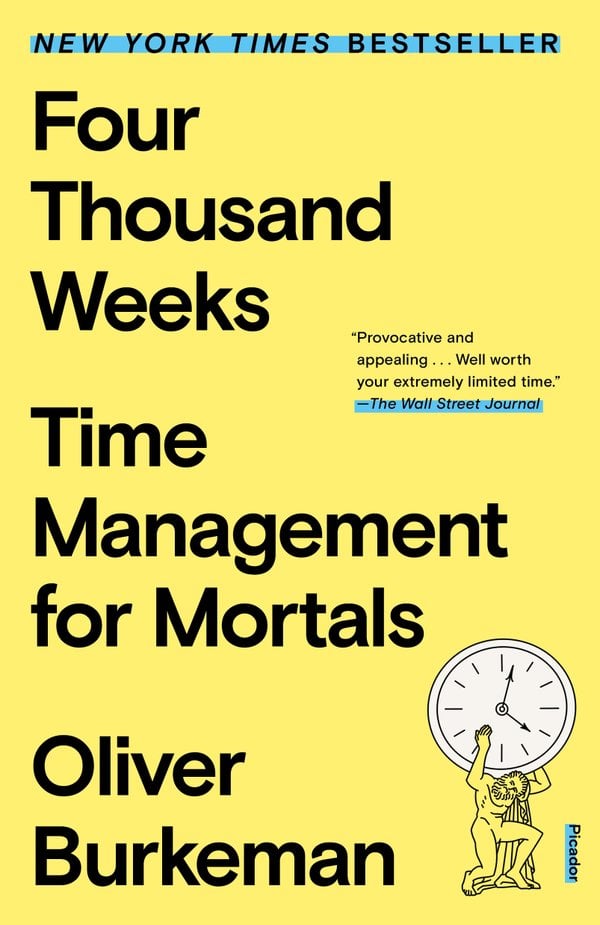
Four Thousand Weeks
By Oliver Burkeman
Discover a different approach to time management by focusing less on doing more and more on what matters most.
Did you know? When you buy through Bookshop.org, you’re helping support independent bookstores.
RELATED POST: Why Most People Never Leave Their Comfort Zone
6. You Have Ideas, But Rarely Follow Through
Many people who are stuck in their comfort zone don’t struggle with a lack of ideas.
In fact, they often have plenty of them:
- Goals
- Projects
- Improvements
- Lifestyle changes
The problem usually isn’t a lack of awareness—it’s follow-through. The ideas stay in your head, but action never quite follows.
That gap between what you intend to do and what you actually do is often where your comfort zone quietly takes over.
Because ideas feel safe:
- They require no risk
- No exposure
- No uncertainty
- No chance of immediate failure
Action, on the other hand, changes everything.
It introduces:
- Potential failure
- Emotional discomfort
- Unpredictability
- Real consequences
So your mind is often happy to think and plan but much more hesitant when it comes to taking action.
If you often know exactly what you should do but still don’t follow through, it’s a strong sign you may be caught in a comfort zone loop without realizing it.
7. You Feel Restless, But Don’t Change Anything
This is one of the most important signs—and also one of the easiest to overlook.
You might feel:
- Bored
- Stuck
- Unfulfilled
- Like something is missing
But even when you recognize those feelings, nothing really changes.
Instead, you tend to:
- Distract yourself to avoid the feeling
- Normalize it as “just a phase”
- Tell yourself it will pass on its own
- Continue with the same familiar routines
It creates a strange contradiction:
You feel dissatisfied emotionally, but your behavior stays exactly the same.
And that’s often what being in your comfort zone feels like from the inside.
Because discomfort on its own doesn’t create change. It has to be followed by action. Otherwise, you don’t move beyond the feeling—you simply learn to live with it, adapting to being stuck instead of doing something about it.
If you recognize patterns of staying stuck despite wanting something different, The Mountain Is You by Brianna Wiest (available on Amazon) explores how self-sabotage develops and offers practical insights into moving beyond it.
Why These Signs Are Easy to Miss
Your comfort zone is easy to overlook because it rarely feels like failure.
Instead, it often feels like:
- Stability
- Routine
- Responsibility
- “Real life”
And because nothing seems obviously wrong, there’s usually no clear reason to believe anything needs to change.
But growth rarely comes to a stop because of a crisis. More often, it stalls because of comfort.
The challenging part is that comfort almost never feels like a problem when you’re the one living inside it.
RELATED POST: What Really Happens When You Step Out of Comfort Zone
The Hidden Pattern Behind All 7 Signs
If you take a closer look, all seven signs point to the same underlying pattern: avoiding uncertainty.
- Thinking instead of doing reduces risk
- Predictability reduces anxiety
- Staying in familiar roles reduces exposure
- Busy work reduces emotional discomfort
- Delaying reduces pressure in the present moment
- Planning avoids the possibility of failure
- Restlessness is felt, but not acted on
When you see these patterns together, it becomes easier to understand what’s really happening.
Your comfort zone isn’t about being lazy or lacking ambition. Instead, it’s about repeatedly choosing certainty over uncertainty whenever possible—even when that choice quietly holds you back from growing over time.
Sometimes the hardest part isn’t making a change—it’s recognizing the patterns that need to change.
The Dig Deeper Journal with Prompts (available on Amazon) offers thought-provoking questions to help you uncover the habits, beliefs, and behaviors that may be keeping you in your comfort zone.
Why Staying Stuck Feels Normal
One of the most powerful things about the comfort zone is how quickly we adapt to it.
Over time, we can adjust to almost anything:
- Stress becomes normal
- Repetition becomes routine
- Limitations begin to feel acceptable
As a result, what once felt restrictive or frustrating gradually starts to feel like “just the way life is.” That’s how stagnation becomes almost invisible.
You no longer feel trapped. You simply feel adjusted.
If these signs feel familiar, Awaken to Your True Self by Andrew Daniel (available on Amazon) offers practical guidance to help you identify the hidden patterns that keep you stuck and take meaningful steps toward lasting personal growth.
How People Finally Break Out of Their Comfort Zone
Most people don’t leave their comfort zone because of one big decision.
More often, they break out of it through the accumulation of small changes:
- Small moments of discomfort repeated consistently
- Small actions taken even when they feel inconvenient
- Small risks accepted over time instead of avoided
Eventually, something shifts:
The cost of staying the same becomes greater than the cost of making a change.
That turning point is what creates real momentum.
But it’s rarely dramatic or sudden. Most of the time, it happens gradually—almost impossible to notice in the moment, yet obvious when you look back.
Final Thoughts
Being stuck in your comfort zone isn’t always easy to recognize when you’re living inside it.
It rarely feels like failure or a crisis. More often, it feels like routine, planning, waiting, and simply moving through life as usual.
But beneath the surface, the same pattern tends to appear again and again:
- Avoiding uncertainty
- Delaying discomfort
- Choosing familiarity over growth
- Staying busy instead of expanding
The most important insight is this:
Comfort isn’t the opposite of progress—but when it goes unquestioned, it can become the limit of your progress.
So the goal isn’t to eliminate comfort completely. It’s to recognize when it’s supporting you—and when it’s beginning to define the boundaries of your life.
Because the moment you see that pattern clearly, you’re no longer completely inside it—you’re observing it.
And that shift in awareness is often where real change begins.
*This article is for informational and educational purposes only and should not be considered a substitute for professional mental health advice. If you are experiencing emotional distress or mental health challenges, please seek guidance from a licensed therapist or mental health professional.
Li, Lili, Andreas Richter, and Philipp Steinorth. Mental Health Changes and the Willingness to Take Risks. Geneva Risk and Insurance Review, vol. 48, 2023, pp. 31–62. Springer, https://doi.org/10.1057/s10713-021-00070-7.Adapted and used under the terms of the Creative Commons Attribution 4.0 International License.
Singh, Ravi. “The Unsettling Truth about ‘Settling Down’ in Life.” Times of India, 20 Aug. 2024, 4:16 p.m., https://timesofindia.indiatimes.com/blogs/one-must-imagine-sisyphus-happy/the-unsettling-truth-about-settling-down-in-life/. Accessed 15 August 2025.
Świątkowski, Wojciech, and Benoît Dompnier. “When pursuing bad goals for good reasons makes it even worse: a social value approach to performance-avoidance goal pursuit.” Social psychology of education : an international journal vol. 24,3 (2021): 653-677. doi:10.1007/s11218-021-09623-0. Adapted and used under the terms of the Creative Commons Attribution 4.0 International License.
Van Gelderen, Marco. “Using a comfort zone model and daily life situations to develop entrepreneurial competencies and an entrepreneurial mindset.” Frontiers in psychology vol. 14 1136707. 15 May. 2023, doi:10.3389/fpsyg.2023.1136707. Adapted and used under the terms of the Creative Commons Attribution 4.0 International License.
Weiss-Sidi, Merav, and Hila Riemer. “Help others-be happy? The effect of altruistic behavior on happiness across cultures.” Frontiers in psychology vol. 14 1156661. 23 Jun. 2023, doi:10.3389/fpsyg.2023.1156661. Adapted and used under the terms of the Creative Commons Attribution 4.0 International License.

Linda is the co-founder of Courier Mind and holds a Diploma in Natural Health Nutrition & Diet. Her passions include photography, personal growth, and travel, where she draws inspiration from diverse cultures and their approaches to mindset and self-discovery. She is committed to helping others set meaningful goals, overcome self-doubt, and become the best version of themselves.