


10 Inspiring Growth Mindset Examples—and What They Can Teach Us
What does a growth mindset actually look like in everyday life?
The idea itself is easy enough to understand: your abilities can grow through learning, practice, useful feedback, effective strategies, and experience.
But it can feel very different when you’re the one who has just failed an exam, received criticism at work, struggled to learn a new skill, or watched someone else succeed at something you desperately want.
In moments like these, having a growth mindset isn’t simply about telling yourself to “stay positive.” It’s about what you do next.
Do you see a mistake as proof that you’re not capable? Or do you get curious about what went wrong?
Do you avoid challenges because they might expose your weaknesses? Or are you willing to be a beginner for long enough to improve?
Sometimes, the clearest way to understand these differences is to see what they look like in real life.
These 10 growth mindset examples show how small shifts in thinking can change the way you respond to challenges, mistakes, feedback, comparison, and setbacks.
And as you read through them, you might recognize a few in your own life.
This post contains affiliate links, which means we may earn a commission if you purchase through our links—at no extra cost to you. As an Amazon Associate we earn from qualifying purchases. We only recommend products we use or trust. Learn more about affiliate marketing or read our full disclosure.
Understanding Growth Mindset
Many people don’t realize just how much a growth mindset can shape the way they live their lives.
Found this helpful? Pin it for later so you can come back anytime.

Most of us probably have a growth mindset in some areas and a more fixed mindset in others. You might believe you can get better at your job with practice, for example, while quietly believing you’re simply “not creative” or “not good with money.”
It’s often those fixed beliefs—the ones we rarely stop to question—that can have the biggest impact on the choices we make.
When you have a growth mindset, you’re more willing to go after the things you want, even when there’s a chance you might fail.
You’re also less likely to see a setback as a reason to give up. Instead, you begin to understand that where you are right now isn’t necessarily where you’ll always be.
Circumstances change. Skills develop. You learn from experience. Even the way you see yourself can change over time.
And once you truly understand that, a difficult moment can start to feel less like the end of the road and more like something you can learn from and move through.
If you want to explore the idea more deeply, Mindset: The New Psychology of Success by Carol S. Dweck (available on Bookshop.org) is a great place to start. It looks at how the way we think about ability can influence how we approach learning, challenges, and setbacks.
book tip

Mindset: The New Psychology of Success
By Carol S. Dweck
Do you believe your abilities are fixed, or that you can grow with effort?
Did you know? When you buy through Bookshop.org, you’re helping support independent bookstores.
RELATED POST: The Ultimate Guide to Growth Mindset: From “I Can’t” to “I Can Learn”
Now let’s look at some growth mindset examples and see what this way of thinking can look like in real situations:
1. You Fail an Exam You Studied Hard For
Imagine spending days preparing for an important exam. You walk into the room feeling reasonably confident—only to receive a disappointing grade.
A fixed-mindset thought might show up immediately:
I’m just not smart enough for this.
That conclusion turns a single result into a judgment about your ability. A growth-mindset response looks different.
You might still feel disappointed, but once that initial emotion settles, you ask:
What went wrong?
Perhaps you spent too much time rereading your notes instead of testing yourself. Maybe there were topics you thought you understood but struggled to apply.
Perhaps you need help from a teacher or a different approach to studying.
What can this teach us?
A growth mindset doesn’t mean pretending a bad grade doesn’t matter. It means treating the result as information rather than identity.
Instead of asking whether you’re smart enough, ask what could help you prepare more effectively next time.
If you’re interested in understanding how practice actually helps us improve, Peak: Secrets from the New Science of Expertise by Anders Ericsson and Robert Pool (available on Bookshop.org) is worth reading. It explores why simply putting in more time isn’t always enough—and how the way you practice can make a real difference.
book tip

Peak
By Anders Ericsson and Robert Pool
This book challenges the idea of natural talent and shows how focused, structured practice can help anyone improve and perform at a higher level.
Did you know? When you buy through Bookshop.org, you’re helping support independent bookstores.
RELATED POST: How to Cultivate a Growth Mindset When You’re Afraid to Fail
2. You Receive Criticism at Work
Your manager tells you that a project you worked hard on needs improvement. Your first reaction?
Defensiveness.
You want to explain why you made certain decisions. You might even start wondering whether your manager thinks you’re bad at your job.
That reaction is human. A growth mindset doesn’t mean criticism suddenly becomes easy to hear.
The shift happens when you ask:
Is there anything useful here?
Maybe some of the feedback is subjective. Perhaps you disagree with part of it. But there may still be something valuable you can take from it.
What can this teach us?
Feedback doesn’t have to become a verdict on your competence. It can be data.
You can separate:
This piece of work needs improvement
from:
I’m not good at my job.
Making that distinction can make feedback much easier to learn from.
RELATED POST: Growth Mindset and the Brain: What Does Science Actually Say?
3. Someone Else Succeeds Before You Do
A friend gets the promotion. Another creator grows faster. Someone in your class seems to understand everything right away.
You’re happy for them—or at least you want to be—but their success still makes you question your own progress.
A fixed mindset can turn that comparison into evidence:
They have what it takes. I clearly don’t.
A growth mindset asks a different question:
What can their success teach me?
Maybe they have more experience. Perhaps they’re using a strategy you haven’t tried yet. Maybe they’ve been practicing for much longer than you realized.
Found this helpful? Pin it for later so you can come back anytime.

What can this teach us?
Someone else’s success doesn’t automatically say anything about your own potential.
Instead of using other people’s progress as evidence against yourself, use it as a source of information and inspiration. Their path may offer useful clues for yours.
RELATED POST: The Growth Mindset Background: What Really Shapes Our Ability to Learn?
4. You’re Terrible at Something New
You decide to learn something you’ve always wanted to try.
- Painting.
- Dancing.
- Coding.
- Photography.
- A new language.
And then you discover something deeply inconvenient: You’re not very good at it. Your first attempts look nothing like you imagined they would.
It’s tempting to conclude:
I don’t have the talent for this.
But a growth mindset recognizes something obvious that’s surprisingly easy to forget: Beginners are supposed to be beginners.
Instead of asking:
Why am I so bad at this?
try:
What would improve if I practiced this consistently for three months?
What can this teach us?
Being bad at something isn’t always evidence that you have little potential. Sometimes, it’s simply evidence of limited experience.
Give yourself permission to have an awkward beginning.
5. Your First Attempt Fails
You launch a side project. It doesn’t work.
You submit an idea. It gets rejected.
You try something ambitious. The outcome is disappointing.
It’s easy to think:
Well, that proves it. This was a bad idea.
But does one attempt really give you enough information to reach that conclusion?
A growth-oriented response is more curious:
- “What worked?”
- “What didn’t?”
- “What would I change if I tried again?”
Maybe the idea itself was wrong. But perhaps the real problem was the timing, execution, audience, preparation, or strategy.
What can this teach us?
A failed attempt and an impossible goal are not the same thing. Before abandoning something that matters to you, identify what actually failed.
Sometimes the goal doesn’t need to change. The approach does.
If setbacks make you want to walk away from something that matters to you, Grit: The Power of Passion and Perseverance by Angela Duckworth (available on Bookshop.org) is a helpful read. It explores the role perseverance can play in pursuing long-term goals, especially when progress isn’t easy.
book tip

Grit: The Power of Passion and Perseverance
By Angela Duckworth
This book dives into the science behind success, showing that it’s not just talent or intelligence that matters—but grit.
Did you know? When you buy through Bookshop.org, you’re helping support independent bookstores.
RELATED POST: How to Develop a Growth Mindset When Giving Up Feels Easier
6. You Catch Yourself Saying, “I’m Just Not That Kind of Person”
Some fixed-mindset beliefs are surprisingly easy to miss because they can sound like simple descriptions of who you are.
- “I’m just not creative.”
- “I’m not a confident person.”
- “I’ve never been good with money.”
- “I’m terrible at public speaking.”
A growth mindset doesn’t require you to replace those statements with unrealistic declarations.
You don’t have to suddenly start saying:
I’m an amazing public speaker!
Instead, try changing the sentence slightly:
I haven’t learned how to speak confidently in public yet.
Now you have something you can work with.
What can this teach us?
Be careful about turning skills into identities.
“I’m not good at this yet” leaves room for learning.
“I’m simply not that kind of person” can close the door before you’ve had a chance to explore what might be possible.
RELATED POST: Fixed Mindset vs Growth Mindset: Which One Is Running Your Life?
7. You Make an Embarrassing Mistake
- You say the wrong thing during a meeting.
- You send an email with an obvious error.
- You forget something important.
- You make a mistake in front of people whose opinions matter to you.
And suddenly, you wish the floor would swallow you.
Your mind may replay the moment over and over:
How could I have done that?
A growth mindset helps you move from embarrassment to evaluation.
Ask:
- Can I fix it?
- Do I need to apologize?
- What can I do to prevent it next time?
Then, perhaps most importantly:
Can I let it go?
What can this teach us?
Not every mistake needs to become a lasting story about who you are. Correct what you can. Learn what you can. Then give yourself permission to move forward.
Growth sometimes means refusing to punish yourself long after you’ve already learned the lesson.
If you find it much easier to forgive other people’s mistakes than your own, Self-Compassion by Dr. Kristin Neff (available on Bookshop.org) is especially relevant here. It explores how to respond to yourself with more kindness when you struggle, fail, or feel that you haven’t measured up.
book tip

Self-Compassion
By Dr. Kristin Neff
Ever notice how harshly we can treat ourselves — and wonder if it’s holding us back?
Did you know? When you buy through Bookshop.org, you’re helping support independent bookstores.
RELATED POST: Growth Mindset Isn’t Just Positive Thinking: 7 Myths That Miss the Point
8. You Hit a Plateau
You’ve been working toward something for months. At first, the progress was obvious. Then it slowed. Now you feel stuck.
This is where fixed-mindset thinking can start to sound convincing:
I’ve reached my limit.
But a plateau doesn’t necessarily mean you can’t improve. It may simply mean your current strategy has taken you as far as it can.
A growth mindset asks:
What needs to change?
Maybe you need more challenging practice. Perhaps you need feedback from someone with more experience. Maybe there’s a weakness in your foundations that you haven’t noticed yet.
What can this teach us?
When progress stops, don’t automatically assume your ability has stopped growing too. A plateau can be an invitation to change your strategy.
Growth isn’t always about doing more. Sometimes, it’s about doing something differently.
RELATED POST: 12 Simple Growth Mindset Tips to Change the Way You Think
9. You Ask for Help Instead of Pretending You Know
Imagine you’re struggling with something everyone else seems to understand.
You could stay quiet. After all, asking for help might reveal that you don’t know something. And that can feel uncomfortable.
But a growth mindset values learning more than looking knowledgeable.
- So you ask the question.
- You find a mentor.
- You request feedback.
- You watch the tutorial.
You admit:
I don’t know how to do this. Can you show me?
What can this teach us?
Needing help doesn’t mean you lack ability. In many situations, knowing when and how to seek help is part of becoming more capable.
You don’t need to know everything already to deserve a place in the room.
Sometimes, the fastest route to growth begins with three words:
I don’t know.
10. You Decide to Try Again—But Differently
Perhaps one of the most powerful growth mindset examples is what happens after something doesn’t work.
You could repeat exactly what you did before.
Or you could stop and think.
- What did the experience teach you?
- What would you keep?
- What would you change?
- What do you know now that you didn’t know before?
Then you try again—but not as the same person making the same attempt. You return with more information. A better strategy. More realistic expectations. New skills.
Or simply a clearer understanding of the challenge.
What can this teach us?
A growth mindset isn’t about endlessly repeating:
Try, try again.
A better version might be:
Try. Learn. Adjust. Then try again.
Persistence matters. But it becomes much more powerful when you combine it with reflection.
What Do These Growth Mindset Examples Have in Common?
Look closely at all 10 situations, and you’ll notice something. A growth mindset rarely involves dramatic positive thinking.
Nobody has to stand in front of a mirror and declare that they can accomplish anything.
Instead, growth often begins with a small question:
- “What can I learn from this?”
- “What could I try differently?”
- “Who could help me?”
- “What haven’t I learned yet?”
- “Is this really my limit—or just where I am today?”
That curiosity creates a little space between what happened and what you decide it means.
And within that space, you have choices.
- You can learn.
- You can practice.
- You can change strategies.
- You can ask for help.
- You can try again.
You can even decide that a particular path isn’t right for you without turning that decision into evidence that you’re incapable.
How Can You Practice a Growth Mindset in Everyday Life?
You don’t need to wait for a major failure or a life-changing challenge. Start by noticing the small moments.
Pay attention when you hear yourself saying:
- “I can’t.”
- “I’m terrible at this.”
- “They’re just naturally talented.”
- “There’s no point trying.”
- “I should already know how to do this.”
Rather than fighting the thought, get curious about it.
Try adding: “Yet.”
Or ask: “What would getting slightly better look like?”
Then choose one small action.
- Practice.
- Ask a question.
- Research a strategy.
- Request feedback.
- Try again.
You don’t have to transform your entire mindset overnight. Growth can begin with how you respond to one ordinary challenge today.
If you’d like something practical to help you put these ideas into practice, The Growth Mindset Coach by Annie Brock and Heather Hundley (available on Bookshop.org) offers activities and guidance for developing a growth mindset. It’s particularly useful if you want to move beyond understanding the concept and start applying it more intentionally.
book tip
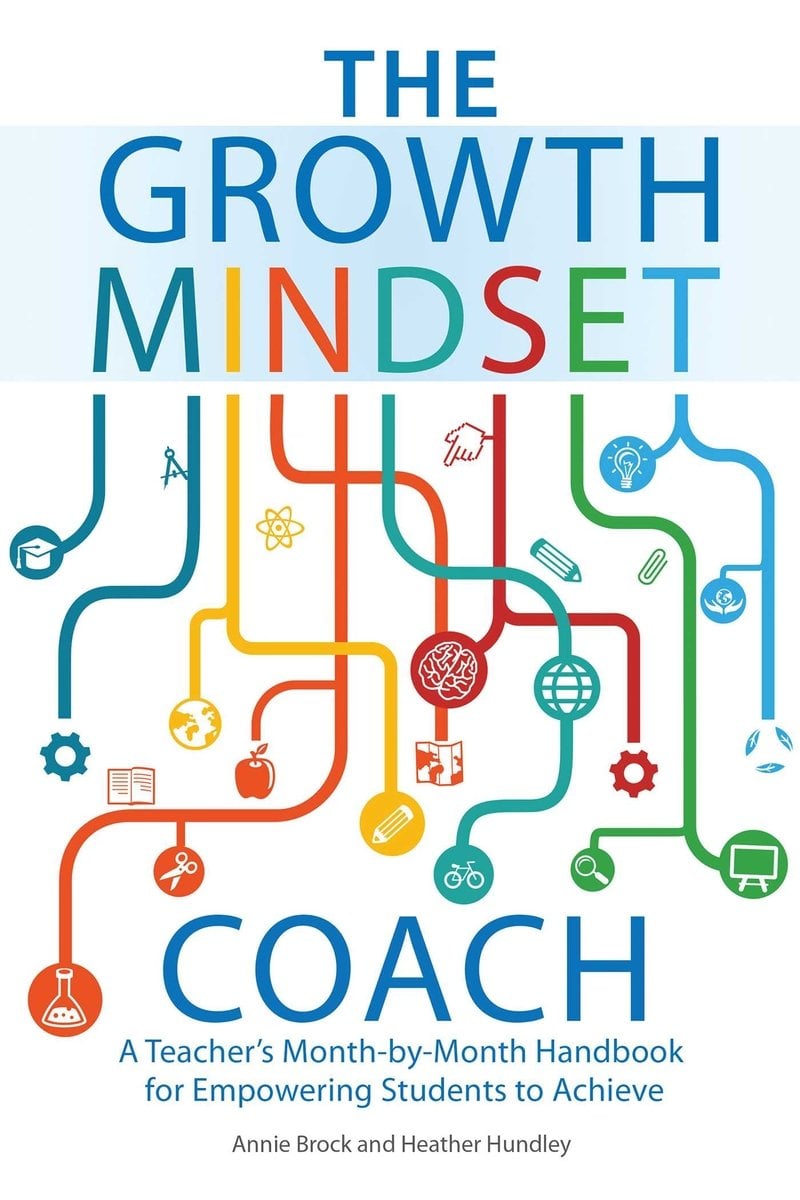
The Growth Mindset Coach
By Annie Brock and Heather Hundley
A practical guide designed to help teachers build a classroom culture where effort, resilience, and continuous improvement thrive.
Did you know? When you buy through Bookshop.org, you’re helping support independent bookstores.
Final Thoughts
The most inspiring growth mindset examples aren’t always extraordinary stories about people overcoming impossible odds.
Often, they’re much smaller.
- They’re the student who changes study strategies after a disappointing grade.
- The employee who listens for something useful in difficult feedback.
- The beginner who keeps practicing even when they still look inexperienced.
- The person who asks for help instead of pretending to understand.
- And the person who makes a mistake, learns from it, and refuses to let that mistake define who they are.
A growth mindset doesn’t guarantee success. It doesn’t make failure painless. It simply leaves room for one important possibility: You can learn.
So the next time something goes wrong, pay attention to the conclusion your mind immediately reaches.
If your mind says: “I can’t do this,” you don’t have to force yourself to say: “Yes, I can.“
Try something more honest:
I can’t do this yet. What could I learn next?
That question might seem small. But sometimes, what you choose to do next changes everything.
*This article is for informational and educational purposes only and should not be considered a substitute for professional mental health advice. If you are experiencing emotional distress or mental health challenges, please seek guidance from a licensed therapist or mental health professional.
Johnson, Lloyd. "Michael Jordan." Research Starters: Biography, EBSCO, 2024, www.ebsco.com/research-starters/biography/michael-jordan. Accessed 20 Mar. 2026.
Rowling, J.K. “My Story.” Stories.JKRowling.com, J.K. Rowling, n.d., https://stories.jkrowling.com/my-story/. Accessed 20 Mar. 2026.

Linda is the co-founder of Courier Mind and holds a Diploma in Natural Health Nutrition & Diet. Her passions include photography, personal growth, and travel, where she draws inspiration from diverse cultures and their approaches to mindset and self-discovery. She is committed to helping others set meaningful goals, overcome self-doubt, and become the best version of themselves.