


Empath vs. Highly Sensitive: The Difference Most People Miss
If you’ve ever searched for the terms empath and highly sensitive person (HSP), you’ve probably noticed something confusing.
People often use the two terms as if they mean exactly the same thing. For a long time, I thought they did too.
Whenever I read about empaths, I recognized myself in the description. Then I discovered the term Highly Sensitive Person, and suddenly, that seemed to describe me just as well.
So which one was I?
The answer turned out to be both. But learning the difference between them completely changed how I understood myself.
While these two traits have a lot in common, they’re not interchangeable.
Understanding the empath vs highly sensitive distinction—where the two overlap and where they don’t—can help you make much more sense of why you experience the world the way you do.
This post contains affiliate links, which means we may earn a commission if you purchase through our links—at no extra cost to you. As an Amazon Associate we earn from qualifying purchases. We only recommend products we use or trust. Learn more about affiliate marketing or read our full disclosure.
Why People Confuse Empaths and Highly Sensitive People
It’s easy to see why these two terms are so often mixed up.
Found this helpful? Pin it for later so you can come back anytime.
Both empaths and highly sensitive people tend to:
- Feel emotions deeply.
- Become overwhelmed more easily than average.
- Value kindness and meaningful relationships.
- Need time to recharge after emotionally intense experiences.
- Notice things that other people often overlook.
From the outside, they can seem almost identical. The difference becomes much clearer when you look at what’s causing those experiences.
RELATED POST: Are You an HSP, Introvert, Empath… or All Three?
What Is a Highly Sensitive Person?
A highly sensitive person has a nervous system that processes information more deeply than average. That’s the simplest explanation I’ve found.
When I first learned this, so many parts of my life suddenly made sense.
- Why busy shopping centers left me exhausted.
- Why loud environments drained me.
- Why criticism stayed with me longer than I wanted it to.
- Why I noticed little details that other people seemed to miss.
Being highly sensitive isn’t just about emotions. It’s about how your brain processes the world around you.
Everything from noise and bright lights to conversations and decisions can feel more intense because your mind is taking in and processing so much information.
If you want to understand high sensitivity on a deeper level, The Highly Sensitive Person by Elaine N. Aron (available on Bookshop.org) is a great place to start. It explores what it means to be highly sensitive and offers practical guidance for navigating life when you experience the world more intensely.
book tip

The Highly Sensitive Person
By Elaine N. Aron, Ph.D.
Do you often feel overwhelmed by sights, sounds, or emotions that others seem to handle easily?
Did you know? When you buy through Bookshop.org, you’re helping support independent bookstores.
What Is an Empath?
An empath, on the other hand, is someone who naturally tunes into other people’s emotional experiences.
For me, this has always felt different from being highly sensitive.
I’ve often noticed when someone wasn’t really okay, even when they insisted they were. And when someone I cared about was struggling, I found it difficult not to feel affected too.
For years, I thought that was simply what caring looked like.
Now I understand that being an empath is less about processing every part of your environment and more about connecting deeply with other people’s emotions.
If you relate strongly to being an empath and want to explore it further, The Empath’s Survival Guide by Judith Orloff (available on Bookshop.org) is worth reading. It focuses on understanding emotional sensitivity while offering practical ways to protect your energy and create healthier boundaries.
book tip
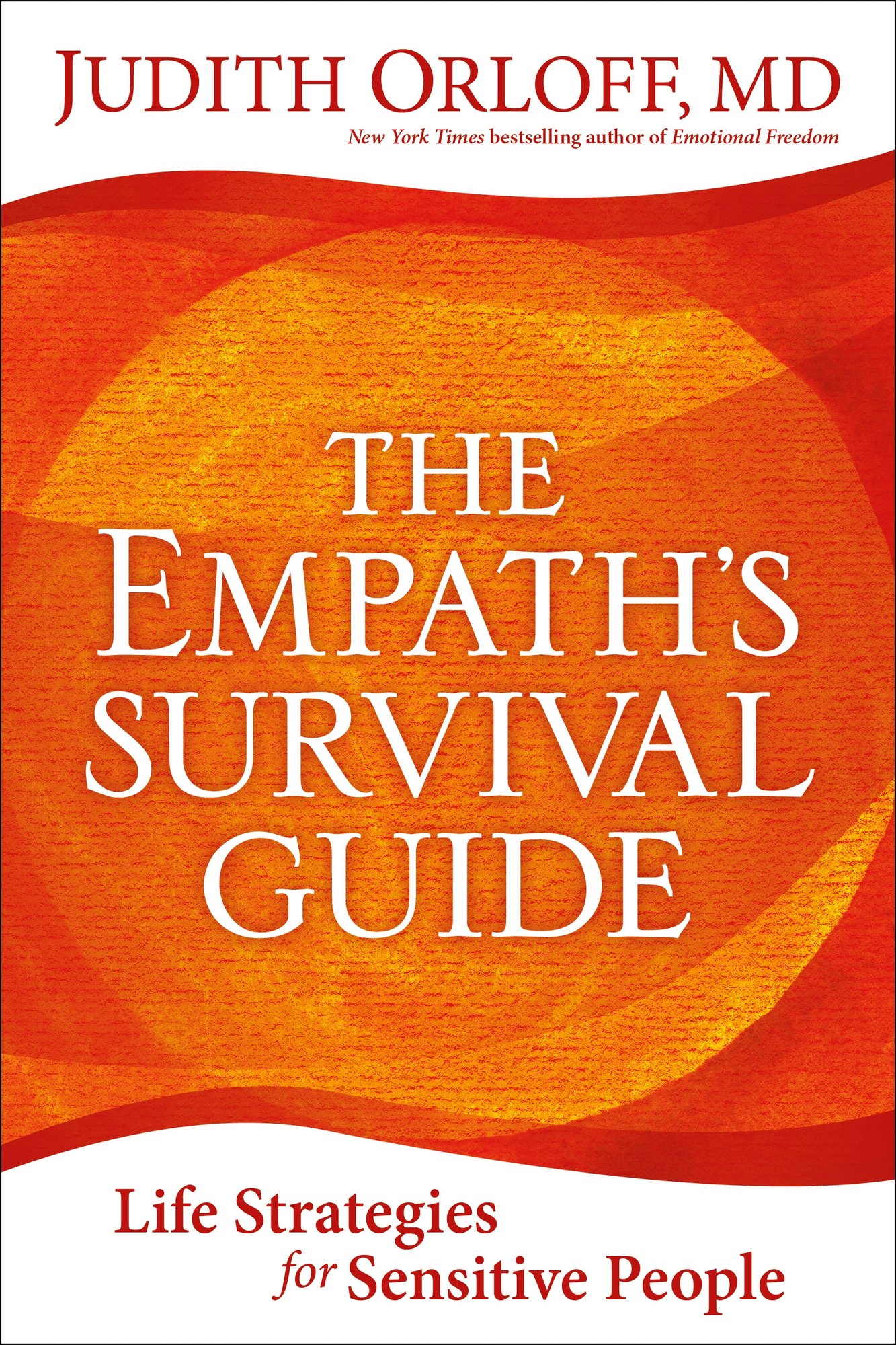
The Empath’s Survival Guide
By Judith Orloff, MD
Do you ever feel drained after being around certain people? Or overwhelmed by emotions that don’t even feel like your own?
Did you know? When you buy through Bookshop.org, you’re helping support independent bookstores.
The Biggest Difference Most People Miss
If I had to explain the difference in one sentence, it would be this:
Highly sensitive people process the world deeply. Empaths process other people’s emotions deeply.
That might sound like a small distinction, but it changes everything. Imagine walking into a busy restaurant.
A highly sensitive person might immediately notice:
- The loud conversations.
- The bright lighting.
- The constant movement.
- The background music.
- The smell of food.
- The overall stimulation.
Found this helpful? Pin it for later so you can come back anytime.
An empath might notice something completely different.
- The couple quietly arguing.
- The exhausted waiter trying to stay cheerful.
- The friend who keeps smiling even though something feels off.
Of course, if you’re both—as I am—you might notice all of it. And at times, that can feel incredibly overwhelming.
RELATED POST: 9 Myths About Highly Sensitive People You May Still Believe
You Can Be Highly Sensitive Without Being an Empath
This surprised me when I first started learning about personality. But not every highly sensitive person naturally absorbs other people’s emotions.
Some HSPs are incredibly thoughtful and compassionate, but they don’t necessarily walk away from every conversation feeling emotionally affected by it.
Their sensitivity is often more connected to how they process their environment than to the emotional states of the people around them.
RELATED POST: 24 Signs You’re a Highly Sensitive Extrovert—and How to Thrive
You Can Be an Empath Without Being Highly Sensitive
The opposite is also true.
Someone may feel deeply connected to other people’s emotions without becoming overwhelmed by noise, bright lights, crowded places, or other forms of sensory stimulation.
For them, the strongest experience is emotional rather than sensory. That’s why I think it’s helpful not to use these two labels interchangeably.
They describe different experiences.
What It Feels Like to Be Both
When I finally realized I was both an empath and a highly sensitive person, so many things clicked into place.
- My high sensitivity explained why I needed quiet after busy days.
- Why criticism affected me so deeply.
- Why I noticed details that other people overlooked.
My empathy explained something different.
- Why I found it difficult to separate my emotions from the emotions of people I cared about.
- Why I often worried about other people’s problems long after the conversation had ended.
- Why meaningful relationships have always mattered so much to me.
Instead of feeling confused about my personality, I finally began to understand it.
The Challenges of Being Both an Empath and Highly Sensitive
I’m not going to pretend it’s always easy. Being both an empath and a highly sensitive person can feel emotionally exhausting.
You’re processing your own experiences deeply while also paying close attention to what everyone else is feeling.
When I was younger, I thought I simply needed to become tougher. Now I realize I needed something completely different.
I needed boundaries.
Learning that someone else’s emotions didn’t automatically become my responsibility changed my life. I still care deeply. I simply don’t believe I have to carry everything anymore.
If you know you need stronger boundaries but aren’t sure where to begin, the Switch Research Boundaries Journal (available on Amazon) can help you work through them more intentionally. Its guided prompts give you space to explore where your boundaries are being stretched and what you might want to change.
The Strengths of Being Both an Empath and Highly Sensitive
While people often focus on the struggles, I think there are some strengths too.
- You tend to notice when someone needs encouragement.
- You genuinely listen.
- You often make people feel understood.
- You appreciate beauty in ordinary moments.
- You think carefully before making decisions.
- You care deeply about the people in your life.
I’ve come to see those qualities as strengths rather than weaknesses. The world needs people who pay attention.
RELATED POST: The Benefits of Being a Highly Sensitive Person No One Talks About
Which One Are You?
You don’t have to choose a label if neither one quite fits.
Some people strongly identify as highly sensitive. Others relate more to being an empath. Many people, like me, recognize themselves in both.
The goal isn’t to find the perfect category. The goal is to understand yourself a little better.
Because once you understand why certain situations drain you—or why certain relationships affect you so deeply—you can stop blaming yourself for being “too much.”
What Helped Me the Most
Learning the difference between empathy and high sensitivity was only the beginning. The real change came when I started working with my personality instead of against it.
That meant:
- Giving myself permission to rest.
- Spending more time in nature.
- Practicing yoga, which has helped me slow down and become more aware of my own thoughts and emotions instead of immediately focusing on everyone else’s.
- Learning to say no without feeling guilty.
- Accepting that boundaries don’t make me less caring. They allow me to care in healthier ways.
Those small changes have made a much bigger difference than I ever expected.
If you’re learning to be kinder to yourself instead of judging yourself for being sensitive, Self-Compassion by Dr. Kristin Neff (available on Bookshop.org) is a wonderful resource. It offers practical ways to treat yourself with the same understanding and compassion you so naturally give to others.
book tip

Self-Compassion
By Dr. Kristin Neff
Ever notice how harshly we can treat ourselves — and wonder if it’s holding us back?
Did you know? When you buy through Bookshop.org, you’re helping support independent bookstores.
You Don’t Need to Fit Perfectly Into a Label
One thing I’ve learned is that personality is wonderfully complicated.
Some people love labels because they finally give them words for experiences they’ve struggled to explain. Others don’t like labels at all.
I think both perspectives are okay.
For me, the labels were helpful because they gave me language for things I’d experienced my entire life.
But they aren’t my identity. They’re simply tools that helped me understand myself.
Final Thoughts
If you’ve ever wondered whether you’re an empath, a highly sensitive person, or both, I hope one thing stands out from this article.
There isn’t a right or wrong answer.
These labels aren’t about putting yourself into a box. They’re about understanding why you experience the world the way you do.
For me, realizing I was both was incredibly freeing.
- I stopped trying to become less sensitive.
- I stopped wondering why I cared so much.
- Instead, I started learning how to work with my personality rather than constantly fighting it.
That doesn’t mean life suddenly became easy.
- I still have days when I feel overwhelmed.
- I still care deeply about the people around me.
- I still need quiet after emotionally intense experiences.
But now I understand why. And that understanding has brought me something I spent years searching for.
Peace.
Because once I stopped seeing my empathy and sensitivity as flaws, I finally began to recognize them for what they really are:
Two different parts of the same compassionate heart.
The world doesn’t need you to become less caring or less sensitive. It simply needs you to learn how to protect those qualities, so they remain strengths instead of becoming burdens.
And in my experience, that’s one of the most valuable lessons you can learn.
*This article is for informational and educational purposes only and should not be considered a substitute for professional mental health advice. If you are experiencing emotional distress or mental health challenges, please seek guidance from a licensed therapist or mental health professional.
Aron, Elaine, Ph.D. "The Highly Sensitive Person." The Highly Sensitive Person, https://hsperson.com/. Accessed 13 November 2024.
Bas, Sharell et al. “Experiences of Adults High in the Personality Trait Sensory Processing Sensitivity: A Qualitative Study.” Journal of clinical medicine vol. 10,21 4912. 24 Oct. 2021, doi:10.3390/jcm10214912. Adapted and used under the terms of the Creative Commons Attribution 4.0 International License.
Orloff, Judith, M.D. "Stop Empathy Overwhelm with Healthy Boundaries." Dr. Judith Orloff, https://drjudithorloff.com/stop-empathy-overwhelm-with-healthy-boundaries/. Accessed 13 November 2024.
Orloff, Judith, M.D. "The Top 10 Traits of an Empath." Dr. Judith Orloff, https://drjudithorloff.com/top-10-traits-of-an-empath/. Accessed 13 November 2024.
Raypole, Crystal. "15 Signs You Might Be an Empath." Healthline, updated 13 July 2023, https://www.healthline.com/health/what-is-an-empath#intimacy. Accessed 13 November 2024.

Linda is the co-founder of Courier Mind and holds a Diploma in Natural Health Nutrition & Diet. Her passions include photography, personal growth, and travel, where she draws inspiration from diverse cultures and their approaches to mindset and self-discovery. She is committed to helping others set meaningful goals, overcome self-doubt, and become the best version of themselves.