


Are You an HSP, Introvert, Empath… or All Three?
For years, I thought there had to be one label that explained who I was. Maybe I was simply an introvert. Or maybe I was a Highly Sensitive Person.
Then I started reading about empaths, and suddenly that felt familiar too. The more I learned, the more uncertain I became.
How could I relate so strongly to all three?
Eventually, I stopped trying to squeeze myself into a single category. Instead, I realized something that completely changed how I understood myself:
I am all three.
I’m an introvert who recharges through solitude, a Highly Sensitive Person (HSP) who experiences the world deeply, and someone who naturally absorbs the emotions of the people around me.
That realization didn’t make my personality feel more complicated. It finally made everything make sense.
If you’ve ever wondered whether you’re an HSP, introvert or empath—or perhaps all three—this guide is for you.
This post contains affiliate links, which means we may earn a commission if you purchase through our links—at no extra cost to you. As an Amazon Associate we earn from qualifying purchases. We only recommend products we use or trust. Learn more about affiliate marketing or read our full disclosure.
Why These Labels Are So Confusing
It’s no surprise that so many people mix these traits up. On the surface, they can look remarkably similar.
Found this helpful? Pin it for later so you can come back anytime.
People who identify as HSPs, introverts, or empaths often:
- Prefer quieter environments.
- Feel overwhelmed by busy crowds.
- Enjoy meaningful conversations.
- Need regular alone time.
- Notice things other people miss.
- Care deeply about others.
If you only looked at their behavior, you might assume they’re all describing the same type of person.
But they’re not.
The biggest differences aren’t found in what people do. They’re found in why they do it.
What Is an Introvert?
Let’s start with the one most people are familiar with.
Being an introvert isn’t about being shy or antisocial. It’s about how you recharge your energy.
Introverts recharge by spending time alone or in calm, low-stimulation environments. Socializing—even with people they genuinely enjoy—uses energy.
After a while, they need quiet time to recharge. That doesn’t mean they dislike people. Many introverts love deep conversations, close friendships, and meaningful relationships. They simply don’t thrive on constant social interaction.
When I first discovered what introversion really meant, so many pieces of my life suddenly fell into place.
I finally understood why a quiet evening at home often felt far more refreshing than a packed weekend full of plans.
Want to understand introversion on a deeper level? Quiet by Susan Cain (available on Bookshop.org) is one of the most influential books on introversion. It explains why quiet people think, work, and connect differently—and why those differences are genuine strengths.
book tip

Quiet
By Susan Cain
This book reveals the surprising power of introverts and how they quietly make a big impact in the world.
Did you know? When you buy through Bookshop.org, you’re helping support independent bookstores.
RELATED POST: 17 Signs You’re More Introverted Than You Realize
What Is a Highly Sensitive Person (HSP)?
Being a Highly Sensitive Person is different. The term was introduced by psychologist Dr. Elaine Aron, who found that around 15–20% of people have a more sensitive nervous system.
Highly Sensitive People process information more deeply than average.
That means they often notice:
- Bright lights
- Loud sounds
- Strong smells
- Emotional tension
- Subtle facial expressions
- Tiny changes in their environment
They’re not “too sensitive.” Their brains simply process more information.
For me, this explained something introversion alone never could.
- Why busy shopping centers left me completely drained.
- Why loud restaurants felt overwhelming.
- Why emotional movies stayed with me for days.
It wasn’t just about needing solitude. It was about how deeply I experienced the world.
If you’re curious about being a Highly Sensitive Person, Dr. Elaine Aron’s The Highly Sensitive Person (available on Bookshop.org) is an excellent place to start. Written by the psychologist who introduced the term, it offers practical insights to help you better understand your sensitivity and learn how to thrive with it.
book tip

The Highly Sensitive Person
By Elaine N. Aron, Ph.D.
Do you often feel overwhelmed by sights, sounds, or emotions that others seem to handle easily?
Did you know? When you buy through Bookshop.org, you’re helping support independent bookstores.
RELATED POST: Could You Be a Highly Sensitive Introvert? These Clues Say Yes
What Is an Empath?
The word “empath” has become increasingly popular over the past few years. People use it to describe someone who feels deeply connected to other people’s emotions.
If someone close to you is hurting… you feel it too.
If someone walks into a room feeling anxious… you often notice it immediately.
Sometimes it can feel as though you absorb other people’s emotional energy without even realizing it.
While psychology generally explains these experiences in terms of empathy, emotional sensitivity, and emotional awareness rather than a separate personality type, many people still find the word empath meaningful because it reflects how intensely they experience other people’s emotions.
I know I do.
I’ve often walked away from conversations feeling emotionally exhausted—not because anything had happened to me, but because I’d been carrying someone else’s worries.
Learning to set emotional boundaries has become one of the most important lessons of my life.
If you often feel emotionally drained by other people’s feelings, The Empath’s Survival Guide by Judith Orloff (available on Bookshop.org) offers practical strategies for protecting your energy while staying compassionate and connected.
book tip
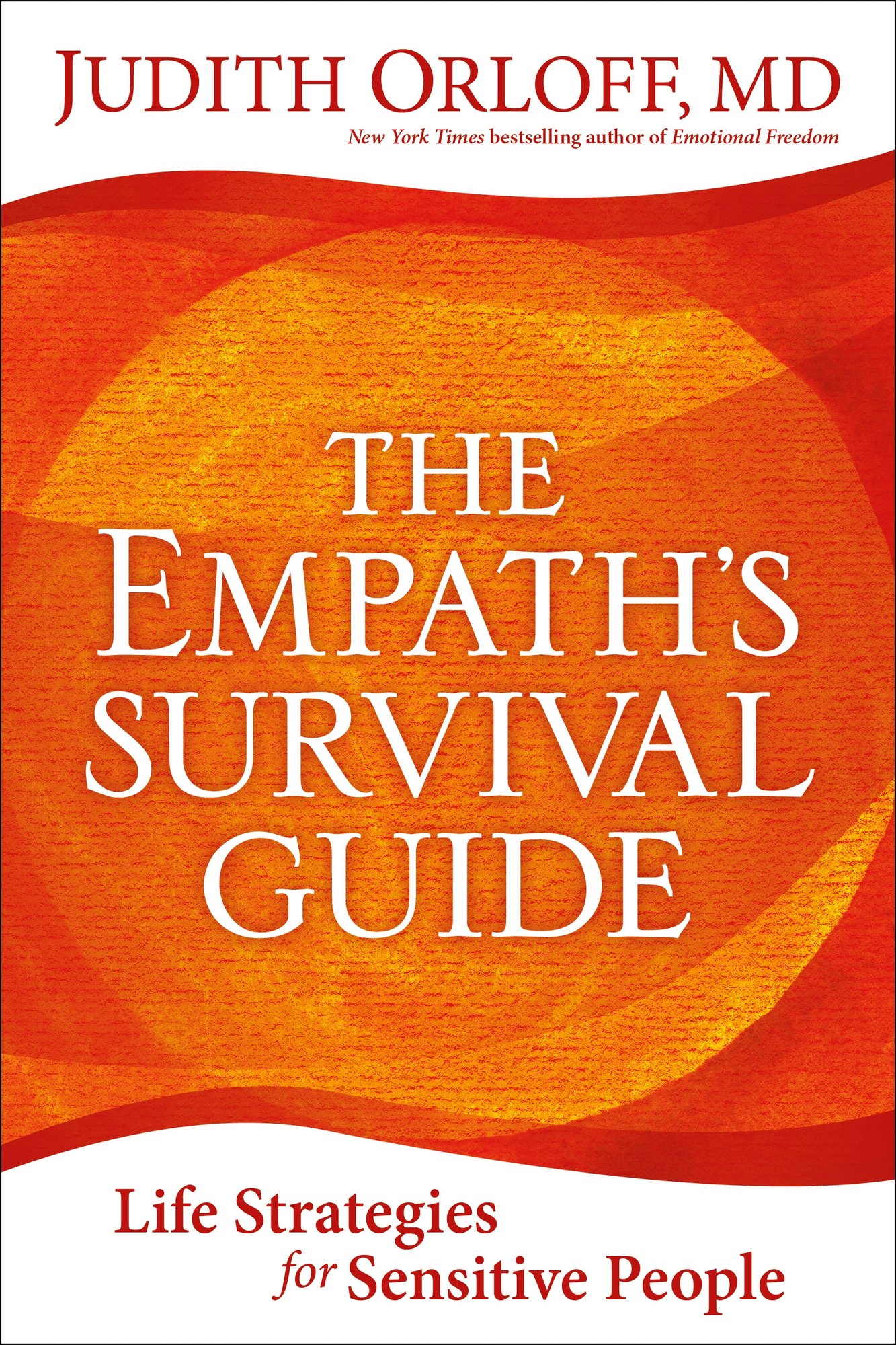
The Empath’s Survival Guide
By Judith Orloff, MD
Do you ever feel drained after being around certain people? Or overwhelmed by emotions that don’t even feel like your own?
Did you know? When you buy through Bookshop.org, you’re helping support independent bookstores.
Can You Be an HSP, Introvert, and Empath?
Absolutely.
In fact, that’s exactly what happened to me. For years, I kept searching for one label that explained everything.
Instead, I discovered that each one explained a different part of who I am.
- I’m introverted because I need quiet to recharge.
- I’m highly sensitive because my nervous system notices and processes more than many people seem to.
- And I identify with being an empath because I naturally feel deeply connected to other people’s emotions.
None of these traits cancel one another out. They simply overlap. Once I understood that, I stopped trying to force myself into a single box.
RELATED POST: Why Introverts Rarely Accept Easy Answers
Found this helpful? Pin it for later so you can come back anytime.
How to Tell Whether You’re an HSP, Introvert, or Empath
Let’s make it simple.
You may be an introvert if…
- You need alone time after socializing.
- Small groups feel more comfortable than large crowds.
- You enjoy meaningful conversations.
- Quiet environments restore your energy.
- You often think before you speak.
You may be a highly sensitive person if…
- Loud environments overwhelm you.
- You notice subtle details that others miss.
- Strong emotions stay with you for a long time.
- Busy days leave you feeling overstimulated.
- You deeply appreciate beauty, art, music, and nature.
You may identify as an empath if…
- Other people’s emotions strongly affect your mood.
- You instinctively know when someone is struggling.
- Emotional conflict drains you.
- You often feel responsible for helping others.
- You sometimes struggle to separate your emotions from someone else’s.
As you read through those lists, you may have found yourself saying yes to one.
Or two.
Or all three.
RELATED POST: Are You an Introvert or an Extrovert? The Answer Might Surprise You
The Strengths of Being an HSP, Introvert, and Empath
I’ll be honest. There were times when I wished I wasn’t so sensitive. When I wished loud places didn’t overwhelm me.
When I wished I didn’t replay conversations in my mind or carry other people’s emotions quite so deeply.
But over time, I’ve come to see these traits in a different light.
Because they’re also the reason I:
- Notice beauty in ordinary moments.
- Listen carefully when people need someone.
- Build deep friendships instead of surface-level connections.
- Appreciate peaceful mornings.
- Write from the heart.
- Care deeply.
Those aren’t weaknesses. They’re strengths. Quiet strengths, perhaps—but strengths all the same.
RELATED POST: The Secret Humor of Introverts: Laughing in Our Own Way
The Challenges of Being an HSP, Introvert, and Empath
Of course, these traits also come with challenges.
- Sometimes I become emotionally exhausted without realizing it.
- Sometimes I need to leave a noisy environment long before everyone else.
- Sometimes I need an entire quiet day to recover after a busy weekend.
For years, I felt guilty about those needs. Now I see them differently. They’re simply part of understanding how I’m wired.
The more I respect those needs instead of fighting them, the happier and healthier I feel.
How to Care for Yourself as an HSP, Introvert, or Empath
If you recognize yourself in this article, one lesson matters more than any other.
Protect your energy.
That might mean:
- Saying no without feeling guilty.
- Spending time in nature.
- Creating quiet mornings.
- Taking breaks after social events.
- Limiting overstimulating environments.
- Setting emotional boundaries with compassion.
- Choosing relationships where you can be completely yourself.
You don’t have to explain every one of these choices. You simply have to honor them.
If setting healthy boundaries is something you’re working on, the Switch Research Boundaries Journal (available on Amazon) can help you build that habit through thoughtful prompts and guided reflection, making it easier to protect your energy without feeling guilty.
RELATED POST: Why These Introvert Jobs Feel More Like Freedom Than Work
You Don’t Need to Choose Just One Label
One of the biggest mistakes I made was believing I had to decide which label described me best.
Was I an introvert?
An HSP?
An empath?
Now I realize the answer was never just one. It was all three.
The labels themselves aren’t the important part. Understanding yourself is.
If one word helps you make sense of your experiences, wonderful. If several words together paint a more complete picture, that’s wonderful too.
Our personalities are rarely simple. They’re beautifully layered.
RELATED POST: Can an Introvert and an Extrovert Really Be Best Friends?
Final Thoughts
So… are you an HSP, introvert or empath… or all three?
Only you can answer that question.
But if you’ve spent years feeling different without quite understanding why, I hope this article helps you feel a little less alone.
Discovering that I was all three didn’t change who I was. It changed the way I saw myself. Instead of feeling like I was “too quiet,” “too emotional,” or “too sensitive,” I finally understood that I was simply experiencing the world in my own way.
And once I stopped trying to fit into someone else’s definition of normal, something unexpected happened.
I began to appreciate the parts of myself I’d spent years trying to hide.
If that’s where you are today, know this:
- You don’t have to become louder.
- Less sensitive.
- Or less compassionate.
The qualities that sometimes make life feel overwhelming are often the very same qualities that allow you to notice beauty, love deeply, and understand people in ways that others cannot.
And that’s not something to fix. It’s something to embrace.
*This article is for informational and educational purposes only and should not be considered a substitute for professional mental health advice. If you are experiencing emotional distress or mental health challenges, please seek guidance from a licensed therapist or mental health professional.
Decety, Jean, and Aikaterini Fotopoulou. “Why empathy has a beneficial impact on others in medicine: unifying theories.” Frontiers in behavioral neuroscience vol. 8 457. 14 Jan. 2015, doi:10.3389/fnbeh.2014.00457. Adapted from and used under the terms of the Creative Commons Attribution 4.0 International License.
Greven, Corina U. et al. "Sensory Processing Sensitivity in the context of Environmental Sensitivity: A critical review and development of research agenda." Neuroscience & Biobehavioral Reviews, vol. 98, 2019, pp. 287-305, ISSN 0149-7634, https://doi.org/10.1016/j.neubiorev.2019.01.009. Adapted and used under the Creative Commons Attribution 4.0 International License.
McQuarrie, A. M., Smith, S. D., & Jakobson, L. S. "Alexithymia and sensory processing sensitivity account for unique variance in the prediction of emotional contagion and empathy." Frontiers in Psychology, vol. 14, 2023, article 1072783. doi: 10.3389/fpsyg.2023.1072783. Adapted from and used under the terms of the Creative Commons Attribution 4.0 International License.
Tuovinen, Sanna et al. “Introversion and Social Engagement: Scale Validation, Their Interaction, and Positive Association With Self-Esteem.” Frontiers in psychology vol. 11 590748. 30 Nov. 2020, doi:10.3389/fpsyg.2020.590748. Adapted from and used under the terms of the Creative Commons Attribution 4.0 International License.

Malin, co-founder of Courier Mind, is passionate about personal growth and mindset. With a focus on self-discovery and goal-setting, she creates content that inspires confidence, balance, and growth for the mind and spirit.