
Growth Mindset and the Brain: What Does Science Actually Say?

This post contains affiliate links, which means we may earn a commission if you purchase through our links—at no extra cost to you. As an Amazon Associate we earn from qualifying purchases. We only recommend products we use or trust. Learn more about affiliate marketing or read our full disclosure.
Can changing the way you think about your abilities actually change your brain?
It’s an appealing idea.
You may have come across claims that developing a growth mindset can “rewire your brain,” unlock hidden potential, make you smarter, or turn failure into success.
But the relationship between growth mindset and the brain is more interesting—and more nuanced—than those catchy claims make it sound.
Your brain really can change through learning and experience. Researchers call this neuroplasticity. There’s also research exploring how beliefs about ability may relate to motivation, responses to mistakes, learning behaviors, and academic outcomes.
But that doesn’t mean simply telling yourself “I have a growth mindset” will instantly transform your brain.
So, what does the science actually say?
Let’s look at what the research tells us and separate the fascinating reality from the exaggeration.
What Is a Growth Mindset?
The concept of growth mindset is closely associated with psychologist Carol Dweck and her research into how people think about intelligence and ability.

A fixed mindset generally describes the belief that abilities are relatively fixed—you have a certain amount of intelligence or talent, and there isn’t much you can do to change it.
A growth mindset reflects the belief that abilities can develop over time. That development can involve practice, effective strategies, feedback, instruction, experience, and persistence.
This difference in perspective can shape how you approach learning.
If you believe difficulty is a sign that you lack ability, struggling with something may make you want to avoid it.
But if you believe improvement is possible, difficulty can take on a different meaning:
There is something here I haven’t learned yet.
That brings us to an important question. If abilities can develop, what is actually happening inside the brain?
If you want to explore growth mindset in more depth, Mindset: The New Psychology of Success by Carol S. Dweck (available on Bookshop.org) is the natural place to start. Dweck’s work is closely tied to the concept itself, and the book explores how beliefs about ability can shape the way we approach learning, challenges, and improvement.
book tip

Mindset: The New Psychology of Success
By Carol S. Dweck
Do you believe your abilities are fixed, or that you can grow with effort?
Did you know? When you buy through Bookshop.org, you’re helping support independent bookstores.
RELATED POST: The Ultimate Guide to Growth Mindset: From “I Can’t” to “I Can Learn”
What Is Neuroplasticity?
Your brain isn’t a completely fixed structure that finishes developing and then stays the same for the rest of your life.
It adapts.
Neuroplasticity broadly refers to the nervous system’s ability to change its activity, organization, or connections in response to experience and other influences.
As you learn and practice, changes can occur in the neural systems involved. That doesn’t mean your brain becomes completely new every time you learn something.
Think about learning to play the piano. At first, even a simple combination of notes may take enormous concentration. But with repeated practice, those movements can gradually become smoother and more automatic.
Your brain and nervous system are adapting to the demands you repeatedly place on them.
Similar principles apply when you learn a language, develop motor skills, memorize information, or practice other complex abilities.
So the basic idea that experience can change the brain is well established. But this is where an important distinction comes in.
If the brain science is the part that fascinates you most, Livewired: The Inside Story of the Ever-Changing Brain by David Eagleman (available on Amazon) is worth exploring. It takes a much deeper look at the brain’s remarkable ability to adapt and change in response to the world around it.
RELATED POST: The Growth Mindset Background: What Really Shapes Our Ability to Learn?
Neuroplasticity and Growth Mindset Aren’t the Same Thing
It’s tempting to see neuroplasticity as proof of every claim made about growth mindset. But the two aren’t interchangeable.
Neuroplasticity describes the brain’s capacity to change. Growth mindset describes beliefs about whether abilities can develop.
Simply believing your brain can change doesn’t automatically produce the changes you want.
Imagine believing that muscles can become stronger. That belief may make you more willing to exercise, but the belief itself isn’t the workout.
In the same way, believing you can improve may influence what you do.
- You might practice longer.
- Ask for feedback.
- Try a different strategy.
- Seek help.
- Return after a setback.
Those behaviors create opportunities for learning to happen.
So a useful way to think about growth mindset and the brain is not:
Positive thoughts rewire your brain.
But rather:
Beliefs can influence behavior, and behavior creates experiences through which learning and brain adaptation can occur.
That may not be quite as catchy, but it gets much closer to the interesting part of the story.
RELATED POST: Growth Mindset Isn’t Just Positive Thinking: 7 Myths That Miss the Point
What Happens in the Brain When We Make Mistakes?
Mistakes are especially interesting when it comes to growth mindset research. Your brain doesn’t simply ignore an error and move on.
Researchers can measure electrical brain responses associated with recognizing and processing mistakes. Some studies have explored whether people’s beliefs about intelligence are related to these responses.
One intriguing possibility is that people who believe abilities can develop may pay more attention to errors or engage differently with corrective information.

Why would that matter?
Because noticing that you were wrong is only the beginning. To actually learn from an error, you need to process useful information about what went wrong.
Imagine answering a mathematics problem incorrectly. You could glance at the correct answer and move on.
Or you could ask:
- Where did my reasoning go wrong?
- Which step did I misunderstand?
- What would I do differently next time?
The mistake itself doesn’t create improvement. What you do with the mistake matters. And that fits surprisingly well with the practical side of growth mindset.
RELATED POST: How to Cultivate a Growth Mindset When You’re Afraid to Fail
Does a Growth Mindset Make You Smarter?
This is where some claims can become exaggerated. Having a growth mindset doesn’t magically increase intelligence.
You can’t simply repeat “My brain can grow!” and expect your abilities to transform. Research on growth mindset interventions paints a more nuanced picture.
Some studies have found positive effects on outcomes such as academic achievement or motivation, particularly in certain contexts or among particular groups of students.
Other research has found that the average effects of brief growth mindset interventions can be relatively small.
That doesn’t mean the concept is meaningless.
It simply means we should be careful about promising dramatic results from a change in mindset alone.
- Context matters.
- Teaching quality matters.
- Resources matter.
- The learning environment matters.
- The strategies someone uses matter.
- Opportunities to practice matter.
A student who believes they can improve but doesn’t receive effective instruction may still struggle. Mindset is one part of a much larger learning system.
If you’re curious about what actually helps people improve their abilities, Peak: Secrets from the New Science of Expertise by Anders Ericsson and Robert Pool (available on Bookshop.org) is an excellent next read. It explores the science of expertise and why the way you practice matters—not simply how hard you try.
book tip
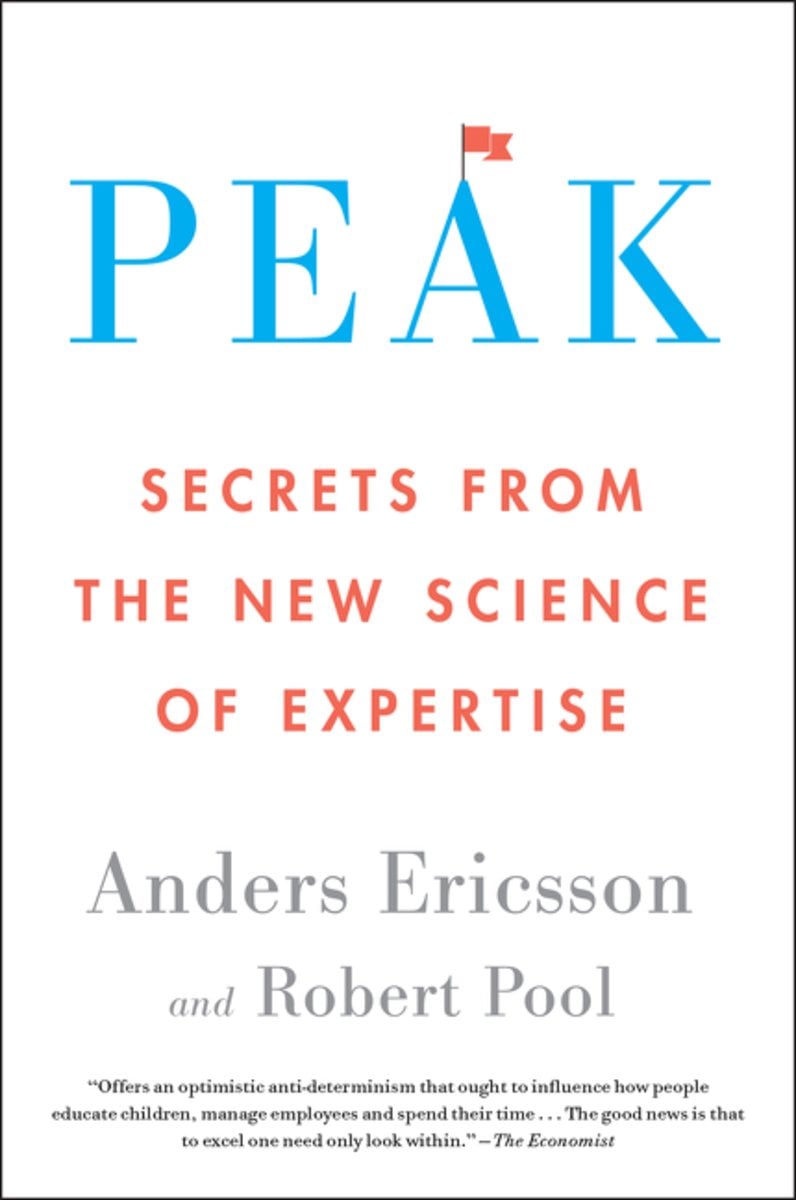
Peak
By Anders Ericsson and Robert Pool
This book challenges the idea of natural talent and shows how focused, structured practice can help anyone improve and perform at a higher level.
Did you know? When you buy through Bookshop.org, you’re helping support independent bookstores.
RELATED POST: Fixed Mindset vs Growth Mindset: Which One Is Running Your Life?
How Does a Growth Mindset Affect Learning?
If growth mindset isn’t a magic switch, why does it still matter?
Because what you believe can influence the choices you make when learning gets difficult. Imagine two people struggling with the same task.
One thinks:
I’m struggling because I don’t have the ability.
The other thinks:
I’m struggling because I haven’t mastered this yet.
Neither belief guarantees what happens next. But each one may encourage very different behaviors.
The first person may avoid further practice because every mistake feels like more evidence that they simply can’t do it. The second may be more willing to try another strategy, seek feedback, or keep learning.
This is part of what makes mindset so interesting.
The belief doesn’t have to directly transform your brain to make a difference. It can influence whether you continue giving your brain opportunities to learn.
What About the Power of “Yet”?
One of the simplest ideas associated with growth mindset is adding the word “yet.”
I don’t understand this.
becomes:
I don’t understand this yet.
That one word doesn’t change your ability. What it changes is the implied future.
The first statement sounds final. The second leaves room for your current understanding to change. That can be useful because learning often means spending time in an uncomfortable middle ground, where you don’t yet know how to do something.
If every struggle feels like proof that you’re incapable, you’re less likely to stay with it long enough to improve.
“Yet” gives that uncertainty somewhere to go.
RELATED POST: 10 Inspiring Growth Mindset Examples—and What They Can Teach Us
Can Learning About the Brain Encourage a Growth Mindset?
This creates an interesting loop. If people learn that the brain can adapt through experience, could that knowledge change the way they approach learning?
Some educational growth mindset interventions have included information about brain development and the idea that abilities are not necessarily fixed.
The goal isn’t simply to teach people a few facts about neuroscience. It’s to challenge the assumption that struggling means you’ve reached a limit you can’t change. But there’s a risk in oversimplifying that message.
“Your brain is plastic” should not become:
You can become anything you want if you try hard enough.
Those are not the same claim.
Human development is influenced by many factors, including biology, environment, education, opportunity, health, resources, and experience.
Neuroplasticity means change is possible. It doesn’t mean change is unlimited or guaranteed.
Effort Alone Isn’t Enough
Another common misunderstanding is that growth mindset means praising effort regardless of the outcome. But effort without an effective strategy can simply lead to more frustration.
Suppose you’re practicing a tennis serve incorrectly.
Repeating the same movement thousands of times won’t necessarily help you develop the technique you’re aiming for.
- You may need coaching.
- Feedback.
- Slower practice.
- A change in technique.
- A different drill.
The same principle applies to academic learning and many other skills.
A more useful growth mindset question isn’t:
How can I force myself to try harder?
It’s:
What would help me learn more effectively?
Sometimes the answer is more practice. Sometimes it’s better practice.
If you want to understand how to learn more effectively rather than simply putting in more effort, Make It Stick: The Science of Successful Learning by Peter C. Brown, Henry L. Roediger III, and Mark A. McDaniel (available on Amazon) is a great next step. It explores what research tells us about learning strategies that actually help knowledge stick.
RELATED POST: How to Develop a Growth Mindset When Giving Up Feels Easier
What Growth Mindset Cannot Do
It’s also important to be clear about the limits.
- A growth mindset cannot guarantee success.
- It cannot erase differences in circumstances.
- It cannot replace good teaching, resources, support, or opportunity.
- It cannot make every goal achievable simply because you believe strongly enough.
- And it doesn’t mean your brain has no limits.
This matters because exaggerated claims can turn a useful psychological concept into something that sounds more like motivational magic.
Worse, they can suggest that if someone doesn’t succeed, they simply didn’t have the right mindset. Reality is far more complicated.
A growth mindset is best understood as one factor that can influence how we respond to learning and challenge.
Not the only factor.
So, Can You Really “Rewire” Your Brain?
“Rewire your brain” is a popular phrase, but it can give you the wrong mental picture. Your brain isn’t a collection of electrical cables that you can consciously unplug and reconnect simply by thinking different thoughts.
However, learning and repeated experience can produce changes in neural function and structure. So there is a real scientific idea underneath the phrase.
The key is remembering that change usually happens through experience and learning, not through a motivational slogan.
If a growth mindset encourages you to practice, seek useful feedback, tolerate mistakes, change strategies, and stay engaged with learning, those behaviors may contribute to the experiences through which your brain adapts.
That’s a much more realistic—and arguably more empowering—way to understand the connection between growth mindset and the brain.
How Can You Apply the Science in Everyday Life?
You don’t need a detailed understanding of neuroscience to put these ideas into practice.
When you’re learning something difficult, try replacing judgments with questions.
- Instead of: “I’m bad at this.” ask: “Which part haven’t I learned yet?”
- Instead of: “I made another mistake.” ask: “What does this mistake show me?”
- Instead of: “I need to try harder.” ask: “Do I need more practice, better feedback, or a different strategy?”
And rather than expecting instant improvement, remember that learning often involves repetition, correction, rest, frustration, and gradual progress.
Your brain’s ability to adapt doesn’t mean learning should always feel easy. Sometimes difficulty is simply part of building a skill or understanding that isn’t automatic yet.
If you’re wondering how to turn these ideas into small, practical changes, Tiny Habits: The Small Changes That Change Everything by BJ Fogg (available on Bookshop.org) is a helpful place to start. It focuses on making behavior change manageable, rather than relying on motivation or willpower alone.
book tip

Tiny Habits
By BJ Fogg, PhD
Discover how tiny, consistent habits can lead to meaningful and lasting changes over time.
Did you know? When you buy through Bookshop.org, you’re helping support independent bookstores.
RELATED POST: 12 Simple Growth Mindset Tips to Change the Way You Think
Final Thoughts
The science behind growth mindset is more nuanced than many inspirational quotes make it sound.
Yes, the brain is capable of change. Yes, learning and experience can shape neural systems. And yes, beliefs about ability may influence how people respond to challenges, mistakes, feedback, and opportunities to learn.
But having a growth mindset isn’t a shortcut to becoming smarter or instantly “rewiring” your brain.
The more interesting connection lies in what happens between belief and behavior.
- If you believe improvement is possible, you may be more willing to practice.
- If mistakes don’t define your ability, you may look at them more closely.
- If struggle doesn’t automatically mean “I can’t,” you may stay engaged long enough to find a better strategy.
And those experiences create opportunities for learning.
So perhaps the most useful lesson from the science isn’t:
If I believe hard enough, I can change my brain.
It’s something more grounded:
Where I am today doesn’t necessarily tell me everything about what I can learn tomorrow.
Your brain isn’t infinitely changeable, and mindset isn’t magic. But learning is real. Adaptation is real.
And your current abilities don’t always have to be the end of the story.
*This article is for informational and educational purposes only and should not be considered a substitute for professional mental health advice. If you are experiencing emotional distress or mental health challenges, please seek guidance from a licensed therapist or mental health professional.

Linda is the co-founder of Courier Mind and holds a Diploma in Natural Health Nutrition & Diet. Her passions include photography, personal growth, and travel, where she draws inspiration from diverse cultures and their approaches to mindset and self-discovery. She is committed to helping others set meaningful goals, overcome self-doubt, and become the best version of themselves.