


The Ultimate Guide to Growth Mindset: From “I Can’t” to “I Can Learn”
Have you ever looked at something difficult and immediately thought: “I can’t do that.”
Maybe it was learning a new skill, applying for a better job, speaking in front of a room, starting a business, returning to school, or trying something you’ve never been particularly good at.
Sometimes, “I can’t” sounds like a simple observation.
But hidden inside those two words can be a much bigger belief:
The ability I have today is the ability I’ll always have.
But what if that isn’t necessarily true?
A growth mindset is the belief that your abilities can develop through learning, practice, effective strategies, feedback, support, and experience.
It doesn’t mean believing you can become anything you want simply by thinking positively. It doesn’t mean pretending that failure feels good. And it certainly doesn’t mean endlessly telling yourself to “try harder.”
Growth mindset is much more practical than that.
It’s learning to replace:
Can I do this?
with:
What would help me learn how to do this?
That small shift can change the way you approach challenges, mistakes, feedback, comparison, and even your own potential.
So, what exactly is a growth mindset? Where did the idea come from? And most importantly, how can you begin developing one?
Here’s what you need to know.
This post contains affiliate links, which means we may earn a commission if you purchase through our links—at no extra cost to you. As an Amazon Associate we earn from qualifying purchases. We only recommend products we use or trust. Learn more about affiliate marketing or read our full disclosure.
What Is a Growth Mindset?
The concept of growth mindset is closely associated with psychologist Carol Dweck, whose research explored how people think about intelligence and ability.
Found this helpful? Pin it for later so you can come back anytime.

At its simplest, the idea contrasts two ways of thinking: a fixed mindset and a growth mindset. Someone experiencing a fixed mindset may see their abilities as relatively set.
They might think:
- “I’m either talented or I’m not.”
- “I’ve never been good at math.”
- “Creative people are born creative.”
- “If I were smart enough, this wouldn’t be so difficult.”
A growth mindset leaves more room for development.
Instead, someone might think:
- “I don’t understand this yet.”
- “What could I practice?”
- “Maybe I need a different strategy.”
- “I’m not good at this right now, but I can learn.”
The difference can seem subtle. But think about where those thoughts can lead. If you believe difficulty proves you lack ability, it makes sense to avoid challenges.
If you believe ability can develop, difficulty can become a reason to look more closely at what you need to learn next.
Fixed Mindset vs Growth Mindset: What’s the Difference?
Imagine two people trying to learn the same new skill. Both struggle.
The first thinks:
I knew I wouldn’t be good at this.
The second thinks:
This is harder than I expected. What am I missing?
Neither person is magically more talented because of that thought. But each thought encourages a different response.
The first may stop practicing. The second may ask for help, try a different strategy, practice in a new way, or simply give themselves more time.
That’s one of the most important differences when comparing a fixed mindset vs growth mindset.
A fixed mindset tends to ask:
What does this result say about my ability?
A growth mindset asks:
What can this result teach me?
And chances are, you experience both.
You might have a growth mindset about your career while believing you’re “just not creative.” You could be confident that physical fitness improves with practice but still insist you’ve “never been good with numbers.”
Growth mindset isn’t a personality type. It’s a way of interpreting ability—and those interpretations can change depending on the situation.
RELATED POST: Fixed Mindset vs Growth Mindset: Which One Is Running Your Life?
Where Did the Idea of Growth Mindset Come From?
Growth mindset didn’t begin as an inspirational slogan.
Its roots are in psychological research into motivation, beliefs about intelligence, achievement, and how people respond when things become difficult.
Researchers became interested in a fascinating question:
Why can two people with similar abilities respond so differently when something becomes difficult?
One might become curious and keep going. Another might become discouraged and pull back. Part of the answer appeared to involve the meaning people gave to struggle and failure.
If difficulty means:
I’m discovering that I’m not intelligent enough,
then struggle can feel like a threat to your identity.
But if it means:
I’m encountering something I haven’t learned yet,
then struggle can take on a different meaning.
The idea of growth mindset eventually spread beyond psychology into education, parenting, sports, workplaces, and personal development.
Along the way, however, the concept was sometimes simplified into “believe in yourself” or “just keep trying.” The original idea is much more nuanced than that.
If you want to explore the research and ideas behind growth mindset in more depth, Carol Dweck’s Mindset (available on Bookshop.org) is the natural place to start. It takes you beyond the simplified version of the concept and explores how beliefs about ability can shape the way we learn, work, and respond to challenges.
book tip

Mindset: The New Psychology of Success
By Carol S. Dweck
Do you believe your abilities are fixed, or that you can grow with effort?
Did you know? When you buy through Bookshop.org, you’re helping support independent bookstores.
RELATED POST: The Growth Mindset Background: What Really Shapes Our Ability to Learn?
What Does the Brain Have to Do With Growth Mindset?
One reason growth mindset resonates with so many people is that our brains really are capable of change.
The nervous system can adapt in response to learning and experience, an ability broadly described as neuroplasticity.
When you practice a skill, learn new information, or repeatedly engage in an activity, changes can occur in the neural systems involved.
But there’s an important distinction:
Neuroplasticity and growth mindset are not the same thing.
Neuroplasticity describes the brain’s capacity to change. Growth mindset is about your beliefs about whether abilities can develop.
Found this helpful? Pin it for later so you can come back anytime.

Simply believing your brain can change doesn’t instantly “rewire” it. The connection is more practical than that.
If you believe improvement is possible, you may be more willing to practice, seek feedback, try different strategies, ask for help, and stay engaged after mistakes. Those behaviors create more opportunities for learning.
So growth mindset isn’t magic for your brain. It can influence what you do with opportunities to learn.
RELATED POST: Growth Mindset and the Brain: What Does Science Actually Say?
Why Does a Growth Mindset Matter?
Think about how many choices are shaped by what you believe you’re capable of doing.
- Do you apply for the opportunity?
- Ask the question?
- Take the class?
- Try again?
- Share your work?
- Ask for feedback?
- Attempt something you might not be good at right away?
Your beliefs about ability can influence whether you step toward those situations or avoid them. A growth mindset doesn’t guarantee that every attempt will succeed.
Instead, it makes room for a useful possibility:
Your first attempt doesn’t have to be your final level of ability.
That can change the way you approach learning.
What Does a Growth Mindset Look Like in Real Life?
Growth mindset often shows up in ordinary moments rather than dramatic transformations. Imagine receiving criticism at work.
A fixed response might be:
They obviously think I’m bad at my job.
A growth-oriented response could be:
That was uncomfortable. Is there something useful in the feedback?
Or imagine learning a language and repeatedly forgetting vocabulary.
You could decide: “I’m terrible at languages.” Or ask: “Is the way I’m studying actually helping me remember?“
Perhaps someone else succeeds before you.
Instead of: “They have the talent I don’t,” you might ask: “What could I learn from how they got there?“
These growth mindset examples all have something in common. They replace judgment with curiosity.
RELATED POST: 10 Inspiring Growth Mindset Examples—and What They Can Teach Us
Growth Mindset Isn’t Just Positive Thinking
One of the biggest misconceptions about growth mindset is that you always have to think positively. You don’t.
You can have a growth mindset and say:
- “I’m disappointed.”
- “This is really difficult.”
- “I don’t know whether this will work.”
- “I need help.”
Growth mindset isn’t about denying reality. It’s about not turning a difficult reality into a permanent conclusion about your ability. There are several other myths worth avoiding.
A growth mindset doesn’t mean you can become anything.
- It doesn’t mean failure is always good.
- It doesn’t mean effort automatically leads to improvement.
- And it doesn’t mean you should never give up.
Sometimes, the growth-oriented decision is to change your strategy, ask for support, rest, or even choose a different goal.
Growth requires flexibility, not blind optimism.
If you’re interested in why positive thinking alone isn’t always enough, Gabriele Oettingen’s Rethinking Positive Thinking (available on Bookshop.org) is a fascinating next read. It explores the science of motivation and why facing the obstacles between you and a goal can be more useful than simply imagining a positive outcome.
book tip
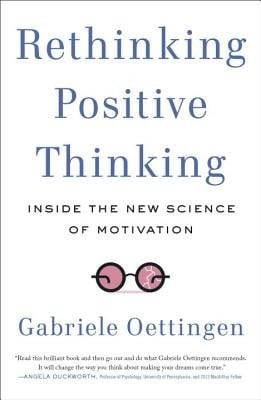
Rethinking Positive Thinking
By Gabriele Oettingen
Learn how psychological research challenges common myths about positive thinking and motivation.
Did you know? When you buy through Bookshop.org, you’re helping support independent bookstores.
RELATED POST: Growth Mindset Isn’t Just Positive Thinking: 7 Myths That Miss the Point
How Does a Growth Mindset Change the Way You See Failure?
Failure can feel deeply personal.
- You didn’t simply fail the exam. You think: “I’m stupid.”
- You didn’t get the job. You conclude: “I’m not good enough.”
- Your idea didn’t work. You decide: “I’m not cut out for this.”
A growth mindset helps you create some distance between the outcome and your identity.
Instead of:
I failed, therefore I am a failure,
you can ask:
What exactly went wrong?
Maybe your preparation wasn’t effective. Perhaps your strategy was wrong. Maybe you lacked information. Perhaps you weren’t ready.
Or maybe you did everything reasonably well and still didn’t get the outcome you wanted.
Not every failure comes with a magical lesson. But failure doesn’t automatically tell you everything about what you’re capable of, either.
If you tend to turn mistakes into judgments about yourself, Kristin Neff’s Self-Compassion (available on Bookshop.org) is a helpful companion to this idea. It explores how you can respond to setbacks with greater kindness without ignoring mistakes or giving up on growth.
book tip

Self-Compassion
By Dr. Kristin Neff
Ever notice how harshly we can treat ourselves — and wonder if it’s holding us back?
Did you know? When you buy through Bookshop.org, you’re helping support independent bookstores.
How to Develop a Growth Mindset
You don’t need to transform the way you think overnight. Developing a growth mindset can begin with small changes in how you respond to everyday situations.
1. Add “Yet”
When you catch yourself thinking:
I can’t do this,
try:
I can’t do this yet.
“Yet” doesn’t promise success. It simply leaves the future open.
2. Become Specific About What’s Difficult
Instead of:
I’m terrible at writing,
ask:
Which part of writing am I struggling with?
Maybe generating ideas comes easily, but organizing them is difficult. Now you have something specific to work on.
3. Treat Mistakes as Information
After a mistake, ask:
- What happened?
- What did I learn?
- What could I change next time?
The goal isn’t to celebrate the mistake. It’s to use it.
4. Ask for Feedback
You can’t always see your own blind spots.
Ask someone:
What’s one thing I could improve?
Then listen before defending yourself. You don’t have to accept every piece of feedback, but you can consider what might be useful.
5. Change Strategies When Necessary
Growth mindset doesn’t mean repeatedly doing something that isn’t working.
Ask:
Do I need more effort—or a better approach?
Sometimes, improvement begins when you stop pushing harder and start trying something different.
6. Let Yourself Be a Beginner
You aren’t supposed to be excellent at something you’ve barely practiced. Give yourself permission to make awkward first attempts.
Being a beginner isn’t evidence of low potential. It’s a stage of learning.
If you want to understand more about how people actually improve at difficult skills, Anders Ericsson and Robert Pool’s Peak (available on Bookshop.org) is worth exploring. It looks at the role of purposeful practice and shows why getting better often depends on how you practice, not simply how hard you try.
book tip

Peak
By Anders Ericsson and Robert Pool
This book challenges the idea of natural talent and shows how focused, structured practice can help anyone improve and perform at a higher level.
Did you know? When you buy through Bookshop.org, you’re helping support independent bookstores.
RELATED POST: How to Develop a Growth Mindset When Giving Up Feels Easier
What Should You Do When You’re Afraid to Fail?
Fear of failure can make fixed-mindset thinking especially powerful. If failing might prove you’re not capable, then not trying can feel safer.
But avoiding failure can also mean avoiding opportunities to learn. When fear shows up, make the challenge smaller.
Instead of asking:
“Can I succeed at this?”
ask:
“What’s one small step I could take?”
Send the email. Practice for ten minutes. Write the first paragraph. Ask one question. Apply for one opportunity.
You don’t need enough confidence for the entire journey. You just need enough to gather the next piece of information.
RELATED POST: How to Cultivate a Growth Mindset When You’re Afraid to Fail
How Can a Growth Mindset Help When You Feel Like Giving Up?
There will also be moments when you’ve already started—and continuing feels harder than stopping. Before you quit, get curious.
Ask:
- Am I tired?
- Am I frustrated because progress is slow?
- Is my strategy working?
- Do I need help?
- Does this goal still matter to me?
Sometimes, you’ll discover that you need to persist. Sometimes, you need a different approach. Sometimes, you need rest. And occasionally, you’ll realize that changing direction is the right decision.
A growth mindset doesn’t mean never giving up. It means learning before deciding.
Simple Growth Mindset Tips You Can Practice Every Day
You can reinforce growth-oriented thinking through small, everyday habits.
Notice when you use identity statements such as:
I’m not creative.
Try turning them into descriptions:
I haven’t developed much confidence in my creativity yet.
Compare yourself with your past self rather than constantly measuring yourself against other people. Notice progress even when it doesn’t come with a big achievement.
Ask questions when you don’t understand something. Study people who are better than you instead of automatically feeling threatened by them. And when something goes wrong, resist making an immediate judgment about yourself.
Curiosity is one of the simplest growth mindset tips you can practice.
RELATED POST: 12 Simple Growth Mindset Tips to Change the Way You Think
Growth Mindset Activities That Make the Idea Real
Reading about growth mindset is useful. Practicing it can show you much more.
Try keeping a mistake journal for a week. Each day, write down one mistake and what you learned from it.
- Create a list of things you once couldn’t do but eventually learned.
- Ask someone you trust for one piece of constructive feedback.
- Choose something new and deliberately let yourself experience being a beginner.
- Create a “challenge ladder” by breaking something intimidating into increasingly difficult steps.
- Or spend 30 days practicing one skill while recording what works, what doesn’t, and what you change along the way.
These growth mindset activities turn an abstract idea into something you can observe in your own behavior.
If you’d like a little more structure for that reflection, the INSIDE THEN OUT Dig Deeper Journal (available on Amazon) uses prompts to help you look more closely at your thoughts and experiences. It could be especially useful for recording what you’re learning from challenges, mistakes, and the strategies you try along the way.
Can Books Help You Develop a Growth Mindset?
Books can be another useful way to explore the idea more deeply. Carol Dweck’s Mindset is an obvious starting point if you want to understand the concept itself.
Other growth mindset books can broaden the conversation by exploring learning, practice, perseverance, habits, vulnerability, and human potential.
But don’t measure your growth by how many books you read.
After reading something useful, ask:
What idea can I actually test?
One idea put into practice may change more than another five books sitting on your shelf.
How Do You Know If You’re Developing a Growth Mindset?
You probably won’t wake up one morning feeling like you’ve officially achieved a growth mindset.
Look for the smaller signs instead.
- Maybe you recover from mistakes more quickly.
- You ask for feedback without feeling quite as defensive.
- You catch yourself saying “yet.”
- You become more comfortable being inexperienced.
- You change strategies instead of immediately giving up.
- Someone else’s success makes you curious rather than defeated.
Or you notice a thought like:
I’m just not good at this,
and no longer automatically believe it.
Those small moments matter.
Growth mindset isn’t about eliminating every fixed thought. It’s about getting better at recognizing those thoughts and choosing what happens next.
Final Thoughts
A growth mindset doesn’t promise that everything is possible. It offers something more useful.
The possibility that you don’t know everything about your potential yet.
- Maybe the thing you struggle with today will become easier with practice.
- Maybe you need a different strategy.
- Maybe someone can teach you.
- Maybe failure will reveal something you couldn’t see before.
- Maybe you’ll discover that the goal isn’t right for you and use what you’ve learned somewhere else.
Growth isn’t always dramatic.
Sometimes, it begins when you catch yourself in the middle of a familiar sentence:
I can’t do this.
And instead of immediately accepting it, you get curious.
- “Why can’t I do it?”
- “What am I missing?”
- “What could I practice?”
- “Who could help?”
- “What haven’t I learned yet?”
You don’t have to replace “I can’t” with “I definitely can.”
There’s a more honest place to begin:
I can learn.
Those three words don’t promise a specific outcome. They promise something more within your control: the possibility of learning, improving, and becoming more capable than you are today.
And they open a door that “I can’t” keeps closed. And sometimes, opening that door is where growth begins.
*This article is for informational and educational purposes only and should not be considered a substitute for professional mental health advice. If you are experiencing emotional distress or mental health challenges, please seek guidance from a licensed therapist or mental health professional.

Malin, co-founder of Courier Mind, is passionate about personal growth and mindset. With a focus on self-discovery and goal-setting, she creates content that inspires confidence, balance, and growth for the mind and spirit.