


12 Things Highly Sensitive People Need to Be Truly Happy
Being a highly sensitive person can be a beautiful way to experience the world.
Music can move you deeply and moments that other people barely notice—a beautiful sunset, the smell of rain, a quiet morning—can feel almost magical.
But being highly sensitive can also make everyday life feel like a lot sometimes.
As a highly sensitive person myself, I’ve learned that happiness doesn’t necessarily come from building a bigger, busier, or more exciting life. Often, it comes from creating a life that feels safe enough, spacious enough, and meaningful enough for our nervous systems to truly enjoy it.
We don’t need to become less sensitive to be happy. We need to understand what helps our sensitivity become a strength rather than a constant source of overwhelm.
This post contains affiliate links, which means we may earn a commission if you purchase through our links—at no extra cost to you. As an Amazon Associate we earn from qualifying purchases. We only recommend products we use or trust. Learn more about affiliate marketing or read our full disclosure.
What Is a Highly Sensitive Person?
The term “highly sensitive person,” or HSP, was popularized by psychologist Dr. Elaine Aron, who began researching high sensitivity in the early 1990s.
Found this helpful? Pin it for later so you can come back anytime.

In scientific research, the trait is known as sensory processing sensitivity (SPS), and it isn’t a disorder or something that needs to be fixed.
As highly sensitive people, we tend to process our experiences deeply, notice subtle details others may miss, respond strongly to emotions, and become overwhelmed more easily when there’s simply too much going on.
That can make certain parts of life more tiring, but it can also be connected to some of the qualities we value most about ourselves.
Understanding that difference can make it much easier to stop fighting our sensitivity and start creating a life that works with it.
If you want to understand your sensitivity on a deeper level, Dr. Elaine Aron’s The Highly Sensitive Person (available on Bookshop.org) is a great place to start. It explores what it means to be highly sensitive and offers practical ways to navigate life without treating your sensitivity as something you need to change.
book tip

The Highly Sensitive Person
By Elaine N. Aron, Ph.D.
Do you often feel overwhelmed by sights, sounds, or emotions that others seem to handle easily?
Did you know? When you buy through Bookshop.org, you’re helping support independent bookstores.
Here are 12 things highly sensitive people need to be truly happy.
1. Enough Time Alone
When you are highly sensitive, alone time isn’t loneliness. It’s recovery.
When we’re constantly taking in conversations, sounds, moods, expectations, notifications, and everything happening around us, we need somewhere quiet to process it all.
That’s why even social situations we genuinely enjoy can leave us exhausted afterward.
You might love spending an afternoon with friends and still desperately want to go home, put on comfortable clothes, and not speak to anyone for a while.
There’s nothing wrong with that.
Regular solitude gives us a chance to come back to ourselves. It allows our nervous system to settle and creates space to think, feel, dream, and simply exist without having to respond to anyone else.
The key is not waiting until you’re completely overwhelmed before giving yourself that space.
If you want to make your quiet time feel a little more intentional, the Recharge: A Day and Night Reflection Journal by Insight Editions (available on Bookshop.org) gives you a place to slow down, check in with yourself, and put some of what’s going on inside your head onto paper.
recharge your energy
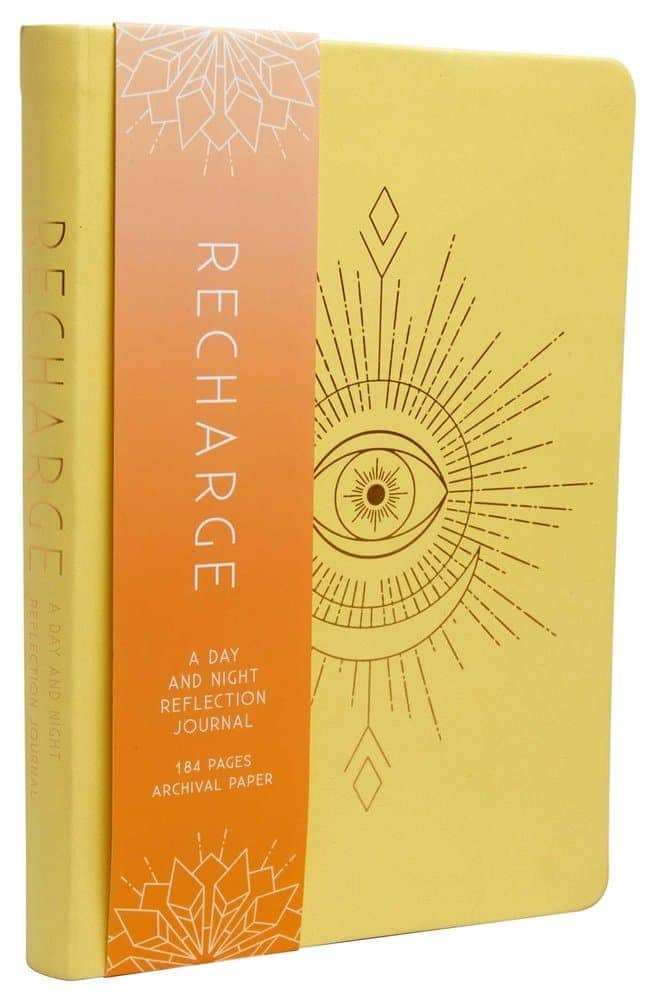
Recharge Journal by Insight Editions
Recharge your energy and avoid burnout with a simple daily routine that actually fits your life.
Did you know? By buying from Bookshop.org, you help support independent bookstores.
RELATED POST: Could You Be a Highly Sensitive Introvert? These Clues Say Yes
2. A Calm Home Environment
Home matters enormously when you’re highly sensitive.
It doesn’t need to look like a perfectly styled Pinterest board. It simply needs to feel like somewhere you can let your guard down and your nervous system can settle.
Too much clutter, constant noise, harsh lighting, uncomfortable furniture, or a lack of privacy can add to our stress without us even realizing it.
Small changes can make a surprisingly big difference.
Soft lighting. A comfortable blanket. A tidy corner. Plants. A favorite candle. Calming colors. A place where you can drink tea without looking at a screen.
For us, these details aren’t necessarily superficial. Our surroundings really do affect how we feel.
RELATED POST: 13 Things That Secretly Trigger Highly Sensitive People
3. Relationships Where We Can Be Ourselves
Many of us become very good at reading other people.
The problem is that this can sometimes turn into constantly adjusting ourselves to keep everyone else comfortable.
- Are they upset?
- Did I say something wrong?
- Should I be quieter?
- Am I being too emotional?
- Do they think I’m difficult?
That kind of self-monitoring is exhausting.
The happiest relationships are often the ones where we don’t have to perform emotional gymnastics just to feel accepted.
- We can say, “I’m tired.”
- We can ask for quiet.
- We can admit that something hurt us.
We can be enthusiastic, emotional, thoughtful, silly, introverted, talkative, quiet, or anything else without constantly worrying that we’re somehow “too much.”
Feeling emotionally safe with another person is one of the greatest forms of freedom.
4. Stronger Boundaries
Many highly sensitive people have deeply compassionate hearts. Unfortunately, compassion without boundaries can quickly turn into exhaustion.
When you pick up on other people’s emotions easily, it can be tempting to take responsibility for them.
You might agree to things you don’t really want to do because you don’t want someone to feel disappointed. You might listen to someone’s problems for hours even though you’re already drained.
Eventually, resentment or burnout can creep in. Healthy boundaries allow us to stay caring without constantly sacrificing ourselves in the process.
Found this helpful? Pin it for later so you can come back anytime.

Sometimes happiness sounds like:
- “I can’t do that tonight.”
- “I need some time to think.”
- “I’m not available right now.”
- “No, thank you.”
A boundary isn’t a rejection of another person. Sometimes it’s simply a way of protecting the energy you need to live your own life.
If setting boundaries is something you struggle with, the Switch Research Boundaries Journal (available on Amazon) can help you explore where you need them and why they can feel so difficult to maintain. It’s especially useful if you tend to put other people’s feelings ahead of your own needs.
RELATED POST: Why Some Highly Sensitive People Choose Not to Have Children
5. A Slower Pace
Modern life celebrates speed. Reply quickly. Work faster. Stay productive. Fill your calendar. Keep up. Do more.
For many of us, life feels better when we deliberately resist some of that pressure.
A slower life doesn’t mean an unambitious life. It means leaving enough space between things to actually experience them.
- Instead of scheduling every hour, leave some blank.
- Instead of rushing through your morning, give yourself ten extra minutes.
- Instead of saying yes to three social plans in one weekend, perhaps choose the one you genuinely want.
Sensitivity becomes much harder to live with when there’s never enough time to process what we’re experiencing.
Sometimes the happiest life isn’t the fullest one. It’s the one with room to breathe.
RELATED POST: 7 Signs You’re Both Highly Sensitive and a High Sensation Seeker
6. Meaningful Work
Many of us struggle when our daily lives feel disconnected from what matters to us.
Money and stability matter, of course. But we may also need to feel that what we’re doing means something.
That doesn’t mean we all need to quit our jobs and pursue some dramatic calling. Meaning can be surprisingly ordinary.
It might come from helping someone. Creating something beautiful. Solving problems. Caring for animals. Teaching. Writing. Building a peaceful home.Supporting a cause. Doing work you can genuinely feel proud of.
We tend to experience life deeply, so spending years doing something that feels completely empty can be especially draining.
We need something—inside or outside of work—that makes us feel connected to a purpose beyond simply getting through another day.
7. Permission to Feel Things Deeply
One of the most painful parts of being highly sensitive is repeatedly being told that the way you feel is somehow wrong.
- “You’re overthinking it.”
- “Why are you so sensitive?”
- “It’s not a big deal.”
- “Just forget about it.”
Maybe it isn’t a big deal to someone else. But you still felt it.
Something shifts when we stop treating every strong emotion as evidence that there’s something wrong with us.
- You can feel deeply without believing every thought that comes with the feeling.
- You can be hurt and eventually let go.
- You can cry easily and still be strong.
- You can be affected by something and still choose how you respond.
Sensitivity becomes much easier to live with when we stop fighting ourselves for feeling things so deeply.
If you’re trying to become a little kinder to yourself, Kristin Neff’s Self-Compassion (available on Bookshop.org) is well worth reading. It explores how to respond to your own struggles with the same understanding and compassion you might naturally offer someone you care about.
book tip

Self-Compassion
By Dr. Kristin Neff
Ever notice how harshly we can treat ourselves — and wonder if it’s holding us back?
Did you know? When you buy through Bookshop.org, you’re helping support independent bookstores.
RELATED POST: How to Deal With Criticism as a Highly Sensitive Person
8. Less Comparison
Comparison can be especially cruel when you’re highly sensitive because it’s easy to compare our inner experience with someone else’s outward appearance.
Someone else seems capable of working all day, socializing all evening, traveling every weekend, maintaining twenty friendships, exercising at sunrise, and somehow still looking cheerful.
Meanwhile, you need an afternoon to recover from a crowded shopping center.
That doesn’t mean you’re failing. We all have different capacities, personalities, circumstances, and nervous systems.
The question isn’t, “Why can’t I live the way they do?”
A better question is:
What kind of life actually feels good to me?
You’re allowed to build your life around your real needs instead of trying to prove that you can tolerate someone else’s lifestyle.
RELATED POST: 24 Signs You’re a Highly Sensitive Extrovert—and How to Thrive
9. Time in Nature
Nature offers something that overstimulating environments rarely do: sensory richness without constant demands.
There are colors, textures, sounds, movement, and beauty—but nothing is asking you to reply to an email or make conversation.
For many of us, that combination is incredibly restorative.
A walk through the woods can quiet thoughts that felt impossible to untangle indoors. Sitting beside water can help the body feel calmer. Even spending ten minutes in a garden or watching clouds move across the sky can create a small sense of spaciousness.
You don’t need an elaborate wellness routine.
Sometimes you simply need trees, fresh air, and twenty minutes where nobody needs anything from you.
10. People Who Respect Our Sensitivity
There’s a huge difference between someone who tolerates your sensitivity and someone who respects it.
- The right people don’t constantly tease you for needing quiet.
- They don’t intentionally push your boundaries because they think you need to “toughen up.”
- They don’t dismiss your feelings simply because they would have reacted differently.
They might not understand everything you experience—and they don’t have to. Respect is enough.
You shouldn’t have to convince the people closest to you that your needs are legitimate before they’re willing to care about them.
RELATED POST: How Highly Sensitive People Can Thrive in an Insensitive World
11. A Creative Outlet
Many highly sensitive people have incredibly rich inner worlds.
We notice details. We imagine possibilities. We feel emotions intensely. We connect ideas that might seem completely unrelated to someone else. All of that inner material needs somewhere to go.
Writing, painting, photography, gardening, cooking, decorating, music, crafting, dancing, or any other creative activity can give those thoughts and feelings a place to take shape.
You don’t need to be talented enough to sell what you create.
You don’t even need to show anyone. Creativity can simply be a place where your sensitivity gets to play instead of always being something you have to manage.
In a world that often asks us to tone ourselves down, creating something can be a great way of doing the opposite.
If writing, doodling, planning, or simply putting your thoughts onto paper helps you unwind, a dotted journal like the VIVID SCRIBBLES A5 Bullet Dotted Journal (available on Amazon) gives you plenty of freedom to make it your own. There’s no right way to use it—which is part of the appeal.
RELATED POST: The Benefits of Being a Highly Sensitive Person No One Talks About
12. Acceptance of Who We Are
Perhaps the most important thing we need as highly sensitive people is something no one else can completely give us: self-acceptance.
There may always be situations that overwhelm you more quickly than they overwhelm someone else.
- You might always need more downtime.
- You may cry easily.
- You may notice tension that other people overlook.
- You may need to leave the party earlier.
And yes, sometimes sensitivity is inconvenient. But it’s also connected to many beautiful qualities.
- The person who is easily moved by sadness may also be easily moved by beauty.
- The person who notices criticism may also notice kindness.
- The person who feels overwhelmed by chaotic environments may experience extraordinary peace in quiet ones.
- The person who feels heartbreak intensely may also love intensely.
You don’t have to romanticize every difficult part of being sensitive. But you also don’t have to spend your life wishing you had been born with a completely different nervous system.
If self-acceptance is something you’re still working on, Tara Brach’s Radical Acceptance (available on Bookshop.org) is a thoughtful read. It explores how we can stop fighting ourselves quite so much and meet our experiences with greater understanding and compassion.
book tip

Radical Acceptance
By Tara Brach
In the busyness of everyday life, it’s easy to forget the present moment. This book is a gentle reminder to slow down and truly live.
Did you know? When you buy through Bookshop.org, you’re helping support independent bookstores.
RELATED POST: Are You an HSP, Introvert, Empath… or All Three?
Happiness Doesn’t Have to Look Loud
For a long time, happiness has been sold to us as something big and visible.
More friends. More adventures. More success. More plans. More experiences. More everything.
But for those of us who are highly sensitive, happiness can be much quieter.
- It can look like waking up without immediately rushing.
- It can be a home that feels peaceful.
- A few relationships where you feel deeply understood.
- Work that means something.
- Enough money to feel secure.
- Time outside.
- Creative projects nobody else needs to understand.
- Saying no without spending the next three days feeling guilty.
- A Saturday with absolutely nothing scheduled.
And perhaps most importantly, happiness can be reaching a point where you no longer treat your sensitivity as a problem you need to solve.
Being highly sensitive may mean experiencing some of life’s difficult moments more intensely. But it also means you get to experience its beauty that way.
The goal isn’t to feel less. It’s to create a life where feeling deeply feels safe.
Final Thoughts
Being highly sensitive shapes the way we experience the world, but it doesn’t mean we need an entirely different kind of life.
Often, the things highly sensitive people need are simple: enough rest, meaningful relationships, healthy boundaries, a peaceful environment, and the freedom to be ourselves.
The more we understand and respect those needs, the easier it becomes to build a life that feels good rather than one we’re constantly trying to recover from.
Sensitivity may come with challenges, but it also brings depth, connection, creativity, and a greater awareness of the beauty around us.
We don’t need to become less sensitive to be happy. We simply need to make room for who we already are.
*This article is for informational and educational purposes only and should not be considered a substitute for professional mental health advice. If you are experiencing emotional distress or mental health challenges, please seek guidance from a licensed therapist or mental health professional.
Aron, Elaine, Ph.D. “Introversion, Extroversion and the Highly Sensitive Person.” Highly Sensitive Person, 24 April 2018, https://hsperson.com/introversion-extroversion-and-the-highly-sensitive-person/. Accessed 11 July 2023.
Bjelland, Julie. “Recommended Downtime for HSPs.” Julie Bjelland, https://www.juliebjelland.com/hsp-blog/recommendeddowntimeforhsps. Accessed 11 July 2023.
Cherney, Kristeen. “How Long Does Caffeine Stay in Your System?” Healthline, reviewed by Katherine Marengo LDN, R.D., Nutrition, updated on 7 November 2018, https://www.healthline.com/health/how-long-does-caffeine-last. Accessed 11 July 2023.
Greven, Corina U. et al. "Sensory Processing Sensitivity in the context of Environmental Sensitivity: A critical review and development of research agenda." Neuroscience & Biobehavioral Reviews, vol. 98, 2019, pp. 287-305, ISSN 0149-7634, https://doi.org/10.1016/j.neubiorev.2019.01.009. Adapted and used under the Creative Commons Attribution 4.0 International License.
Norman, Phillip. “10 Creative Things Sensitive People Can Do to Process and Calm Their Emotions.” Introvert Dear, 7 August 2023, https://introvertdear.com/news/10-creative-things-sensitive-people-can-do-to-process-and-calm-their-emotions/. Accessed 8 January 2024.
Park, H., Shin, D., & Lee, K.W. "Association of main meal frequency and skipping with metabolic syndrome in Korean adults: a cross-sectional study." Nutrition Journal, vol. 22, no. 24, 2023, https://doi.org/10.1186/s12937-023-00852-x. Adapted and used under the Creative Commons Attribution 4.0 International License.

Linda is the co-founder of Courier Mind and holds a Diploma in Natural Health Nutrition & Diet. Her passions include photography, personal growth, and travel, where she draws inspiration from diverse cultures and their approaches to mindset and self-discovery. She is committed to helping others set meaningful goals, overcome self-doubt, and become the best version of themselves.