
Why Most People Never Escape Mediocrity (Even When They Try)

This post contains affiliate links, which means we may earn a commission if you purchase through our links—at no extra cost to you. As an Amazon Associate we earn from qualifying purchases. We only recommend products we use or trust. Learn more about affiliate marketing or read our full disclosure.
Most people don’t consciously choose mediocrity.
Very few people wake up and think:
I want an average life.
The truth is, most people want more for themselves. They genuinely want to improve.
They:
- Set goals
- Start new habits
- Read self-improvement content
- Feel motivated after hearing something inspiring
And yet… a few weeks or months later, they find themselves right back where they started. The effort was real. The intention was real. The desire to change was real.
So why doesn’t anything actually change?
The answer isn’t a lack of ambition.
It’s something more subtle:
Most people don’t fail to escape mediocrity because they don’t try. They fail because the systems that create mediocrity are stronger than motivation alone.
In this article, we’ll look at why mediocrity is so difficult to escape, why trying harder usually isn’t enough, and what separates people who change from those who stay stuck.
What “Mediocrity” Actually Means
Before we go any deeper, it’s important to understand what mediocrity really means — because most people get it wrong.

Mediocrity is not:
- Failure
- A lack of intelligence
- A lack of potential
In fact, many people who are stuck in mediocrity are capable, talented, and filled with untapped potential.
Mediocrity is more complex than that. It’s a pattern of staying within familiar limits without experiencing meaningful or lasting growth.
It often looks like:
- Repeating the same routines without making real progress
- Constantly thinking about goals but never fully reaching them
- Cycles of motivation that eventually lead back to stagnation
- Comfort gradually replacing challenge over time
And that’s exactly what makes mediocrity so difficult to recognize.
It rarely feels like a crisis. It usually doesn’t look like failure from the outside. Life keeps moving. Things still feel relatively stable and predictable.
Most importantly, mediocrity is not dramatic. It is stable. And that stability is exactly why it’s so hard to escape mediocrity.
People naturally adjust to what feels familiar, even when that familiarity keeps them stuck in the same place for years.
RELATED POST: Am I Mediocre? The Truth Most People Don’t Want to Face
Now let’s look at some common reasons why people never escape mediocrity:
1. The Brain Prefers Familiarity Over Growth
One of the biggest reasons people struggle to escape mediocrity is rooted in how the brain works.
Your brain is not primarily designed to maximize growth or achievement. Its main job is to keep you safe and help you conserve energy.
Because of that, your brain naturally tries to:
- Conserve energy
- Reduce uncertainty
- Avoid risk
- Favor predictable outcomes
Research suggests that people are strongly motivated to reduce uncertainty and maintain predictability. Uncertainty often creates psychological discomfort, which can influence behavior and decision-making.
From an evolutionary standpoint, unfamiliar situations often meant danger. For most of human history, uncertainty could have serious consequences, so the brain adapted to deal with that reality.
Over time, it developed a simple internal rule:
- Familiar = safe
- Unfamiliar = risky
The problem is that growth almost always requires you to step into something unfamiliar.
Even positive change can feel uncomfortable because uncertainty naturally creates resistance. That resistance is subtle, but it can be incredibly powerful.
It often shows up as procrastination, hesitation, overthinking, or the urge to fall back into old routines.
So when you try to improve your life, your brain starts asking questions like:
- “Is this safe?”
- “Is this predictable?”
- “Is this worth the energy?”
And when the answers don’t feel clear, your brain will usually return to what feels familiar.
Unfortunately, familiarity is often where mediocrity lives.
Not because mediocrity feels ideal — but because it feels known, predictable, and emotionally comfortable.
That’s why so many people remain stuck in patterns they’ve already outgrown, even when they genuinely want something better.
2. Why Motivation Alone Isn’t Enough
Most people try to escape mediocrity through motivation.
They feel inspired:
- After reading something powerful
- After a stressful moment
- After comparing themselves to other people
For a short while, that motivation feels real and powerful. It creates energy, optimism, and the feeling that change is finally within reach.
But motivation has one major limitation:
It is emotional, not systematic.

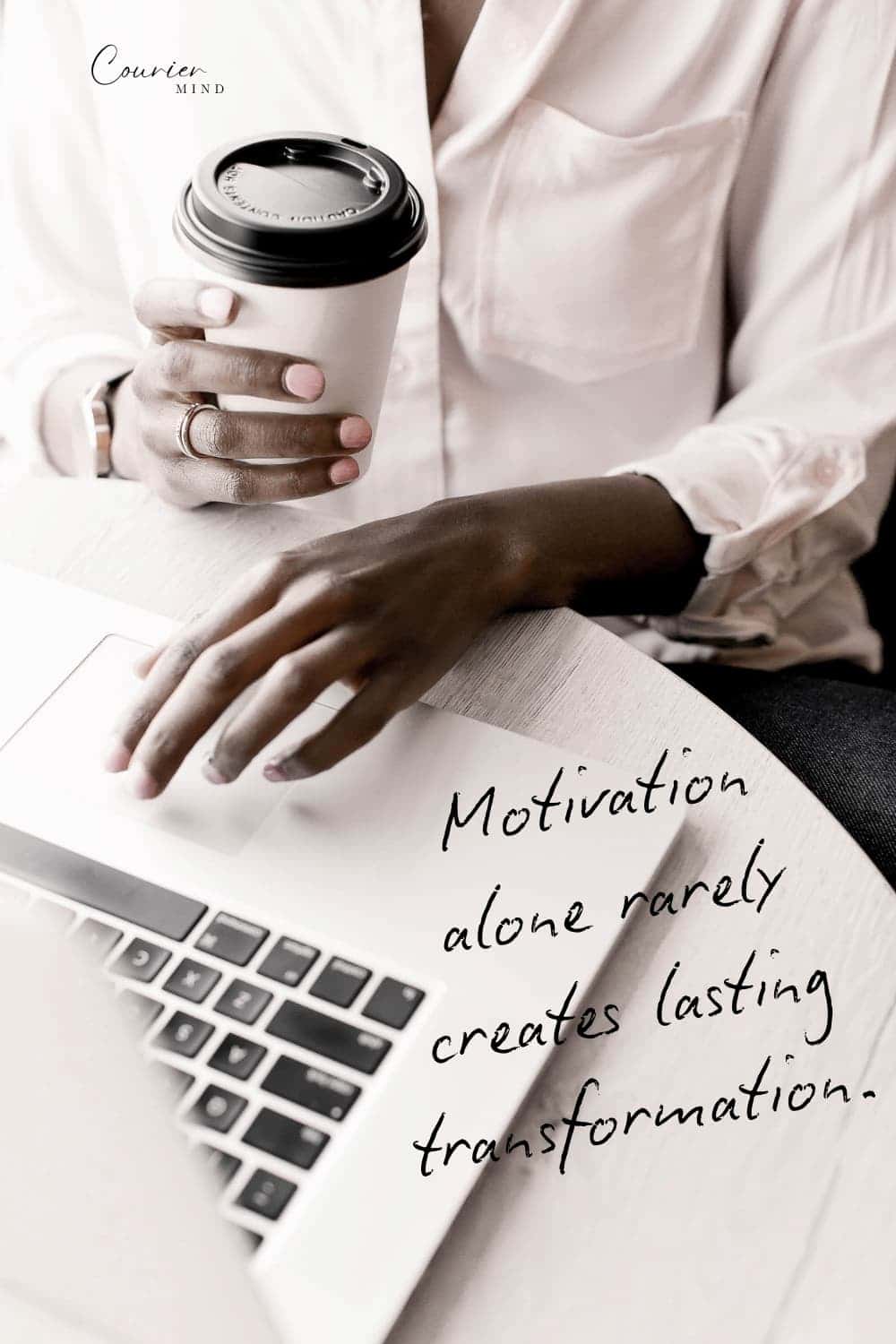
And that matters because mediocrity is rarely the result of a single decision. More often, it’s created by systems and patterns that repeat every day.
Those systems include:
- Habits
- Routines
- Environments
- Identity patterns
- Default behaviors
This is why motivation on its own rarely creates lasting change.
What usually happens looks something like this:
Motivation spikes → temporary change → motivation fades → old systems return
At first, you come out strong. You make changes, see some progress, and start to believe you’ve finally broken the cycle.
But sooner or later, that emotional intensity fades. And when it does, the underlying system starts running the show again.
That’s why so many people:
- Start strong
- Make short-term progress
- Then slowly slip back into old patterns
Without changing the deeper systems that drive behavior, motivation simply isn’t enough to help you escape mediocrity over the long term.
Studies indicate that motivation often fluctuates throughout the behavior-change process, making long-term success dependent on maintenance mechanisms rather than motivation alone.
This idea is explored in Atomic Habits (available on Bookshop.org), which explains why lasting change comes from systems and habits rather than motivation alone.
book tip

Atomic Habits
By James Clear
Want to change your life without relying on willpower?
Did you know? When you buy through Bookshop.org, you’re helping support independent bookstores.
3. Comfort Feels Like Progress (Even When It Isn’t)
One of the most dangerous things about mediocrity is that it rarely feels like failure. More often, it feels responsible.
It can look like:
- Staying consistent
- Keeping life stable
- Avoiding unnecessary risk
- Being “realistic”
Because of that, people often confuse comfort with real progress.
For example:
- Being busy feels productive
- Routines feel like discipline
- Avoiding risk feels wise
But none of those things automatically create growth. In fact, they can strengthen stagnation when nothing is actually changing.
That’s what makes mediocrity so difficult to spot. You can feel like you’re moving forward while repeating the same patterns year after year.
RELATED POST: Should You Accept Mediocrity to Be Happier? A Deep Look
4. Fear of Uncertainty Is Stronger Than Desire for Growth
People often assume that mediocrity sticks around because of laziness.
But in many cases, the real reason is much simpler:
Uncertainty feels more uncomfortable than dissatisfaction.
Mediocrity may feel:
- Boring
- Unfulfilling
- Frustrating
But it also feels:
- Predictable
- Controllable
- Familiar
And that sense of familiarity matters more than most people realize.
Real change introduces things your brain naturally pushes back against:
- Unknown outcomes
- Possible failure
- Temporary instability
- Identity disruption
So the brain ends up comparing the discomfort it knows (mediocrity) with the discomfort it doesn’t know (change).
And most of the time, it chooses the familiar option. Not because it’s better — but because it feels safer.
RELATED POST: This Is What “Never Settle for Mediocrity” Gets Wrong
5. Identity Keeps People Anchored
One of the deepest reasons people stay stuck in mediocrity is identity.
People don’t just think:
I want to change.
They also think:
- “I’m not that kind of person.”
- “People like me don’t do that.”
- “I’ve never been good at this.”
Over time, these beliefs become part of how people see themselves. And once an identity feels established, the brain works to protect it — even when that identity is holding them back.
Identity acts like an internal boundary system.
Identity is not fixed — it’s learned. The Mountain Is You (available on Amazon) explores how self-image shapes behavior more than intention ever does.
Even when behavior changes for a while, identity often pulls people back to familiar patterns.
For example:
- Someone tries to become disciplined → but still sees themselves as “undisciplined”
- Someone tries to become confident → but still identifies as “shy”
As a result, change starts to feel unnatural or disconnected from how they see themselves. And the brain generally prefers consistency over contradiction.
So instead of fully adapting to new behavior, people often return to familiar identity patterns — even when those patterns are exactly what keep them stuck.
According to psychologist Carol Dweck’s research, people’s beliefs about their abilities can influence motivation, learning goals, willingness to take on challenges, and achievement-related behavior.

6. People Overestimate Big Changes and Underestimate Small Ones
Another reason people struggle to escape mediocrity is that they misunderstand how change really works.
Many people believe:
- Change has to be dramatic to matter
- Transformation should happen fast
- Big results require extreme action
So they turn to things like:
- Intense routines
- Short bursts of motivation
- Massive commitments
At first, this feels productive. But most of the time, it’s not sustainable. Eventually, energy drops, motivation fades, and the entire system starts to fall apart.
Meanwhile, the changes that actually drive long-term growth are usually much smaller:
- Simple actions
- Repeated consistently
- Gradually expanding comfort zones over time
Research suggests that repeated behaviors can become increasingly automatic over time as habits form, helping sustain behavior with less reliance on conscious effort.
The problem is that small actions feel insignificant in the beginning. They don’t create immediate transformation, so people underestimate their value and quit too soon.
That creates a repeating cycle:
Aim too high → burn out → return to old patterns → repeat
And over time, that cycle reinforces mediocrity instead of helping you escape it.
If you are interested, The Power of Habit (available on Bookshop.org) explains how small repeated behaviors often have a greater impact than dramatic short-term efforts.
book tip

The Power of Habit
By Charles Duhigg
Discover the science behind how habits form, how they function, and most importantly, how we can change them.
Did you know? When you buy through Bookshop.org, you’re helping support independent bookstores.
7. The Environment Reinforces Mediocrity
Mediocrity isn’t just internal — it’s also shaped by your environment.
The places you spend time in and the people around you constantly influence:
- Habits
- Expectations
- Behavior norms
- Social feedback loops
So if your environment consistently rewards comfort and discourages risk, it will naturally reinforce mediocrity over time.
For example:
- Social circles that subtly discourage change or ambition
- Routines that prioritize safety and predictability over challenge
- Environments with little exposure to growth-oriented behavior
In these situations, staying the same isn’t just easier — it’s often socially and practically reinforced.

Even strong personal motivation can be weakened by this kind of environmental pressure. Not because you stop caring, but because the structure around you keeps pulling your behavior back toward the default.
Research suggests that social norms play a powerful role in shaping behavior. Studies consistently find that people are influenced by what those around them view as normal, acceptable, and expected.
And in most cases, the default behavior is simply whatever your environment makes easiest to maintain.
Because ultimately, the behavior that is easiest to sustain usually wins over the behavior that requires constant resistance.
RELATED POST: Why Mediocre Relationships Feel “Fine” But Still Hurt You
8. Discomfort Is Misinterpreted as a Sign to Stop
One of the most misunderstood parts of growth is discomfort.
When you try to change, you often experience:
- Resistance
- Awkwardness
- Self-doubt
- Slow progress
And because these feelings don’t match the expectation that “improvement should feel good,” they’re often mistaken for a warning sign.
This isn’t working.
But discomfort is not a sign of failure. It’s a sign that something is unfamiliar.
The problem is that most people expect progress to feel positive right away. So when things feel difficult, uncertain, or clumsy in the beginning, they assume they must be doing something wrong.
In reality, that early discomfort is often just the transition period between old patterns and new ones.
However, instead of sticking with it, many people give up too soon — right when change is starting to take shape but hasn’t become stable yet.
9. The Cost of Mediocrity Is Easy to Ignore
One reason mediocrity is so persistent is that it doesn’t punish you immediately.
There’s no sudden collapse or obvious signal forcing you to change. Instead, life keeps moving in a way that feels normal and manageable.

From day to day:
- Life still functions
- Routines continue
- Responsibilities are still met
Nothing feels urgently wrong. So the cost of staying the same is:
- Slow
- Invisible
- Cumulative
Because the consequences build gradually rather than showing up all at once, they’re easy to miss in the moment.
That’s what makes mediocrity so easy to tolerate in the short term, even when it becomes limiting over the long term.
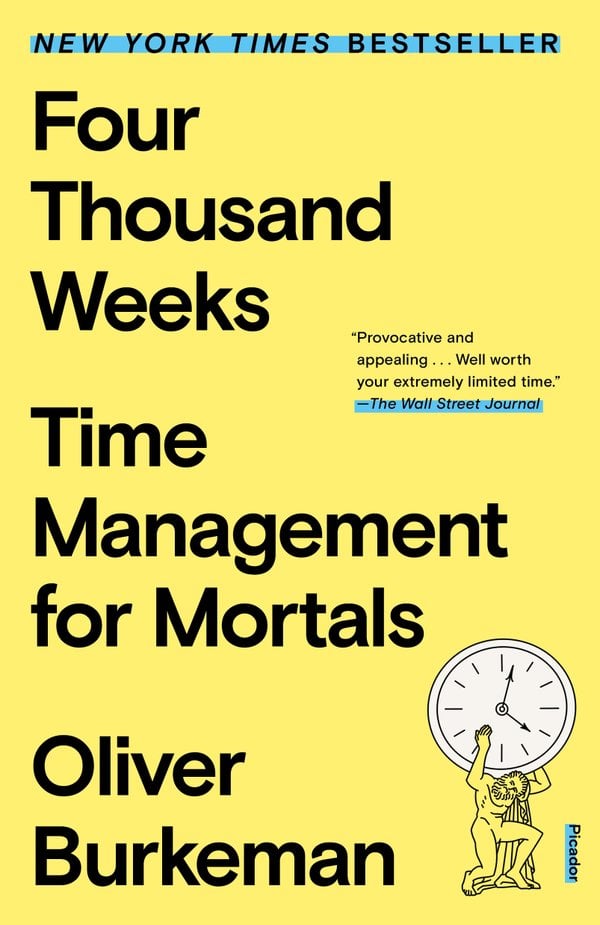
For a deeper look at the hidden cost of postponing change, Four Thousand Weeks (available on Bookshop.org) explores how our limited time influences the choices we make and the opportunities we leave behind.
book tip
Four Thousand Weeks
By Oliver Burkeman
Discover a different approach to time management by focusing less on doing more and more on what matters most.
Did you know? When you buy through Bookshop.org, you’re helping support independent bookstores.
10. People Confuse Thinking With Doing
Many people who feel stuck in mediocrity are actually very self-aware.
They spend a lot of time:
- Thinking about change
- Analyzing their situation
- Planning improvements
- Researching solutions
And on the surface, this can feel like progress. It creates the feeling that things are already beginning to move in a new direction.
But thinking can create the illusion of action. Because without execution, nothing meaningful changes at a structural level.
This is where the gap shows up:
People often feel like they’re growing mentally, while their real-world behavior remains largely unchanged.
And mediocrity isn’t a thinking problem — it’s a behavioral one. Until behavior changes, circumstances rarely change either.
If you want to better understand the patterns that may be keeping you stuck, the Dig Deeper Journal with Prompts (available on Amazon) includes guided questions that can help you reflect on your habits, beliefs, and behaviors.
RELATED POST: 7 Signs You’re Stuck in a Mediocre Mindset and How to Change It
Why Some People Eventually Escape Mediocrity
People who eventually manage to escape mediocrity don’t necessarily have more motivation than everyone else.
In most cases, they change something deeper in the way they approach growth and change:
- They make actions smaller and easier to maintain
- They stay with discomfort longer instead of treating it as failure
- They stop waiting for the “perfect moment” when they finally feel ready
- They take action even when the outcome feels uncertain
- They build systems instead of depending on mood or motivation
- Most importantly, they stop treating discomfort as a stop sign.
Over time, these small shifts change everything.
Instead, they start seeing discomfort as a normal part of the process — something you should expect when stepping outside familiar patterns, not something that means you should turn back.
And that simple shift in perspective is often what separates staying stuck from genuinely moving forward.
If you’d like to explore this idea further, Mindset (available on Bookshop.org) examines how the beliefs people hold about their abilities can shape their willingness to grow, learn, and change.
book tip

Mindset: The New Psychology of Success
By Carol S. Dweck
Do you believe your abilities are fixed, or that you can grow with effort?
Did you know? When you buy through Bookshop.org, you’re helping support independent bookstores.
RELATED POST: How to Overcome Mediocrity and Finally Stand Out in Life
Final Thoughts
Most people never escape mediocrity not because they don’t want more from life, but because the forces that keep them there are subtle, consistent, and psychologically comfortable.
Mediocrity persists because:
- The brain prefers familiarity
- Motivation is temporary
- Identity resists change
- Systems override intention
- Discomfort is misunderstood
- Progress gets pushed into “someday”
The result is a cycle where people keep trying to change, but eventually drift back toward what feels stable.
But mediocrity isn’t a permanent condition. It’s a pattern. And patterns can be changed — not through short bursts of intensity, but through consistency over time.
The real shift happens when taking action becomes more familiar than avoidance, and when showing up no longer depends on feeling ready.
Because in the end, escaping mediocrity isn’t about becoming a completely different person.
It’s about repeatedly choosing small discomforts over comfortable stagnation — until growth stops feeling like the exception and starts becoming the default.
*This article is for informational and educational purposes only and should not be considered a substitute for professional mental health advice. If you are experiencing emotional distress or mental health challenges, please seek guidance from a licensed therapist or mental health professional.
Michaelsen, Maren M, and Tobias Esch. “Understanding health behavior change by motivation and reward mechanisms: a review of the literature.” Frontiers in behavioral neuroscience vol. 17 1151918. 19 Jun. 2023, doi:10.3389/fnbeh.2023.1151918. Adapted and used under the terms of the Creative Commons Attribution 4.0 International License.
Muradoglu, Melis et al. “The structure and motivational significance of early beliefs about ability.” Developmental psychology vol. 62,3 (2026): 583-596. doi:10.1037/dev0001910.
Yamin, Paulius, et al. "Using Social Norms to Change Behavior and Increase Sustainability in the Real World: A Systematic Review of the Literature." Sustainability, vol. 11, no. 20, 2019, article 5847, https://doi.org/10.3390/su11205847. Adapted and used under the terms of the Creative Commons Attribution 4.0 International License.
Zhang, Chao et al. “Theory-based habit modeling for enhancing behavior prediction in behavior change support systems.” User modeling and user-adapted interaction vol. 32,3 (2022): 389-415. doi:10.1007/s11257-022-09326-x. Adapted and used under the terms of the Creative Commons Attribution 4.0 International License.

Linda is the co-founder of Courier Mind and holds a Diploma in Natural Health Nutrition & Diet. Her passions include photography, personal growth, and travel, where she draws inspiration from diverse cultures and their approaches to mindset and self-discovery. She is committed to helping others set meaningful goals, overcome self-doubt, and become the best version of themselves.