

Am I Mediocre? The Truth Most People Don’t Want to Face
At some point, almost everyone asks themselves some version of this question:
“Am I mediocre?”
It doesn’t always come up in those exact words.
Sometimes it sounds more like:
- “Is this really all there is?”
- “Why am I not further along by now?”
- “Do I actually have potential?”
This question usually shows up during moments of reflection, comparison, or frustration. And there’s a reason it feels so uncomfortable.
Because underneath the question isn’t just curiosity — it’s the fear of being “average.”
But here’s the first uncomfortable truth:
Most people are not mediocre in the way they think they are. But many people do end up living in patterns that create mediocrity over time.
Those two things are not the same.
In this article, I’ll break down what mediocrity really means, why so many people feel this way about themselves, and what the question “Am I mediocre?” is actually trying to reveal.
This post contains affiliate links, which means we may earn a commission if you purchase through our links—at no extra cost to you. As an Amazon Associate we earn from qualifying purchases. We only recommend products we use or trust. Learn more about affiliate marketing or read our full disclosure.
What “Mediocre” Actually Means
“Mediocre” is one of those emotionally charged words that people often use to describe themselves without really stopping to think about what it means.
Found this helpful? Pin it for later so you can come back anytime.

But most of the time, people misunderstand it.
Mediocrity does not mean:
- Being average at everything
- Not being talented
- Not being successful yet
- Not having potential
Mediocrity is better understood as:
A pattern of not fully using your capacity over time.
In other words you have potential. But you’re not expressing it consistently, and your growth often feels uneven, stuck, or stalled.
That distinction matters because it takes away some of the self-judgment and replaces it with clarity.
Mediocrity is not a fixed identity that you are. It’s a behavioral pattern that you can fall into.
Why People Ask “Am I Mediocre?”
This question doesn’t just appear out of nowhere.
It usually comes up when there’s a gap between who you think you could be and what your current life actually reflects.
That gap creates tension. And in today’s world, that tension often gets amplified.
It’s incredibly easy to open social media and see carefully curated lives—people traveling, building businesses, achieving visible success, and always seeming one step ahead.
When you compare yourself to that, your own life can start to feel ordinary, repetitive, or even like you’re falling behind.
Research suggests that social media can amplify upward social comparisons, causing people to compare themselves to others who appear more successful, attractive, or accomplished, which can negatively affect well-being and self-perception.
And in that gap between what you see and what you feel, the word “mediocre” often starts to creep in.
That tension usually shows up as:
- Dissatisfaction
- Comparison
- Self-doubt
- Restlessness
But the question itself is rarely just logical. It’s emotional.
It often comes up in moments when:
- You find yourself comparing your life to other people
- You feel like you’re behind where you think you “should” be
- Your progress feels slower than you expected
- Your life starts to feel stuck or repetitive
In those moments, “Am I mediocre?” becomes a shortcut for a deeper question.
But underneath it, the real question is:
Am I falling short of my potential?
The Uncomfortable Truth About Being Average
One of the hardest truths to accept is that most people aren’t exceptional in any obvious or visible way.
Most people are:
- Somewhere in the middle when it comes to their abilities
- Inconsistent with their growth
- Moving back and forth between effort and avoidance
- Trying to balance comfort with ambition
This isn’t an insult—it’s simply reality. But the discomfort comes from a gap between expectations and reality.
Because modern culture tends to promote:
- Constant growth
- Extreme success stories
- Highly visible achievement
- Comparison-driven narratives
So it becomes easy to assume:
If I’m not standing out, I must be falling behind.
But life isn’t actually that black and white:
- Exceptional vs. mediocre
- Success vs. failure
Most people’s lives exist somewhere in between, not at the extremes.
Why You Feel “Mediocre” Even If You’re Not
The feeling of being mediocre is often more about perception than reality.
There are a few major psychological factors behind it:
1. Comparison Bias
You rarely compare yourself to average people.
Instead, you tend to compare yourself to:
- Highlight reels
- Visible success stories
- People who are ahead of you in specific areas
But that creates a distorted point of reference. So even normal, healthy progress can start to feel like it’s not enough.

2. Unrealistic Internal Timelines
People often carry assumptions like:
- They should already be further ahead by now
- Success should be happening faster
- Effort should produce immediate, visible results
When reality doesn’t match those expectations, it can easily feel like failure—even when progress is still happening behind the scenes.
For a deeper look at why so many people feel behind in life, Four Thousand Weeks by Oliver Burkeman (available on Bookshop.org) offers a powerful perspective on time, expectations, and the pressure to constantly achieve more.
book tip
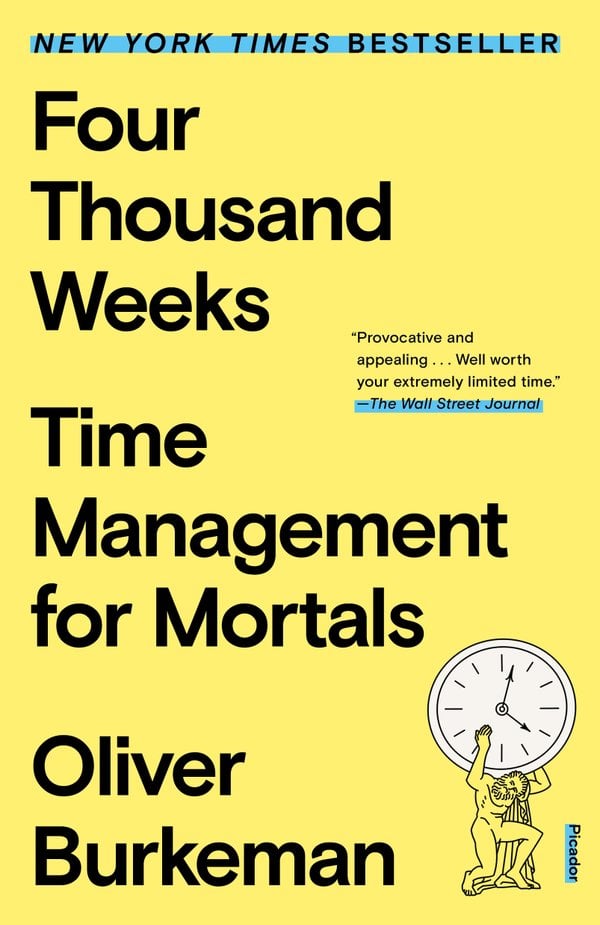
Four Thousand Weeks
By Oliver Burkeman
Discover a different approach to time management by focusing less on doing more and more on what matters most.
Did you know? When you buy through Bookshop.org, you’re helping support independent bookstores.
3. Invisible Progress Problem
Most meaningful growth isn’t immediately visible:
- Skill development
- Emotional maturity
- Discipline building
- Habit formation
But the challenge is that people usually measure only what they can see. As a result, a lot of internal progress goes unnoticed.
And when that happens, it can create the illusion that nothing is changing—even when real growth is happening beneath the surface.
RELATED POST: 7 Signs You’re Stuck in a Mediocre Mindset and How to Change It
Mediocrity Is Often a Pattern, Not a Identity
Here is where the truth becomes more useful:
Most people who feel “mediocre” are not stuck in mediocrity.
They’re moving through a cycle of three states:
1. Intention
“I want to improve.”
This is the starting point—the moment you become aware that things could be better and start thinking about change.
Studies indicate that people who believe abilities can be developed through effort, learning, and effective strategies tend to show greater motivation, persistence, and achievement than those who view abilities as fixed traits.
If the idea that mediocrity is a pattern rather than an identity resonates with you, Mindset: The New Psychology (available on Bookshop.org) may be worth exploring. The book examines how the beliefs you hold about your abilities can shape your willingness to learn, grow, and persist through challenges.
book tip

Mindset: The New Psychology of Success
By Carol S. Dweck
Do you believe your abilities are fixed, or that you can grow with effort?
Did you know? When you buy through Bookshop.org, you’re helping support independent bookstores.
2. Effort
“I start making changes.”
This is the phase where action begins—you try new habits, adjust your behavior, and put energy into improving, even if your efforts are inconsistent at first.
Found this helpful? Pin it for later so you can come back anytime.

3. Reversion
“I fall back into old patterns.”
This is the stage where things slowly drift back to what feels familiar, even after a period of effort.
This cycle creates the feeling of:
- Trying but not really changing
- Wanting more but ending up in the same place
But the issue usually isn’t a lack of capability. It’s a lack of consistency in your systems.
RELATED POST: Why Mediocre Relationships Feel “Fine” But Still Hurt You
The Real Reason People Stay Stuck
If mediocrity is a pattern, what keeps that pattern going?
It usually comes down to four forces:
1. Comfort Beats Growth in the Short Term
Growth usually comes with:
- Uncertainty
- Effort
- Emotional friction
Comfort, on the other hand, offers:
- Predictability
- Ease
- Familiarity
So even when people genuinely want to grow, they often end up choosing comfort in the small day-to-day decisions that ultimately shape the direction of their lives.
2. Systems Override Motivation
Motivation might say:
I want to change.
But systems determine:
This is what we actually do on a regular basis.
So without making changes to your systems—your habits, environment, and routines—motivation tends to fade, no matter how strong it feels in the beginning.
Evidence shows that repeated behaviors can become increasingly automatic over time as habits form, reducing reliance on conscious decision-making and momentary motivation.
If you’re interested in why certain behaviors are so difficult to change, The Power of Habit by Charles Duhigg (available on Bookshop.org) offers a deeper look at how habits are formed and maintained.
book tip

The Power of Habit
By Charles Duhigg
Discover the science behind how habits form, how they function, and most importantly, how we can change them.
Did you know? When you buy through Bookshop.org, you’re helping support independent bookstores.
3. Identity Resistance
If you hold beliefs like:
- “I’m not disciplined”
- “I’m not consistent”
- “I’m not that type of person”
Then you can end up unconsciously behaving in ways that reinforce those beliefs.
4. Small Avoidance Accumulates
Mediocrity is rarely the result of one big decision.
It’s usually the result of small, repeated choices:
- Skipping effort
- Delaying tasks
- Avoiding discomfort
- Staying in familiar routines
On their own, these choices can seem minor. But over time, they add up.
RELATED POST: Why Most People Never Escape Mediocrity (Even When They Try)
The Most Important Distinction: Average vs Stuck
Not everyone who is “average” is actually stuck.
There’s an important difference between the two:
Healthy Average:
- Consistent improvement
- Steady learning
- Gradual progress
- Engagement with life
Stagnant Mediocrity:
- Repeated cycles without meaningful progress
- Avoidance of discomfort
- Lack of direction over time
- Persistent feeling of being “stuck”
If you’re interested in why some people continue making progress even when results are slow, Grit: The Power of Passion and Perseverance (available on Bookshop.org) is worth exploring. The book examines how persistence, consistency, and long-term commitment often matter more than talent when it comes to meaningful achievement.
book tip

Grit: The Power of Passion and Perseverance
By Angela Duckworth
This book dives into the science behind success, showing that it’s not just talent or intelligence that matters—but grit.
Did you know? When you buy through Bookshop.org, you’re helping support independent bookstores.
So the real question isn’t whether you’re mediocre, but whether you’re growing consistently, even if it’s slow.
RELATED POST: Should You Accept Mediocrity to Be Happier? A Deep Look
Why “Am I Mediocre?” Feels So Personal
The phrase “Am I mediocre?” feels so heavy because it’s not just about performance—it touches something deeper: identity.
We don’t just judge our actions; we attach meaning to them:
- “If I am not exceptional, what does that say about me?”
- “If I’m average, is that still enough?”
- “Am I wasting my potential?”
That’s where the emotional weight comes from.

But fear often makes the situation feel bigger than it really is. Because not being exceptional is not the same as being stuck.
And being average in some areas doesn’t automatically mean there’s something wrong.
If this question has brought up deeper thoughts about your identity, self-worth, or potential, a guided journal like the Dig Deeper Journal with Prompts (available on Amazon) can help you explore those patterns and gain more clarity through structured reflection.
RELATED POST: This Is What “Never Settle for Mediocrity” Gets Wrong
The Hidden Trap: Thinking You Need a Big Breakthrough
Many people believe that escaping mediocrity requires:
- A major life change
- A dramatic transformation
- One breakthrough moment
But that way of thinking often leads to paralysis. Because it causes people to delay taking action until something “big” happens.
In reality:
Change is usually small, repetitive, and unglamorous.
It comes from:
- Repeated effort
- Small improvements
- A consistent willingness to tolerate discomfort
Not sudden transformation.
What Actually Moves You Out of Mediocrity
People who stop feeling stuck don’t suddenly become extraordinary overnight.
Instead, they tend to make a few key shifts:
1. They Reduce the Size of Actions
Instead of waiting for motivation or the “right moment,” they make the starting point smaller:
- 5 minutes instead of 1 hour
- One task instead of a complete transformation
The focus shifts from doing everything to simply doing something.
If you’re trying to turn good intentions into consistent action, a structured planner like the Full Focus Planner (available on Amazon), can help you build routines, set meaningful goals, and stay focused on small steps that add up over time.
2. They Act Despite Discomfort
They stop treating discomfort as a sign that they should stop or pull back.
Instead, they start to see it as:
A normal part of doing something new.
So discomfort becomes something they expect rather than avoid, and they keep going anyway—even when it feels a little uncomfortable or inconvenient.
3. They Focus On Systems, Not Feelings
They stop relying on:
- Motivation
- Inspiration
- Mood
And instead focus on building:
- Consistent habits
- Routines
- Environments that make action more automatic than emotional
If you’re interested in how small daily actions can lead to meaningful long-term change, Atomic Habits (available on Bookshop.org) is a valuable read. The book explores how tiny improvements, repeated consistently, can gradually transform behavior and produce significant results over time.
book tip

Atomic Habits
By James Clear
Want to change your life without relying on willpower?
Did you know? When you buy through Bookshop.org, you’re helping support independent bookstores.
4. They Accept Gradual Progress
They stop expecting immediate results or dramatic transformation.
Instead, they begin to value:
- Consistency
- Direction
- Accumulation
Progress becomes something that builds over time rather than something that has to be instantly visible to count.
Studies suggest that skill development is a gradual process supported by practice, feedback, and continued learning over time.
RELATED POST: How to Overcome Mediocrity and Finally Stand Out in Life
So… Are You Mediocre?
The honest answer is:
That question matters less than what you choose to do next.
Because mediocrity isn’t a permanent label. It’s a description of your current patterns. And patterns can change.
If:
- You’re aware of your habits
- You’re reflecting honestly
- You’re willing to adjust your behavior
Then you’re already outside the worst form of mediocrity—the unaware kind. And that alone can change the direction your life takes from here.
Final Thoughts
Asking “Am I mediocre?” usually comes from a genuine desire to understand where you stand in life.
But in the end, the truth is more useful than the label.
Most people aren’t defined by mediocrity or greatness—they’re defined by what they repeatedly do. What you do consistently becomes your trajectory over time.
And the uncomfortable truth most people don’t want to face is this:
- You don’t escape mediocrity by thinking about it.
- You escape it by changing what you repeatedly do—even in small, ordinary ways.
So the question isn’t really whether you are mediocre.
The real question is:
Are my current patterns moving me toward the life I actually want?
And the important thing to remember is that this isn’t a fixed answer—it’s something you can start changing today.
*This article is for informational and educational purposes only and should not be considered a substitute for professional mental health advice. If you are experiencing emotional distress or mental health challenges, please seek guidance from a licensed therapist or mental health professional.
Stojanovic, Marco, and Wendy Wood. “Beyond deliberate self-control: Habits automatically achieve long-term goals.” Current opinion in psychology vol. 60 (2024): 101880. doi:10.1016/j.copsyc.2024.101880.
Yeager, David S et al. “A national experiment reveals where a growth mindset improves achievement.” Nature vol. 573,7774 (2019): 364-369. doi:10.1038/s41586-019-1466-y. Adapted and used under the terms of the Creative Commons Attribution 4.0 International License.
Zamiri, Majid, and Ali Esmaeili. "Strategies, Methods, and Supports for Developing Skills within Learning Communities: A Systematic Review of the Literature." Administrative Sciences, vol. 14, no. 9, 2024, article 231, https://doi.org/10.3390/admsci14090231. Adapted and used under the terms of the Creative Commons Attribution 4.0 International License.

Linda is the co-founder of Courier Mind and holds a Diploma in Natural Health Nutrition & Diet. Her passions include photography, personal growth, and travel, where she draws inspiration from diverse cultures and their approaches to mindset and self-discovery. She is committed to helping others set meaningful goals, overcome self-doubt, and become the best version of themselves.