

Attachment to Material Things: How to Break Free From Clutter
Let’s be honest—most of us have way more stuff than we actually need. Maybe it’s that overstuffed closet, the kitchen drawer crammed with mystery cords, or the dusty boxes in the attic you haven’t opened in years.
In a world of fast fashion, two-day shipping, and endless “must-haves,” it’s easy to fall into the trap of accumulating things without really thinking about why we’re doing it.
But here’s the catch: while our things might bring comfort or even feel like part of our identity, an unhealthy attachment to material things can weigh us down.
It clutters not just our homes, but also our minds—causing stress, distraction, and that nagging feeling that we’re never quite at peace.
Breaking free from this kind of attachment doesn’t mean tossing everything out or living like a monk. It’s about getting clear on what actually adds value to your life and letting go of the rest.
In this article, we’ll dig into why we get so attached to our stuff, how it impacts our well-being, and—most importantly—how you can start clearing the clutter for good.
Ready to reclaim your space and your peace of mind?
Let’s dive in!
This post contains affiliate links, which means we may earn a commission if you purchase through our links—at no extra cost to you. As an Amazon Associate we earn from qualifying purchases. We only recommend products we use or trust. Learn more about affiliate marketing or read our full disclosure.
Why We Hold Onto Material Things
Before we dive into the most personal reasons we cling to our belongings, it’s worth stepping back and looking at the bigger picture.
The truth is, we live in a world that equates happiness with having more.
From the moment we wake up, we’re hit with ads and social media posts nudging us to buy the latest gadget, upgrade our wardrobe, or redecorate our homes.
Found this helpful? Pin it for later so you can come back anytime.
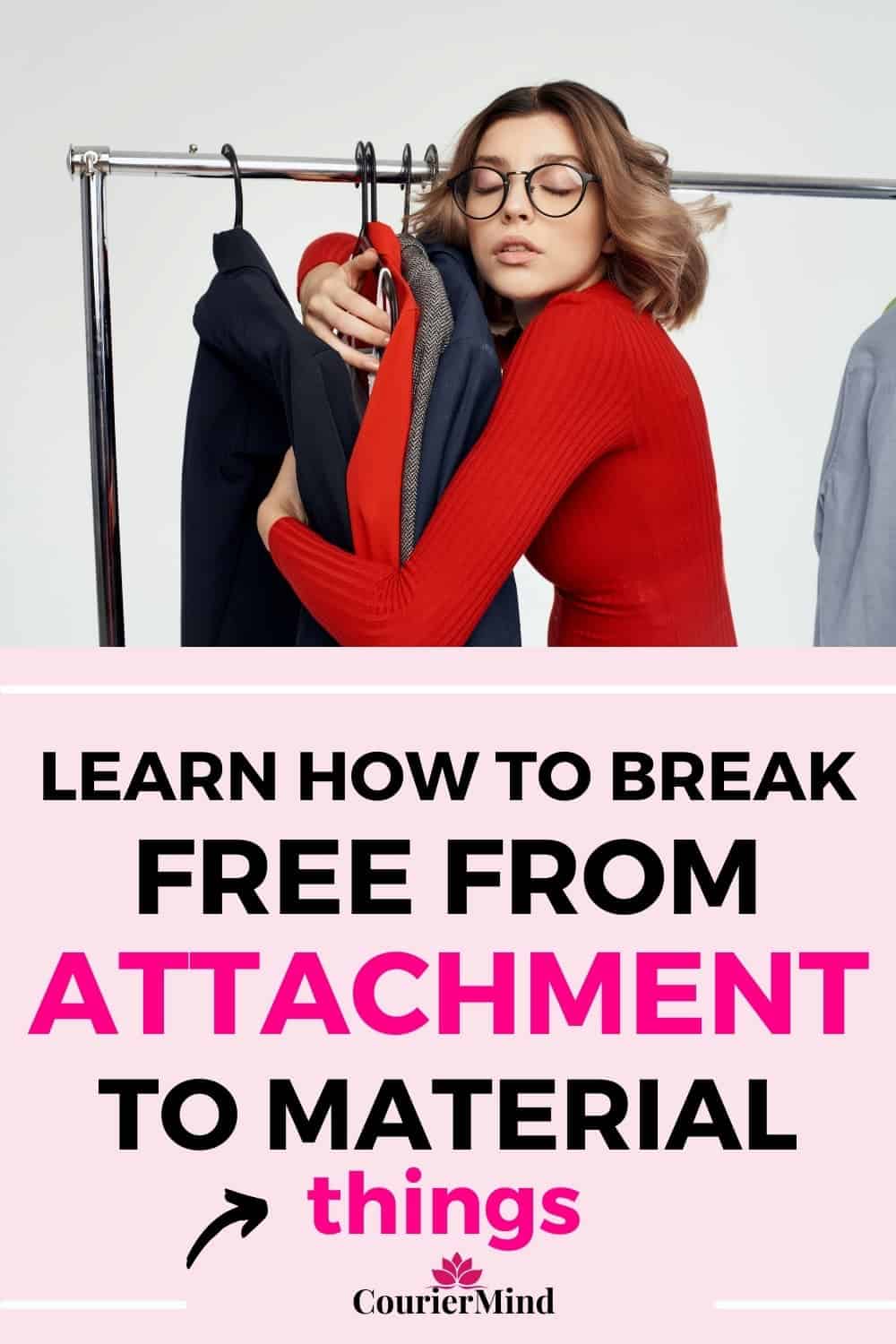
It’s no wonder we start to believe that more stuff equals more success—or even more self-worth.
This kind of messaging creates a cycle: we buy to feel better, the thrill fades, and so we buy again. Over time, our attachment to material things becomes deeply ingrained, shaping how we see ourselves and how we compare ourselves to others.
But this mindset can quietly steal our joy.
Instead of focusing on personal growth, meaningful relationships, or experiences, we get caught up in accumulating things. We mistake our possessions for proof that we’re doing okay in life.
And that keeps us stuck.
RELATED POST: Why Self-Worth Is Important for Success and How to Build It
What Research Says About Attachment to Material Things
Research backs this up. In The Sociological Review, sociologist Sophie Woodward conducted a fascinating study that involved home visits and interviews across the UK.
She spoke with people from all walks of life to understand their relationship with the items they keep—and why letting go is often so hard.
What she found might sound familiar.
Most people hang on to things not because they’re useful, but because they’re emotionally loaded.
Some of the most common reasons included:
- They cost a lot, so getting rid of them feels wasteful
- They hold sentimental value
- They might come in handy “someday”
- They were passed down or inherited
- They were gifts from loved ones
- They’re still technically functional
- Or… they’re just clutter we haven’t faced yet
Even when we know we don’t use or need something, letting go can stir up unexpected feelings—guilt, sadness, even anger.
That’s how powerful our emotional bond with stuff can be.
In fact, when someone else suggests we declutter, it can feel almost like a personal attack—as if they’re asking us to throw away a part of ourselves. It’s not just the stuff we’re holding onto—it’s the meaning we’ve given it.
But here’s the truth: our emotions don’t always tell the whole story.
By gently questioning our attachment to material things, we start to loosen their grip.
We begin to see our belongings more clearly—not as who we are, but as things. Useful, perhaps. Beautiful, sometimes. But not us.
And that’s the moment when real, lasting change starts to become possible.
RELATED POST: 6 Reasons Why Clutter and Mental Health Are Connected
The Psychology of Material Attachment
Once we understand the cultural pressure to hold on to stuff, the next step is looking inward.
Our attachment to material things is also driven by deep psychological needs. It’s not just about having things—it’s about what those things represent to us.
Let’s look at some of the most common reasons we struggle to let go:
1. We See Ourselves in Our Stuff
Our possessions can feel like an extension of our identity. Whether it’s your favorite outfit, your tech collection, or the way your living space looks, these things send a message—to others and to yourself.
When you let go of them, it can feel like letting go of a part of you.
2. We Crave Control and Stability
In times of uncertainty, stuff can give us a sense of order.
Holding onto old or unused items can feel like we’re preparing for some future crisis—or clinging to the past in a world that keeps changing.
3. We’re Emotionally Attached
Some items are soaked in memories. That necklace from your grandmother. The postcard from a long-ago trip.
Even if they’re tucked away in a drawer, they carry emotional weight. Getting rid of them can feel like losing the memory itself.
4. We’re Afraid We’ll Regret It
Ah yes, the classic “What if I need this someday?”
This one keeps junk drawers full and closets bursting at the seams. The fear of future regret is powerful, even when logic tells us the item hasn’t been touched in years and probably never will be.
Here’s the good news: simply recognizing these patterns is a huge first step.
Once we understand why we’re so attached, we can start to question whether these things are actually serving us—or just weighing us down.
The Consequences of Clutter
Clutter isn’t just about a messy house or an overflowing junk drawer—it runs much deeper than that.
When we don’t address our attachment to material things, it can quietly take a toll on our mental and emotional well-being.
Let’s look at some of the real-life consequences of living with too much stuff:
1. It Cranks Up Your Stress
Ever feel tense just walking into a cluttered room?
You’re not imagining it. Research shows that cluttered environments can raise cortisol levels (that’s your stress hormone), especially in women.
All those piles, stacks, and scattered things send constant signals to your brain that something’s unfinished or out of control—which makes it really hard to relax.
RELATED POST: How to Support Mental Health by Removing Clutter
2. It Kills Your Focus and Productivity
When your space is chaotic, your mind tends to follow. Clutter creates mental noise, making it harder to think clearly or get things done.
Plus, how much time have you spent looking for lost keys, important papers, or that one thing you swore was just right here?
3. It Drains Your Brain with Decision Fatigue
Too much stuff means too many choices—what to wear, what to keep, where to put things.
All those tiny decisions add up and leave you mentally drained.
Eventually, you might just avoid dealing with it altogether, letting the clutter (and stress) keep piling up.
RELATED POST: Benefits of a Daily Routine: 11 Ways It Can Improve Your Life
4. It Can Strain Your Relationships
Let’s be real—clutter can cause tension at home.
Whether it’s a partner who’s more minimalist or a roommate who’s fed up with your “organized chaos,” differing levels of tolerance (and emotional attachment to things) can spark frustration, resentment, or even full-blown arguments.
Found this helpful? Pin it for later so you can come back anytime.
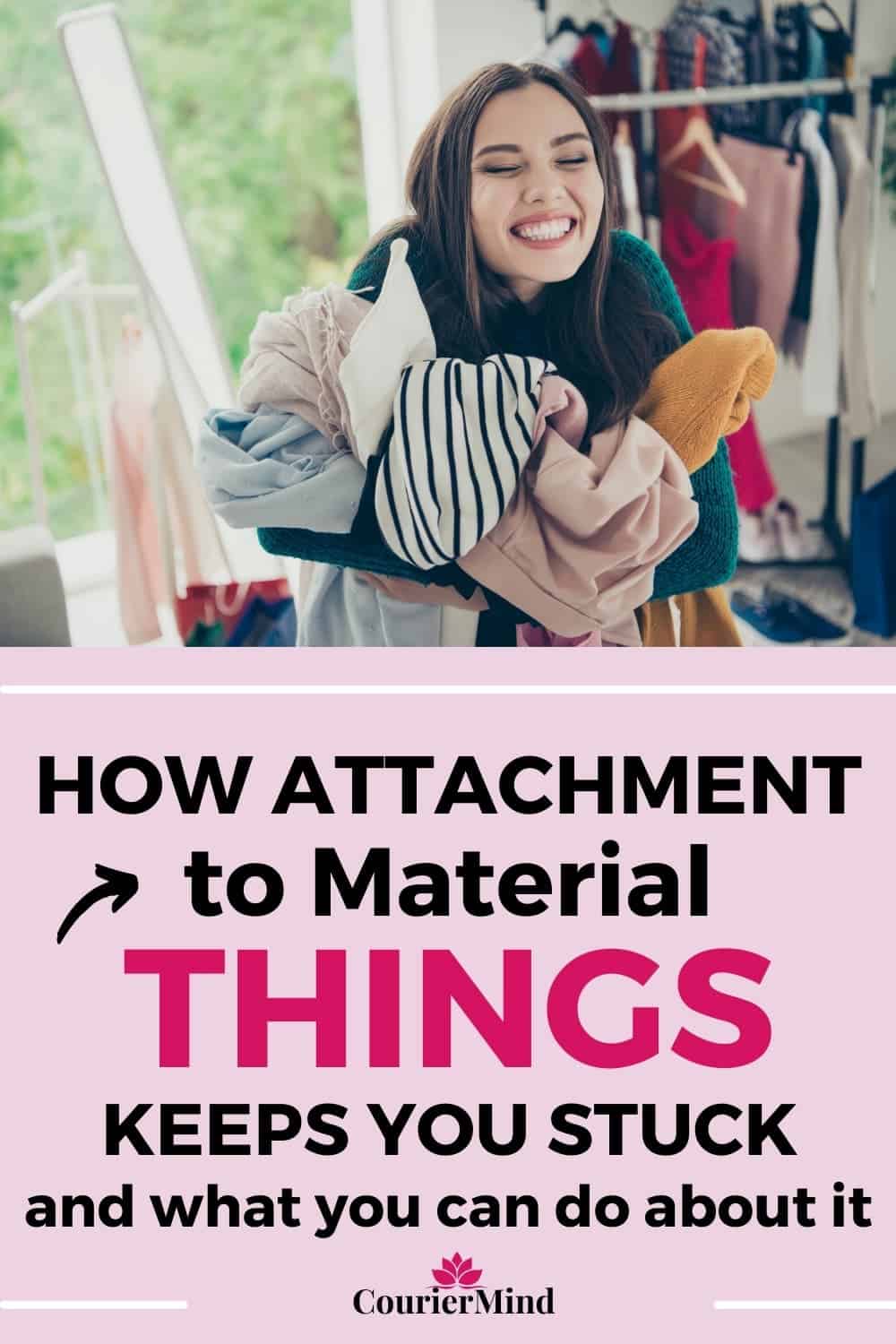
The Path to Freedom: How to Break Free from Clutter
Breaking free from clutter—and from our deeper attachment to material things—takes more than just hauling stuff to the donation bin.
It requires a shift in mindset and a few practical strategies to help you build momentum and keep moving forward.
Here’s how to start your journey toward a freer, lighter life:
1. Redefine What Really Matters to You
Start by asking yourself: What do I truly value?
When you’re clear on what matters—like peace, creativity, simplicity, or connection—it becomes easier to spot the items that are just taking up space (physically and emotionally).
Try this:
Write down five values you want to live by. Then take a look around—does your environment reflect those values?
If not, that’s a gentle nudge that it’s time for change.
RELATED POST: The Amazing Benefits of Minimalism for Mental Well-Being
2. Rethink What It Means to Own Something
Just because you bought it, received it, or used to love it doesn’t mean you need to keep it forever.
Ownership doesn’t equal appreciation, and an item’s worth isn’t defined by its price tag—it’s about whether it still serves you.
Try saying:
“This served its purpose, and now I release it with gratitude.”
3. Start Small to Build Confidence
Decluttering your entire home might feel overwhelming—but you don’t have to tackle it all at once.
Start with something small: a drawer, a shelf, or one category like mugs or shoes. Quick wins build momentum and make it easier to keep going.
Use the 20/20 rule:
If you could replace it in under 20 minutes for under $20, let it go.
RELATED POST: 8 Reasons Why Life Is So Overwhelming and How to Overcome It
4. Use the KonMari Method—But With a Twist
Marie Kondo’s famous question, “Does this spark joy?” is helpful—but be careful. Nostalgia and guilt can feel like joy in disguise.
Be honest with yourself about what’s truly serving you.
Ask instead:
“Does this fit my current life?” or “Would I buy this again today?”
For a deeper dive into the KonMari method and practical guidance on decluttering with intention, Marie Kondo’s book The Life-Changing Magic of Tidying Up (available on Bookshop.org) is a classic resource that has transformed how millions approach tidying their homes.
book tip

The Life-Changing Magic of Tidying up
By Marie Kondo
A revolutionary approach to decluttering and organizing.
Did you know? When you buy through Bookshop.org, you’re helping support independent bookstores.
5. Challenge the Scarcity Mindset
A lot of our attachment to material things is rooted in fear—fear we won’t have enough, or that we’ll regret letting something go.
But trust yourself. You are resourceful, creative, and capable of handling what comes your way.
Try affirmations like:
“I have enough. I am enough.”
RELATED POST: 6 Ways to Break Free from a Fixed Mindset and Unlock Your Success
6. Adopt the One-In, One-Out Rule
To keep clutter from creeping back in, try this simple rule: for every new item that enters your space, let one go.
It’s a small habit that creates big long-term results.
7. Save the Sentimental Stuff for Last
Emotional items are the hardest to part with, so don’t start there. Wait until your decision-making muscles are stronger.
And when you’re ready, remember: the memory isn’t in the object—it’s in you.
Tip:
Take a photo of special items or keep a few in a “memory box” to honor them without holding on to everything.
8. Go Digital Where You Can
Old paperwork, photos, CDs, or even recipes—many of these can be scanned or stored digitally. You’ll free up space without losing the things that matter.
Invest in cloud storage or an external hard drive to keep it all organized and accessible.
RELATED POST: Helpful Tips to Stay Organized With To-Do Lists and Task Planners
9. Make It a Ritual, Not a Chore
Decluttering doesn’t have to feel like punishment. Light a candle, play your favorite music, or invite a friend over.
Turn it into a moment of self-care—a way to reconnect with your space and yourself.
10. Give With Intention
Letting go is easier when you know something will be used and appreciated by someone else.
Donate clothing to shelters, give books to local schools or libraries, or gift items through community groups.
Focus on the joy of giving—not the loss of letting go.
The bottom line?
Decluttering isn’t about deprivation—it’s about freedom. When you let go of what no longer serves you, you make room for what truly matters.
And that’s how you begin to break free from the emotional weight of your attachment to material things—one small step at a time.
Beyond the Physical: Decluttering Your Mind
Here’s something that often gets overlooked: physical clutter isn’t just about stuff. It’s often a reflection of what’s happening inside us.
When our minds feel scattered, stressed, or overloaded, it tends to show up in our surroundings. And vice versa.
So while you’re clearing out your closet or sorting through that drawer you’ve been avoiding, don’t forget to create space internally too.
Here are a few simple habits that can help you declutter your mind—and your life—from the inside out:
1. Practice Mindfulness
A few quiet minutes of meditation or even journaling can work wonders.
These moments help you slow down and notice the unconscious thoughts, emotions, and attachments to material things that might be driving your choices.
RELATED POST: Yoga, Meditation, and Mindfulness: Powerful Practices for Inner Peace
Awareness is the first step to change.
For practical guidance and gentle wisdom on cultivating mindfulness in daily life, The Miracle of Mindfulness by Thich Nhat Hanh (available on Bookshop.org) is an excellent resource, offering exercises and insights to help you stay present and intentional in your actions.
book tip

The Miracle of Mindfulness
By Thich Nhat Hanh
In the busyness of everyday life, it’s easy to forget the present moment. This book is a gentle reminder to slow down and truly live.
Did you know? When you buy through Bookshop.org, you’re helping support independent bookstores.
2. Focus on Gratitude
It’s easy to focus on what we don’t have—but gratitude shifts that.
When you make a habit of appreciating what you do have, the urge to accumulate more starts to fade. You realize you’re already surrounded by enough.
A simple way to build this habit is with The 6-Minute Gratitude Journal by UrBestSelf (available on Amazon) which offers quick daily prompts to reflect on what you’re thankful for and cultivate a lasting sense of abundance.

6-Minute Diary Pure – 3 Million User Gratitude Journal for Women w/ Prompts – Guided Self Care Journal Based on Positive Psychology – Daily Manifestation…
- Only ~6 minutes/day (3 min morning + 3 min evening)
- Undated format, so you can start any time
- High-quality linen cover, vegan and CO₂-neutral print
- Includes intro & weekly reflections + motivational quotes
- Ideal gift for mindfulness & gratitude practice
3. Live With Intention
This one’s powerful: pause and ask yourself before buying something, committing to something, or keeping a habit—Does this truly add value to my life?
Intentional living is all about choosing what stays in your life—physically, mentally, and emotionally—with care and clarity.
Decluttering isn’t just a weekend task—it’s a mindset. One that invites you to live more simply, more clearly, and more in tune with what really matters.
RELATED POST: Why You Should Never Settle for Mediocrity in Life
Final Thoughts
Our attachment to material things is deeply human. It’s often tied to our memories, our fears, our hopes—and our search for meaning. There’s no shame in that.
But when those attachments start weighing us down, they can block the peace and fulfillment we’re really craving.
Letting go doesn’t mean losing—it means choosing. Choosing clarity over chaos. Space over stress. Purpose over pressure.
And here’s the truth: breaking free from clutter isn’t a one-and-done project. It’s a mindset. A practice. An ongoing return to what matters most.
So start small. Stay curious. Be kind to yourself as you go.
Let go. Make space. And rediscover the freedom that’s been waiting for you—just beneath the clutter.
*This article is for informational and educational purposes only and should not be considered a substitute for professional mental health advice. If you are experiencing emotional distress or mental health challenges, please seek guidance from a licensed therapist or mental health professional.
Patel, Devki A et al. “Reactance, Decisional Procrastination, and Hesitation: A Latent Class Analysis of Clutter Behavior.” International journal of environmental research and public health vol. 20,3 2061. 23 Jan. 2023, doi:10.3390/ijerph20032061. Adapted and used under the Creative Commons Attribution 4.0 International License.
Woodward, Sophie. “Clutter in domestic spaces: Material vibrancy, and competing moralities,” The Sociological Review, 69(6), 1214-1228, 2021, https://doi.org/10.1177/0038026121998218. Adapted and used under the Creative Commons Attribution 4.0 International License.

Malin, co-founder of Courier Mind, is passionate about personal growth and mindset. With a focus on self-discovery and goal-setting, she creates content that inspires confidence, balance, and growth for the mind and spirit.