


Why People Stay Stuck in Comfort Zone Relationships
Most people assume that if a relationship isn’t working, leaving should be easy.
If you’re unhappy, you leave. If something doesn’t feel right, you make a change. But real life is rarely that simple.
Many people stay in relationships that feel:
- Emotionally flat
- Unfulfilling
- Stagnant
- “Safe but not right”
Even when they clearly sense that something isn’t right, they still don’t leave. Instead, they stay—sometimes for years—trying to make sense of the tension they feel inside.
So why does this happen?
It’s not because people don’t understand their situation or can’t see what’s happening.
It’s because relationships aren’t just emotional decisions—they’re psychological systems tied to identity, security, routine, and the fear of the unknown.
At the center of it all is one powerful force: the comfort zone.
When it comes to relationships, the comfort zone can be incredibly difficult to leave. It may not always feel good, but it feels familiar.
That sense of familiarity can keep people stuck far longer than they ever expected—which is exactly why a comfort zone relationship can be so difficult to recognize when you’re the one living it.
This post contains affiliate links, which means we may earn a commission if you purchase through our links—at no extra cost to you. As an Amazon Associate we earn from qualifying purchases. We only recommend products we use or trust. Learn more about affiliate marketing or read our full disclosure.
What a Comfort Zone Relationship Actually Is
A comfort zone relationship isn’t necessarily a “bad” relationship. In fact, from the outside, it can appear completely functional—even stable and healthy.
Found this helpful? Pin it for later so you can come back anytime.

There may be nothing that seems obviously wrong to other people, and sometimes it doesn’t even feel clearly wrong to the people in the relationship themselves.
It often includes:
- Familiarity
- Routine
- Emotional predictability
- Shared history
- Low immediate conflict
On the surface, all of those qualities sound positive. And in many ways, they are. They create a sense of stability and comfort that can feel reassuring in everyday life.
But beneath that stability, something important may still be missing:
- Emotional depth
- Growth
- Excitement
- Alignment
- Fulfillment
That’s where the tension begins to build—not always in obvious ways, but quietly over time.
RELATED POST: The Ultimate Guide to the Comfort Zone: What It Is and How to Break Free
Why Familiarity Feels Safer Than Change
Your brain is wired to prioritize safety before fulfillment.
From a psychological perspective, familiarity signals:
- Predictability
- Reduced uncertainty
- Lower perceived risk
Even when a situation isn’t ideal, your brain will often choose what it already knows over what it doesn’t. Familiarity becomes reassuring simply because it’s familiar.
So in a comfort zone relationship, your mind may default to something like:
This is familiar. Therefore, it is safe.
Even if a deeper part of you feels unfulfilled, your nervous system is still responding to stability rather than uncertainty.
Leaving the relationship, on the other hand, introduces:
- Uncertainty
- Emotional risk
- Unknown outcomes
- Potential loneliness or regret
In the short term, the brain often exaggerates those risks. It focuses more on what could go wrong than on what may already be missing in the present.
So people stay.
RELATED POST: Why Getting Out of Your Comfort Zone Feels So Hard
The Emotional Trade-Off People Don’t Notice
Most comfort zone relationships aren’t completely wrong or completely right.
They exist in a gray area—and that in-between space is exactly what makes them psychologically complex.
That gray area creates a subtle but powerful emotional trade-off:
The relationship may not feel deeply fulfilling, but it also doesn’t feel completely unsafe or unstable.
So instead of arriving at a clear yes or no, the brain leans toward: “Stay where we are—it’s manageable.” Over time, that feeling of “manageable” becomes its own form of justification.
This is where people often begin accepting things they once believed they never would:
- Emotional dissatisfaction
- Lack of excitement
- Unmet needs
Because staying feels less costly than leaving, even though that may not be true in the long run.
RELATED POST: 7 Signs You’re Stuck in Your Comfort Zone Without Realizing It
Why Fear of Being Alone Is a Major Factor
One of the biggest reasons people stay in comfort zone relationships is the fear of being alone.
And it’s often not just about being alone in a practical sense—it’s about what being alone can mean emotionally and psychologically:
- Emotional discomfort
- Identity shift
- Social uncertainty
- Starting over
Even when someone knows they’re unhappy in a relationship, the thought of leaving can still feel like stepping into the unknown emotionally.
So the brain begins making a comparison: known discomfort (the current relationship) versus unknown discomfort (being alone and rebuilding your life).
In many cases, it chooses the familiar option because familiar pain often feels easier to cope with than uncertain possibilities.
If self-doubt, fear of being alone, or difficult emotions are holding you back, Radical Acceptance (available on Bookshop.org) can help you break free from patterns that no longer serve you.
book tip

Radical Acceptance
By Tara Brach
In the busyness of everyday life, it’s easy to forget the present moment. This book is a gentle reminder to slow down and truly live.
Did you know? When you buy through Bookshop.org, you’re helping support independent bookstores.
RELATED POST: Why Most People Never Leave Their Comfort Zone
How Attachment Keeps People Stuck
Human attachment plays a major role in why people stay stuck.
Over time, relationships naturally build layers of:
- Emotional bonds
- Shared memories
- Routines
- Identity overlap
Even if the relationship isn’t fully satisfying, it still becomes woven into your emotional conditioning.
Your mind begins creating associations almost automatically:
- Partner = familiarity
- Routine = stability
- Relationship = identity structure
As a result, leaving doesn’t just feel like ending a relationship. It can feel like disrupting an entire emotional system that has been built gradually and reinforced over the years.
That kind of disruption naturally creates resistance to change.
Found this helpful? Pin it for later so you can come back anytime.
The Illusion of “It’s Not That Bad”
One of the strongest psychological traps is normalization.
Over time, people naturally adapt to their environment. Things that once felt uncomfortable or concerning slowly become part of everyday life.
What once felt like a problem starts to feel:
- “Normal”
- “Manageable”
- “Just how things are”
This is often how comfort zone relationships continue for years. The discomfort doesn’t necessarily disappear—you simply become accustomed to it.
The brain does this by gradually reducing emotional friction, often by lowering expectations to match reality instead of questioning it.
As expectations gradually become lower, dissatisfaction becomes easier to live with without triggering immediate action.
Sometimes the hardest part is being honest with yourself about what you’re really feeling. The Dig Deeper Journal (available on Amazon) uses thoughtful prompts to help you explore emotions, patterns, and questions that are easy to overlook in everyday life.
RELATED POST: Your Comfort Zone Will Kill You—But Most People Never Realize It
Why People Delay Decisions About Leaving
Even when someone realizes a relationship has become stuck, they often don’t take action right away.
Instead, they fall into a familiar cycle of delay:
- “Maybe things will improve.”
- “It’s not the right time.”
- “I just need to think about it more.”
- “We’ve been through a lot together.”
On the surface, this can look like indecision. More often, though, it isn’t confusion—it’s a form of emotional self-protection.
Making a major relationship change requires a level of emotional and mental capacity that people don’t always have available in the moment.
It involves:
- Emotional energy
- Uncertainty tolerance
- Identity adjustment
- Confronting fear
Rather than moving toward a decision right away, the brain often chooses something that feels easier and more protective: postponing the decision.
Over time, awareness continues to grow, but action keeps getting pushed further into the future.
If overthinking, fear, or emotional discomfort keeps you feeling stuck, Get Out of Your Mind and Into Your Life (available on Bookshop.org) offers practical exercises based on Acceptance and Commitment Therapy (ACT). It’s designed to help you take meaningful action, even when uncertainty is part of the process.
book tip

Get Out of Your Mind and Into Your Life
By Steven C Hayes
Struggling with overwhelming thoughts and emotions?
Did you know? When you buy through Bookshop.org, you’re helping support independent bookstores.
When Your Relationship Becomes Part of Your Identity
Another reason people stay stuck is identity fusion.
Over time, relationships don’t just influence your daily life—they also begin to shape how you see yourself.
Your thoughts may start to sound like:
- “We are a couple.”
- “This is my person.”
- “This is my life.”
Little by little, the relationship becomes part of your identity, not just an emotional connection.
As a result, leaving doesn’t only feel like ending a relationship. It can feel like changing who you are.
That kind of identity shift is one of the most difficult psychological transitions a person can experience.
It doesn’t happen overnight, and it rarely feels like a purely logical decision. Instead, it feels deeply personal, almost as though part of your foundation is being reshaped.
Even if the relationship isn’t ideal, it still provides a familiar sense of self—and that can be incredibly difficult to let go of.
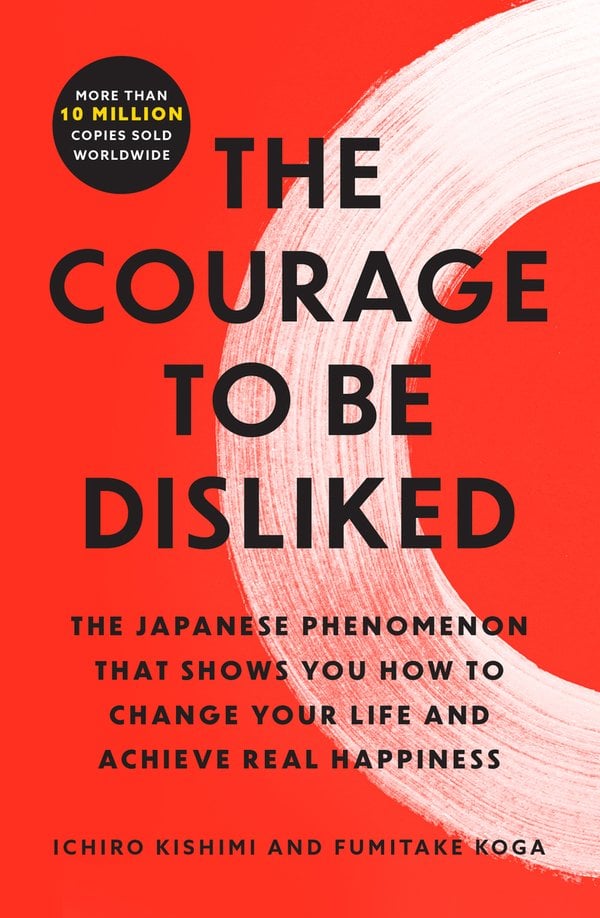
If fear, uncertainty, or concern about what others might think is making it difficult to make changes in your life, The Courage to Be Disliked (available on Bookshop.org) offers a fresh perspective on personal freedom and self-determination.
The book explores how letting go of limiting beliefs can help you make choices that are more aligned with who you truly are.
book tip
The Courage to Be Disliked
By Ichiro Kishimi and Fumitake Koga
Explore a different perspective on happiness, relationships, and the courage to live life on your own terms.
Did you know? When you buy through Bookshop.org, you’re helping support independent bookstores.
When Emotional Investment Keeps You Stuck
The more time, energy, and emotion you invest in a relationship, the harder it often becomes to walk away.
This is commonly known as the “sunk cost effect.”
People start thinking things like:
- “We’ve been together for so long.”
- “I’ve already put so much into this.”
- “It would be a waste to leave now.”
On the surface, these thoughts seem completely reasonable. Emotionally, though, they can keep someone attached to a relationship that no longer feels right.
The important thing to remember is that emotional investment doesn’t guarantee future fulfillment. It simply makes letting go psychologically more difficult.
As a result, people often continue investing in a relationship that no longer feels right.
Why Hope Keeps People Stuck
Hope isn’t inherently negative—in many relationships, it helps people navigate difficult periods.
But in comfort zone relationships, hope can become part of a repeating cycle:
- “Things will get better.”
- “This is just a phase.”
- “We just need time.”
In the moment, hope serves an important purpose. It eases emotional discomfort, softens the urgency of what you’re feeling, and makes the current situation easier to live with.
But it can also have an unintended consequence—it delays action.
As long as hope remains active, change can feel unnecessary. The mind doesn’t fully commit to staying or leaving; instead, it remains suspended between what is and what could be.
Why Fear of Regret Keeps People Stuck
Leaving a relationship comes with uncertainty:
- What if I regret it?
- What if I don’t find something better?
- What if I made a mistake?
These questions don’t always appear as direct thoughts. More often, they show up as hesitation, overthinking, or a lingering feeling of being emotionally stuck.
They can be powerful enough to slow down even a clear awareness that something isn’t working.
Interestingly, people often overestimate the regret they might feel from leaving while underestimating the regret that can build from staying.
Psychologically, imagined future regret tends to feel stronger when we picture taking action than when we imagine doing nothing.
Action feels permanent. Inaction feels reversible—even though, in reality, it often isn’t.
So people choose inaction as a way to avoid anticipated regret, even when that same choice leads to long-term dissatisfaction.
The Hidden Cost of Staying
The biggest challenge with a stuck in comfort zone relationship is that staying rarely feels dramatic.
Instead, it tends to happen gradually:
- Slowly less excitement
- Slowly less connection
- Slowly more emotional distance
- Slowly more dissatisfaction
Because these changes happen little by little, they’re easy to normalize. Nothing feels urgent enough in any single moment to demand immediate action.
But over time, those small shifts begin to add up.
What often develops is:
- Emotional stagnation
- Loss of personal growth
- Reduced life satisfaction
- Lingering regret
Not because something suddenly fell apart—but because nothing ever changed.
If you find yourself staying in situations that no longer feel right, The Mountain Is You (available on Amazon) offers powerful insights into self-sabotage, emotional patterns, and the hidden reasons people resist change.
RELATED POST: What Really Happens When You Step Out of Comfort Zone
How People Eventually Leave (When They Do)
People rarely leave comfort zone relationships because of one sudden moment of clarity. More often, the decision comes after a gradual buildup of awareness and emotional weight over time.
There’s a slow accumulation of:
- Emotional fatigue
- Clearer recognition of unmet needs
- Internal discomfort becoming harder to ignore
- Identity gradually shifting toward independence
At some point, something changes:
Staying begins to feel heavier than leaving. What once felt manageable starts to feel more exhausting than the uncertainty that comes with change.
That turning point looks different for everyone. For some, it comes through exhaustion. For others, it comes through clarity.
But in most cases, it happens when the emotional cost of staying finally becomes greater than the fear of what comes next.
Final Thoughts
People don’t stay stuck in comfort zone relationships simply because they can’t see what’s happening.
More often, it’s because several psychological forces are working together at the same time—familiarity, attachment, fear of uncertainty, identity, and emotional investment—all making change feel more difficult than staying.
The comfort zone in relationships is powerful for one simple reason:
It rarely feels like a trap. It feels like stability.
And stability is something your brain is naturally wired to protect. But stability without fulfillment can gradually become stagnation over time.
The real challenge isn’t just recognizing when a relationship feels comfortable—it’s understanding whether that comfort is supporting growth or quietly replacing it without you realizing it.
Because in the end, people usually don’t stay stuck because they don’t want something better.
They stay because “better” feels uncertain—and uncertainty is exactly what the comfort zone is designed to avoid.
*This article is for informational and educational purposes only and should not be considered a substitute for professional mental health advice. If you are experiencing emotional distress or mental health challenges, please seek guidance from a licensed therapist or mental health professional.

Malin, co-founder of Courier Mind, is passionate about personal growth and mindset. With a focus on self-discovery and goal-setting, she creates content that inspires confidence, balance, and growth for the mind and spirit.