


Small Goals to Set for Yourself That Can Change Your Life
Most people underestimate the power of small goals.
It’s easy to believe that meaningful change only comes from dramatic transformations—quitting your job, starting over, or making life-changing decisions overnight.
In reality, though, lasting change rarely happens through one big leap.
More often, it comes from small, consistent actions that seem insignificant at first but gradually build into something far greater. That’s the true power of small goals.
In this article, you’ll discover how small goals work, why they matter, and which simple small goals to set for yourself can gradually transform your life over time.
This post contains affiliate links, which means we may earn a commission if you purchase through our links—at no extra cost to you. As an Amazon Associate we earn from qualifying purchases. We only recommend products we use or trust. Learn more about affiliate marketing or read our full disclosure.
Why Small Goals Matter More Than Big Ones
Big goals are exciting. They feel meaningful, inspiring, and full of possibility.
Found this helpful? Pin it for later so you can come back anytime.
But the reality is that they often fall apart because they ask too much of you all at once—things like:
- High motivation
- Major lifestyle changes
- Consistent discipline
- Immediate effort
That’s a lot to rely on day after day.
When a goal feels too big, falling short can make it even harder to stay motivated. Small goals help you build momentum instead of losing it.
Small goals work differently. Rather than overwhelming you, they:
- Feel achievable
- Require less willpower
- Are easier to stick with
- Shape your identity over time
- Build momentum
They don’t expect you to become a completely different person overnight. Instead, they help you gradually grow into that person through consistent repetition.
Think about it this way:
Big goals are like trying to jump across a river in a single leap. Small goals are like building a bridge—one step at a time.
And while building a bridge takes longer, it’s far more reliable.
The Psychology Behind Small Goals
Small goals are effective because of the way your brain responds to progress.
When you complete even a small task, a few things naturally happen:
- You feel a sense of accomplishment
- Your brain releases dopamine (the reward chemical)
- You strengthen a positive identity (“I can do this”)
- You reduce the resistance to doing it again
These effects may not feel dramatic in the moment, but together they shape how you approach the task the next time.
This creates a simple feedback loop:
Small action → small win → motivation → repeat
The more often you repeat that cycle, the stronger it becomes. Over time, those small wins begin to reshape both your habits and the way you see yourself.
That’s why something that starts small can eventually lead to meaningful, long-term change.
Want to dive deeper into why small habits are so effective? Tiny Habits by BJ Fogg (available on Bookshop.org) explains the science behind behavior change and shows how tiny actions can lead to lasting results without relying on motivation or willpower.
book tip
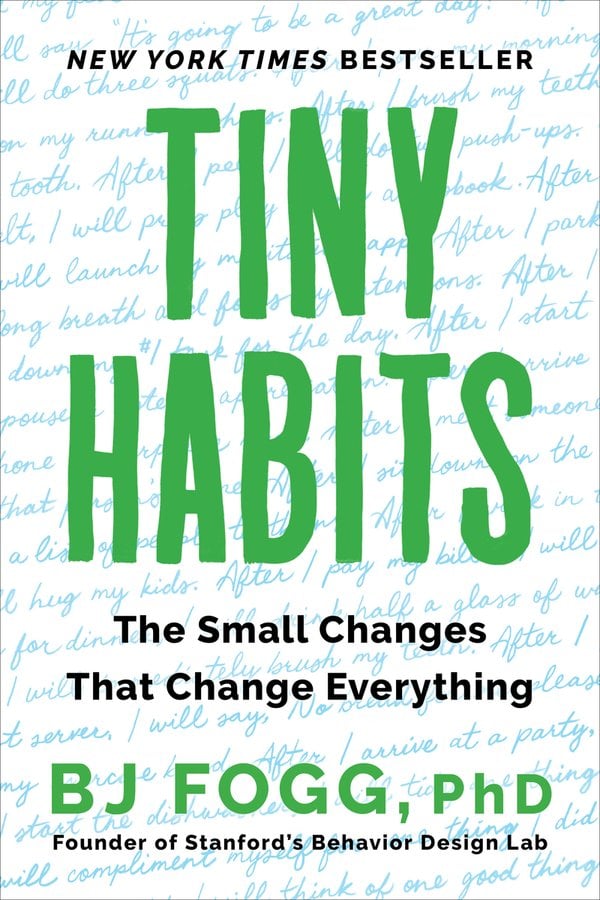
Tiny Habits
By BJ Fogg, PhD
Discover how tiny, consistent habits can lead to meaningful and lasting changes over time.
Did you know? When you buy through Bookshop.org, you’re helping support independent bookstores.
Small Goals to Set for Yourself in Every Area of Life
Now let’s look at some practical small goals to set for yourself that you can start using today.
None of these are meant to feel overwhelming. In fact, they’re intentionally simple—and that simplicity is exactly what makes them so effective when practiced consistently.
1. Health & Energy Goals
Your energy affects every other part of your life. When you feel better physically, it becomes easier to think clearly, take action, and stay motivated.
Small health goals include:
- Take a 10–20 minute walk each day
- Drink one extra glass of water daily
- Stretch for 5 minutes every morning
- Go to bed 15 minutes earlier
- Get up and move once every hour
- Add one healthy meal to your day
- Gradually cut back on sugary drinks
- Spend 10 minutes outside each day
On their own, none of these habits seem life-changing.
But together, they can gradually boost your energy, sharpen your focus, and improve your mood—and those benefits naturally carry over into almost every other area of your life.
2. Mental Clarity Goals
A busy, cluttered mind often leads to stress, procrastination, and feeling overwhelmed.
Small mental goals can help you gradually regain clarity without needing to completely reset your life.
Small mental goals include:
- Write down your thoughts once a day
- Journal for 5 minutes
- Do a brain dump when you feel overwhelmed
- Reduce social media scrolling
- Spend 5 minutes in silence
- Organize your digital files or notes
- Focus on one task at a time
These goals aren’t meant to fix everything overnight. Instead, they create more mental, emotional, and cognitive space, making it easier to think clearly.
And when your thinking becomes clearer, making better decisions becomes much easier.
If writing things down helps you think more clearly, a simple journal like the VICTORIA’S JOURNALS Leatherette Vintage Journal (available on Amazon) can make it easier to organize your thoughts and reflect on your progress. Having one dedicated place for your ideas, reflections, and goals can also make it easier to see how far you’ve come.
3. Productivity Goals
Productivity isn’t about doing more. More often, it comes from doing less—but doing it consistently.
Small productivity goals include:
- Complete one important task each day
- Work for 20–30 minutes without distractions
- Break bigger tasks into smaller steps
- Write down tomorrow’s priorities today
- Finish one task before moving to another
- Spend 5 minutes clearing your workspace each day
These goals are effective because they make procrastination easier to overcome by lowering the barrier to getting started.
Research on procrastination suggests that you’re much more likely to take action when a task feels small, clear, and easy to begin than when it feels overwhelming or distant.
4. Financial Goals
Improving your finances doesn’t require becoming wealthy overnight. It comes from building awareness and staying consistent over time.
Small financial goals include:
- Track your spending for 5 minutes each day
- Save a small amount every week
- Skip one unnecessary purchase each day
- Review your subscriptions once a month
- Create a simple budget category
- Wait 24 hours before making impulse purchases
- Learn one financial concept each week
None of these habits seem like major changes on their own.
But over time, they help you become more aware of your money, make better financial decisions, and steadily build greater financial stability.
5. Personal Growth Goals
This is often where lasting personal change begins.
Small personal growth goals include:
- Read 5–10 pages each day
- Learn one new idea daily
- Reflect on your actions every week
- Practice a new skill consistently
- Challenge one limiting belief each week
- Ask better questions about your habits
- Write down one idea for improvement each day
These kinds of goals build on one another over time.
At first, the changes may be so subtle that you hardly notice them. But after a few months, the difference becomes clear.
Your thinking grows sharper, your perspective expands, and the way you approach life begins to change in meaningful ways.
6. Emotional Wellbeing Goals
Emotional wellbeing is often overlooked, yet it plays a vital role in living a balanced, fulfilling life.
Small emotional goals include:
- Check in with yourself once a day
- Pause before reacting during stressful situations
- Practice gratitude for one thing each day
- Take breaks without feeling guilty
- Speak kindly to yourself when you make mistakes
- Step away from stressful situations for a moment
- Recognize your emotions instead of pushing them away
These goals aren’t about eliminating stress completely. They’re about learning to respond to it with greater awareness and self-compassion.
In other words, they don’t remove life’s challenges—they help you handle them more effectively when they arise.
7. Relationship Goals
Strong relationships are built through small, consistent actions—not occasional grand gestures.
Small relationship goals include:
- Send one thoughtful message each day or week
- Ask more questions when talking with others
- Listen without interrupting
- Spend 10–20 minutes of quality time with someone
- Show appreciation more often
- Check in with friends regularly
- Be more present during conversations
These small actions may seem simple, but they strengthen relationships over time.
In the end, it’s the everyday moments of attention and presence that build deeper, more meaningful connections—not the occasional big gesture.
8. Lifestyle & Environment Goals
Your environment often has a greater influence on your habits than motivation does.
Small lifestyle goals include:
- Tidy one small area each day
- Spend 5 minutes reducing clutter
- Prepare your clothes or meals in advance
- Reduce distractions in your workspace
- Build a simple morning routine
- Improve your sleep environment
- Turn off unnecessary notifications
These small changes may not seem significant on their own, but they shape the way you live and work every day.
A supportive environment makes positive habits easier to maintain—and unhealthy habits harder to fall back into.
If you’re ready to put these small goals into practice, the Legend Planner PRO (available on Amazon) is a great tool for tracking habits, setting priorities, and staying consistent. It helps you organize different areas of your life in one place, making it easier to build momentum over time.
RELATED POST: The 7 Areas of Life You Should Be Setting Goals In (Most People Ignore #3)
How Small Goals Lead to Big Life Changes
Small goals are powerful because they don’t rely on intensity. They rely on repetition. And repetition is what gradually shapes your identity.
For example:
- Walking every day → “I am someone who takes care of my health”
- Reading every day → “I am someone who learns consistently”
- Saving money → “I am someone who is financially responsible”
Identity matters because it naturally influences your future behavior.
Once the way you see yourself begins to change, your decisions naturally start to align with that new identity.
RELATED POST: Why Positive Thinking Isn’t Enough to Reach Your Goals
The Compound Effect of Small Goals
One of the biggest reasons small goals are so effective is the power of compounding.
At first, a single small action may not seem very important. It can even feel too minor to make a real difference.
But when you repeat it consistently over time, those small actions grow into something much bigger. That’s when the compound effect really begins to show.
For example:
- 10 pages of reading per day = ~3,650 pages per year
- 10-minute walk per day = ~60 hours of movement per year
- 5 minutes of journaling daily = deep self-awareness over time
The results don’t happen overnight, but they do accumulate. And over the long run, compounding almost always wins.
If you’d like to learn more about how small actions create big results over time, The Compound Effect by Darren Hardy (available on Bookshop.org) is an excellent read. It explains how seemingly minor choices can add up to remarkable long-term success in every area of life.
book tip
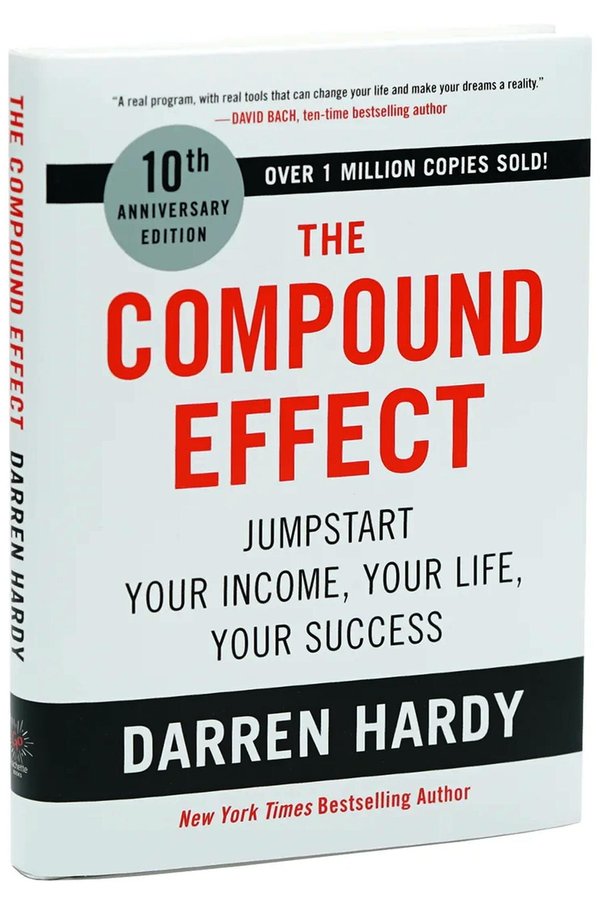
The Compound Effect
By Darren Hardy
Discover how small choices and consistent habits can create lasting change over time.
Did you know? When you buy through Bookshop.org, you’re helping support independent bookstores.
Why Most People Overlook Small Goals
If small goals are so effective, why don’t more people use them?
There are a few common reasons:
1. They Feel Too Easy
People often mistake “easy” for “ineffective.”
If something doesn’t feel difficult or intense, it’s easy to assume it won’t make a meaningful difference—even when it actually does.
2. They Want Fast Results
Small goals can feel slow at first.
Because progress happens gradually, it may seem like nothing is changing, even though meaningful change is quietly happening beneath the surface.
3. They Underestimate Consistency
People often place too much value on intensity and not enough on repetition.
It’s easy to believe that short bursts of effort matter more than small, repeated actions, even though lasting change is usually driven by consistency.
4. They Compare Themselves to Others
Big transformations are much easier to notice than small daily improvements. As a result, people often compare their steady progress to someone else’s visible success.
But lasting change rarely looks impressive in the beginning. Most of the time, it looks simple—sometimes so simple that it goes unnoticed.
RELATED POST: The Hidden Mistake People Make When Setting Goals
How to Make Small Goals Stick
To make small goals to set for yourself truly effective, start with goals that feel almost too easy.
1. Start Smaller Than You Think You Need
If it feels too easy, you’re probably on the right track.
The goal isn’t to make things difficult. It’s to make consistency so effortless that you can actually stick with it.
2. Focus On Consistency, Not Perfection
Missing one day isn’t failure—giving up completely is. What matters most is coming back to your goal, even if you get off track for a while.
Over time, consistency will always matter more than perfection.
3. Attach Goals to Existing Habits
One of the easiest ways to make small goals stick is to connect them to habits you already do automatically.
For example:
After brushing your teeth → do 2 minutes of stretching.
When you attach a new habit to an existing one, you rely less on memory or motivation because it naturally becomes part of your routine.
4. Track Lightly
Keep track of your progress just enough to stay aware, but not so much that it becomes stressful.
The goal is to notice your consistency over time—not to monitor every detail or create unnecessary pressure.
5. Build Slowly Over Time
Once a habit starts to feel easy and automatic, gradually build on it.
There’s no need to rush. Let your progress grow at a pace you can maintain so you can keep moving forward without burning out.
If staying consistent with your goals is something you struggle with, the Full Focus Planner by Michael Hyatt (available on Amazon) can help. It breaks larger goals into manageable daily actions, making it easier to stay focused without feeling overwhelmed.
Common Mistakes With Small Goals
Even the best small goals can fall short if they’re approached the wrong way.
Some common mistakes to avoid include:
- Trying to change too many things at once
- Expecting immediate results
- Giving up after missing a few days
- Turning small goals into a source of pressure
- Comparing your progress to other people
Small goals are meant to simplify your life, not make it more stressful.
If they start to feel heavy or overwhelming, it’s usually a sign that they’ve become something they were never meant to be.
If you tend to overwhelm yourself with long to-do lists, the Taja To Do List Notepad (available on Amazon) can help you focus on what matters most. Keeping your daily tasks short and manageable makes it much easier to stay consistent.
Final Thoughts
Life rarely changes because of one major moment. It changes through small, repeated actions that gradually reshape your habits, mindset, and identity over time.
Small goals are powerful because they are:
- Easy to start
- Easy to repeat
- Easy to maintain
- Powerful when compounded
You don’t need dramatic changes to transform your life. What you need is the consistency to keep showing up for the small things.
Because in the end, it’s not the big decisions that shape your future—it’s the small ones you make every single day.
*This article is for informational and educational purposes only and should not be considered a substitute for professional mental health advice. If you are experiencing emotional distress or mental health challenges, please seek guidance from a licensed therapist or mental health professional.
Höpfner, Jessica, and Nina Keith. “Goal Missed, Self Hit: Goal-Setting, Goal-Failure, and Their Affective, Motivational, and Behavioral Consequences.” Frontiers in psychology vol. 12 704790. 21 Sep. 2021, doi:10.3389/fpsyg.2021.704790. Adapted and used under the terms of the Creative Commons Attribution 4.0 International License.
Steel, Piers et al. “Examining Procrastination Across Multiple Goal Stages: A Longitudinal Study of Temporal Motivation Theory.” Frontiers in psychology vol. 9 327. 3 Apr. 2018, doi:10.3389/fpsyg.2018.00327. Adapted and used under the terms of the Creative Commons Attribution 4.0 International License.

Malin, co-founder of Courier Mind, is passionate about personal growth and mindset. With a focus on self-discovery and goal-setting, she creates content that inspires confidence, balance, and growth for the mind and spirit.